Sunday, March 27, 2022

Jesus and the Cross: Was There No Other Option?

Healing for a broken world

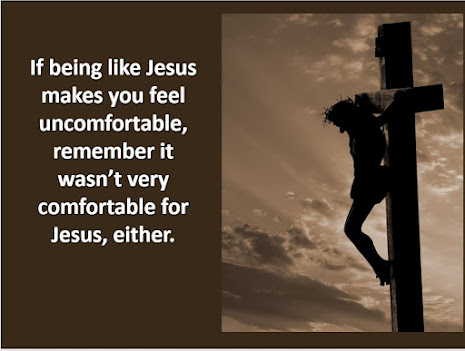
Do you think it is possible to over-celebrate the resurrection of Jesus? I do not mean to give it greater importance than it warrants. Jesus’ resurrection is of supreme importance, after all. But I wonder whether, in celebrating Jesus’ resurrection, we somehow disconnect what the resurrection means from what Jesus’ death means. Jesus was unjustly killed, after all, receiving neither fair trial nor accurate charges of wrongdoing. So he died on a Roman cross and on Sunday he was raised from death.

That is of course what the Scriptures say. But we must be careful not to see Jesus before Resurrection Sunday as someone who was simply railroaded and stood trial in a kangaroo court, for whom crucifixion was just a tragic end of an otherwise exemplary life, and which God corrected after three days.

For Jesus died on purpose, not by accident, by his own intention, not by circumstance. In Mark chapter 8, Jesus taught his disciples that he “must undergo great suffering, and be rejected by the elders, the chief priests, and the scribes, and be killed, and after three days rise again.” Matthew records Jesus saying that he came “to give his life as a ransom for many” (20.28). All the Gospels recount similar expressions by Jesus.

Without Jesus’ death, of course, there could be no resurrection at all. But Jesus’ death on Friday was not an accident that was simply reversed on Sunday, nor was it merely a way station of desolation en route to a Sunday of glory. Jesus’ death was as central to salvation as the resurrection. Indeed, the meaning of Jesus’ resurrection is inextricably bound with the meaning of his death.

So when we celebrate Easter and what it means, we should think about why Jesus had to die to deliver us from our sins and reconcile us to God. Which is to say, why did God not choose a different, non-lethal manner of redeeming sinful humanity?

In the religious and world view of the ancient Jews, including the apostles, there was a reasonably straightforward answer: sins are remitted through sacrifice and the shedding of blood. The New Testament’s book of Hebrews goes directly to that point in verse 9.22: “… without the shedding of blood there is no forgiveness of sins.”

The apostles believed this but went one step further. If remission of sins required the sacrifice of life, then no sacrifice could top that of the actual self-sacrifice of God in the flesh, a perfect sacrifice for which there could never be any improvement. This is developed in more detail in Hebrews 10, which can be summed up that the death of Jesus was eternally effective by itself and took place “once for all” and for all time. So Christians do not practice any kind of blood sacrifice for the remission of our sins. That was taken care of two thousand years ago and nothing we can do can improve it.

The Roman Catholic and Protestant churches don’t go much further than that since the Western church very early adopted a mostly-legal view of sin. That is, sin is a transgression of God’s law and God adjudges us not guilty because Jesus suffered the punishment that we deserve. This is the doctrine of atonement, which simply states that someone must bear the punishment for human ways of sin and death, someone has to clear the debt. Jesus’ death on the cross is what does it.

But this is an incomplete understanding of sin. In the Eastern Church, centered in Constantinople, salvation is developed more as healing of our sin-sick souls than pardon for wrongdoing, although there is still that, too. Speaking Greek, not Latin, the Eastern churches knew all along that the Greek word for Savior, soter, means "healing." And this insight forms their understanding of salvation significantly. Here is an example:

Luke 5:17-20

17 One day, while he was teaching … 18 … some men came, carrying a paralyzed man on a bed. They were trying to bring him in and lay him before Jesus; 19 but finding no way to bring him in because of the crowd, they went up on the roof and let him down with his bed through the tiles into the middle of the crowd in front of Jesus.

20 When he saw their faith, he said, “Friend, your sins are forgiven you.”

Jesus was well known as a healer by then, and presumably this man’s friends went to such great lengths to get this guy in front of Jesus, so Jesus would heal him in his body.


...Apparently, Jesus did not see it that way. Jesus didn’t see the friends' help as determination for the man but as faithfulness in himself. So instead of saying, “Stand up and walk,” he said, “Your sins are forgiven,” a declaration not apparently connected to why that man was there. In fact, he didn’t tell the man to stand up and walk until some others there challenged him right away that only God, not Jesus, could forgive sins. ‘Which is easier for me,’ Jesus answered, ‘forgiving sins or making this man walk? I’ll show you.’ So he told the man to stand up and walk, and he did.

We call Jesus the Great Physician, and so he is, but Jesus has a better understanding of what needs healing than we do. On our prayer lists are persons who are ill or injured, in therapy or full-time care, and we pray for them. We should pray for them. But which of us asks the congregation to pray for one’s sin-sick souls, stricken by habits of sin, addictions to ungodly pastimes, failing marriages, short tempers, over-crowded calendars or misuse of the time and resources God has given us?

The sickness of the human soul is deep and fatal. Sin is a terminal illness for which we have no cure. Only God does, and the cure was the death of Jesus Christ.

As an historical event, the death of Jesus was not unusual. In a long line of lethal violence stretching from Cain and Abel to Auschwitz, Hiroshima, 9/11 and other wars across the world, Jesus’s personal fate was simply one of untold millions for which evil triumphed and goodness was buried.

Jesus was not the first person to give his life on the behalf of others. In fact, no one of Good Friday thought Jesus died on anyone’s behalf. Since the apostles’ day, though, Christian people have held that Jesus lived and died to offer himself as a ransom for all, as atonement for our sins, as a blood offering and sacrifice by which we may be made right before God. How can this be?

The wages of sin is death, wrote Paul, and nothing but death, buddy, and if we think we can cure ourselves from this 100-percent fatal illness then there is no truth in us. But even if we accept the scriptural claim that there are none of us who do good, no not one, and that all have sinned and fallen short of the glory of God, then what made it necessary that God become man and die on a cross to redeem us from our state?

The Church has held for two thousand years that God could save by any means God chooses, for God is sovereign in power and decision. And this Christ on the cross is the way we know God did choose.

And yet the question, “Why?” is not easily dismissed. It has no answer, really, except love. For we know that God became human because of love, and that God’s ultimate self-sacrifice was the fulfillment of love. It was from love that the Son of God was born, so that through God’s grace through our faith in him, we shall enjoy eternal life with God. For God did not send his Son into the world to reject us but bring us to himself forever (John 3:16-17).

But why did this love require a death?

I knew a man at Vanderbilt who had lost his eight-year-old son to cancer. The father said that when his son was first diagnosed, he knelt by his son's bed and prayed to God to heal his son. The cancer worsened until it was clear the boy’s illness would not be reversed. The father said that when this fear gripped him, he started offering himself in prayer to God, kneeling by his sleeping boy and begging God with tears and anguish that if cancer there must be, to take the cancer from his child and put it inside himself.

But who can God pray to? When faced with the sickness unto death of humankind, we turn to God, but who does God turn to? For he is God, there is no other and there is no one whom God can turn to but himself. To me, that’s what God concluded: “No one can handle this but me. Human sin ends in death and only I can die for all humanity. I must be born of woman and take all the sin of the world to my death, even death on a cross. I, God, will take their illness into myself and bear it away. If death there must be – and there must be death because sin is fatal – then I will suffer the death so that they may be healed and may live.”

We tend to think of sin judicially and see it dealt with in a kind of theological court, where we are found not guilty based on the pleading of Christ. But I think it is helpful also to see sin as a deep illness in the human being that we cannot cure ourselves. In the mind of God, healing this illness must be of ultimate value, the very perfection of creation. So out of love for his children, God became born a man and took upon himself all the spiritual deficiencies of humanity. Jesus, “in whom dwelt the Godhead bodily,” who was without sin or spiritual sickness, took upon himself all the sin of humankind, the deep illness of the human soul. And so we are made well. The prophet Isaiah put it this way:
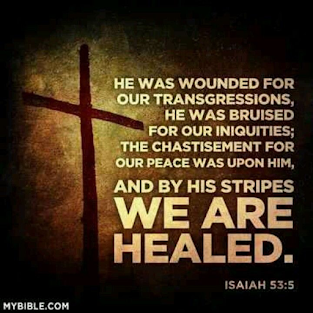
By his stripes we are healed
Surely he took up our infirmities and carried our sorrows, yet we considered him stricken by God, smitten by him, and afflicted. But he was pierced for our transgressions, he was crushed for our iniquities; the punishment that brought us peace was upon him, and by his wounds we are healed (Isa 53:4-5).

The apostle Paul wrote in Second Corinthians,

... God was reconciling the world to himself in Christ, not counting human sins against them. ... God made him who had no sin to be sin for us, so that in him we might become the righteousness of God (2 Cor 5:19, 21).

The book of Hebrews offers this insight:

Since the children have flesh and blood, he too shared in their humanity so that by his death he might destroy him who holds the power of death ... (Heb 2:14).

Easter’s glory should make us confront ourselves, examine our souls and reconsider how we live and why. For even though Jesus’s death was ordinary in nature, it was extraordinary in character, for in his death we find our life. Old Testament scholar Gene Tucker, pondering Isaiah’s prophecy, wrote,
 

There are times when we must simply surrender because we can find no way forward without God’s grace and truth. There are times when we must surrender because the ways we have chosen to go bear only God’s judgment, and we know that. But there are also times when we must surrender because God has laid hold of us so dramatically that we can scarcely do else. When this happens, the speech we get is directly from God. It comes upon us and shows us a truth we never before could have entertained. And then our tongue is free for confession and release; our sins do not overwhelm us because we can see them clearly and report them freely, because they have been clearly and freely taken away from us and laid upon another.

The tragedy of the human condition is that this salvation cost God the life of his Son, but the deep mystery of the divine nature is that in Christ's death, God sacrificed himself, for the Son and the Father are the one and the same. By the wounds that we inflicted upon him, we are made whole. By his stripes we are healed, thanks be to God!

Saturday, March 12, 2022

Ukraine on Fire documentary

 From Oliver Stone in 2016, so obviously not including recent events. But it does explain that no one's hands are clean, including America's. As for the sub-head in the frame below,  "Russian Aggression or American Interference?" well, as the saying goes, embrace the power of "and."


There are interviews as well with political principals in Ukraine and with Putin, all conducted by Stone. That the interview subjects are self-serving hardly needs stating. Nonetheless, the film presents perspectives and historical information not being presented otherwise.

Also on Rumble:
https://rumble.com/embed/vubrga/?pub=4

Tuesday, March 8, 2022

Biden begs Texas to secede

President Joe Biden today begged Texas Gov. Greg Abbott to lead Texas to secede from the United States a second time, promising that this time the secession will not be met with military resistance. 

An historic phone call about the energy future of the United States.

In a phone call late Tuesday afternoon, according to White House press agent Jen Psaki, President Biden explained to Gov. Abbott that because he has promised the Green left wing of his party never to allow increased oil production in the United States, his administration has been forced to beg Iran and Venezuela to sell oil to US refiners.

"Furthermore," said Ms. Psaki, "even Democrat members of Congress were willing to force through a vote mandating a ban on importing oil from Russia over the president's objections." 

Unable to authorize increasing domestic oil production, and finding no foreign producer would sell (or sell more) oil to America, the president had no choice but to create a new foreign producer who would provide additional oil capacity to American who are shocked by record-breaking pump prices. 

Hence the call to Texas Gov. Abbott, begging him to energize secessionists in Texas to re-establish the independent Republic of Texas and begin immediately to increase Texan oil production and sell directly to American refiners. 

"Then," explained Ms. Psaki, "the president can truthfully say that he held the line on crushing America's oil industry while filling the near-term needs with foreign sourcing. It's win-win for everyone!"

Gov. Abbott was not available for comment as we went to press. Texas' only prior secession lasted from 1861-1865 and did not turn out well for the state. 

Please note that this is a humor and satire post!

Sunday, February 27, 2022

I didn't like it, but I did it

I often quote what Preacher Mapple told the whaling sailors before they went to sea in Herman Melville's Moby Dick. Paraphrasing for brevity, he said that the things God wants us to do are hard to do, which is why God commands us rather than tries to persuade us. But to obey God we must first disobey ourselves, and we mistake the difficulty of disobeying ourselves with the hardness of obeying God. 

And we should recall that Jesus said, "My burden is easy and my yoke is light." 

All that said, at church this morning a member informed me that Russian President Vladimir Putin has started rattling Russia's nuclear weapons. The BBC reports,

President Putin’s announcement that he is putting Russia’s nuclear forces on high alert has been condemned in the strongest terms by the US.

Pentagon officials say it is an unnecessary step and a dangerous escalation that raises the stakes of a miscalculation.

Elsewhere, it was reported that Putin blamed the "high alert" on threatening statements against Russia made by NATO leaders. And how many such statements have there actually been. Zero, that's how many. So President Biden's press secretary, Jen Psaki, was exactly right this morning

President Vladimir Putin's order to put Russian nuclear forces on high alert is part of a pattern of Moscow manufacturing threats to justify aggression, White House Press Secretary Jen Psaki said on Sunday.

"We've seen him do this time and time again. At no point has Russia been under threat from NATO, has Russia been under threat from Ukraine," Psaki said on ABC's "This Week" program.

"This is all a pattern from President Putin and we're going to stand up to it. We have the ability to defend ourselves, but we also need to call out what we're seeing here from President Putin," Psaki added.

After the church member told me about this news, I grabbed a moment to read about it on my smart phone. Now I have to say that during my military career, I served as a nuclear target analyst and as a commander and then operations officer in two units with nuclear capability, for which I also had special training, especially in receiving, decrypting, and handling Nuclear Control Orders, for which standards are extremely strict. In both those assignments, I - or anyone occupying those positions - would have been a central figure in firing atomic warheads. I point this out to buttress why Putin's order is very scary. There is zero reason for Putin to feel Russia is under threat from NATO or anyone else, and announcing such a reason for placing nukes in high alert - whatever that actually means in the Russian status - makes me wonder whether Putin has turned into a nut case losing grip on reality. (Some Euro observers have also wondered that and former Secretary of State Condoleeza Rice said much the same thing this morning. Former US ambassador to Russia Michael McFaul appeared on NBC’s “Meet the Press” this morning and said Putin is "unhinged.") 

So when we reached the time for prayer concerns in this morning's worship, I knew that Jesus was not joking when he commanded us in Matthew 5, "But I say to you, Love your enemies and pray for those who persecute you... ." I knew we had to pray for Putin. 

But I confess I did not want to do it, that I would rather pray about Putin than for him, like this: "O Lord, may you swallow him in the earth and commit him to the fires of hell." But of course, I could not do that and be loyal either to my identity as a disciple or to my vows as an ordained minister. After all, we are instructed, 

  • "Bless those who persecute you; bless and do not curse them." (Rom. 12.14)
  • God himself "is kind to the ungrateful and the evil." (Luke 6.35)
  • "As surely as I live, declares the Sovereign Lord, I take no pleasure in the death of the wicked, but rather that they turn from their ways and live." Ezekiel 33:11
So I knew that I would indeed have to pray for, not against, Putin. But in this I remembered what my friend Rabbi Daniel Jackson wrote me about the commandment, citing its verses in Proverbs 25.21-22:

If your enemy is hungry, give him bread to eat,
    and if he is thirsty, give him water to drink,
for you will heap burning coals on his head,
    and the Lord will reward you.

Rabbi Daniel explained to me that of course, one may interpret the first verse literally - if your enemy is physically hungry, give him a meal, if physically thirsty, give him water. But the second verse is a key that literalism is not the only way to read this. After all, you will not literally heap burning coals upon your enemy's head, nor is that a metaphor for discomfiting your enemy so much by your kindness that he will metaphorically be that uncomfortable in reaction. 

Instead, Daniel cited multiple Scripture where the image of burning coals being poured over one's head refers to the certain judgment of God. If there are coals to be poured, Daniel explained, make sure you do the righteous things necessary to avoid them. The hunger, then, refers to a spiritual emptiness that you try to fill with the bread of life - for Jews, it means the Word of God, the witness of the Tanak; for Christians it means that also, plus the life, death, and resurrection of Christ. And the same meaning for the water to drink. 

So, how then to pray for Vladimir Putin? I could do nothing except pray for the grace of God to fall upon him and for the Holy Spirit to lead him and give him clarity of understanding, to turn his purposes to righteous endeavors, to bring him to lay aside the sword and embrace the cross. More specific than that I dared not. The many blanks are ably filled in by God.

And for the record, I also prayed for President Biden and the leaders of our and NATO governments. For this is also commanded by our Lord. And the people of Ukraine were at the top of our list today. 

God bless them, every one. 

Monday, February 14, 2022

How taxes work


Came across this in my archives. A friend emailed this to me in 2003. It was purportedly by T. Davies, a professor of accounting at the University of South Dakota. I did then confirm, back then, that a man named Tom Davies with accounting credentials taught at the school; whether he was the author of the essay below seems reasonable but not certain. But it is an interesting analogy of the tax systems and tax cuts.

Let's put tax cuts in terms everyone can understand. Suppose that every day, ten men go out for dinner. The bill for all ten comes to $100. If they paid their bill the way we pay our taxes, it would go something like this: The first four men - the poorest - would pay nothing; the fifth would pay $1, the sixth would pay $3, the seventh $7, the eighth $12, the ninth $18, and the tenth man - the richest - would pay $59. That's what they decided to do. The ten men ate dinner in the restaurant every day and seemed quite happy with the arrangement - until one day, the owner threw them a curve (in tax language, a tax cut).

"Since you are all such good customers," he said, "I'm going to reduce the cost of your daily meal by $20." So now dinner for the ten only cost $80.

The group still wanted to pay their bill the way we pay our taxes. So the first four men were unaffected. They would still eat for free. But what about the other six men who actually pay the bill? How could they divvy up the $20 windfall so that everyone would get his "fair share?" The six men realized that $20 divided by six is $3.33. But if they subtracted that from everybody's share, the fifth and sixth man would end up being paid to eat their meal. So the restaurant owner suggested that it would be fair to reduce each man's bill by roughly the same amount and he proceeded to work out the amounts each should pay. And so the fifth man paid nothing, the sixth pitched in $2, and the seventh paid $5, the eighth paid $9, the ninth paid $12, leaving the tenth man with a bill of $52 instead of his earlier $59.

Each of the six was better off than before. And the first four continued to eat for free. But once outside the restaurant, the men began to compare their savings. "I only got a dollar out of the $20," declared the sixth man, but he, (pointing to the tenth) got $7!" "Yeah, that's right," exclaimed the fifth man, "I only saved a dollar too. It's unfair that he got seven times more than me!" "That's true!" shouted the seventh man, why should he get $7 back when I only got $2?" "The wealthy get all the breaks!"

"Wait a minute," yelled the first four men in unison, "We didn't get anything at all. The system exploits the poor!"

The nine men surrounded the tenth and beat him up. The next night he didn't show up for dinner, so the nine sat down and ate without him. But when it came time to pay the bill, they discovered, a little late what was very important. They were fifty-two dollars short of paying the bill!

Imagine that!

And that, boys and girls, journalists and college instructors, is how the tax system works. The people who pay the highest taxes get the most benefit from a tax reduction. Tax them too much, attack them for being wealthy, and they just may not show up at the table anymore. 

After all, no one is obligated to become a millionaire. I remember attending a ministerial conference where at lunch, another pastor sitting across the table from me said that the income-tax rate should be 100 percent of all income, however received, of more than $1 million. I said nothing, but wanted to point out that all that would do is guarantee that no one would make more than $1 million. 

It is a political slogan today that "the rich should pay their fair share." Of course, the politicians saying this never - and I mean never - define what is a fair share except that it always means "more." But here are inconvenient facts

  1. The people who have more income per year than 99 percent of Americans - this makes them the fabled one percent - collectively account for 20 percent of all income earned by all Americans. 

    1. So, if they are to pay their "fair share," would that not mean the one percent would pay 20 percent of all federal income taxes? 

    2. But in fact, the one percent pay 40 percent of all income taxes. 
       
  2. The top 0.1 percent of earners paid 20 percent of all income taxes. That is a greater sum than the bottom 75 percent of all taxpayers. 
     
  3. "It is hard to say that the tax code is rigged in favor of the rich when more than 53 million taxpayers, more than one-third of all taxpayers, have no income tax liability because of the numerous credits and deductions that have been created or expanded in recent decades." And the number of Form 1040 filers who have zero tax to pay has increased from 23.6 percent in 1997 to to more than 34 percent today. 


Then there is the question of the value of federal benefits tax filers receive in comparison to the amount of tax they pay. Or, for every $1 a tax payer pays, what is the value of federal benefits received? And here is the answer:

The CBO data indicates that redistribution reduced the incomes of households in the top 1 percent by more than one-third, while lifting the incomes of households in the lowest quintile by 126 percent, those in the second quintile by 46 percent, and those in the middle quintile by 10 percent. Those are the results that you would expect from a highly progressive fiscal system.

I am not saying this is wrong. I am saying that anyone who claims that the rich (which of course, always means "other people") should pay their fair share might want to understand what their share is to begin with. 

BTW, over the years in no few discussions with others about this topic, I have asked the "fair share" proponents whether they thought they, themselves, personally paid too little in taxes. In other words, I challenged them to say whether they were personally paying their fair share. Not one progressive has ever answered that they thought their own tax rate should be increased. It was always other people whom they demanded be taxed more.

Closing thoughts:

In large measure, the federal revenue system is designed to transfer money from the top half to the bottom half. The federal government really is a money-distribution organization. We govern ourselves by the way we spend each others' money. How much gets spent and for what is determined by how much agreement can be reached by a majority. But whether Left or Right, whether Democrat or Republican, the only real questions of American government and governance are, "Who will be be the beneficiaries of government spending? How much shall we exact from the public for it, and by what means?"

During the 1980s, the Grace Commission was formed by President Reagan to examine to where tax revenues disappear inside the great government money maw. The commission reported that none of the money collected by income taxes paid for services. All income-tax revenue serviced the national debt. The commission said that one third of income taxes,

. . . is consumed by waste and inefficiency in the Federal Government as we identified in our survey. Another one-third of all their taxes escapes collection from others as the underground economy blossoms in direct proportion to tax increases and places even more pressure on law abiding taxpayers, promoting still more underground economy - a vicious cycle that must be broken.

With two-thirds of everyone's personal income taxes wasted or not collected, 100 percent of what is collected is absorbed solely by interest on the Federal debt and by Federal Government contributions to transfer payments. In other words, all individual income tax revenues are gone before one nickel is spent on the services which taxpayers expect from their government.

Link to the full text of the report is here.

Tuesday, January 11, 2022

Insurance CEO: Deaths of working-age people are skyrocketing

 OneAmerica CEO says death rates among working-age people up 40%

OneAmerica CEO Scott Davison

With COVID-19-related deaths in the U.S. now surpassing 800,000 according to the Centers for Disease Control (CDC), a life insurance company executive sounded the alarm about working-age death rates recently during a Dec. 30, 2021 virtual news conference sponsored by the Indianapolis Chamber of Commerce and the Indiana Hospital Association.

“We’re seeing right now the highest death rates we’ve ever seen in the history of this business,” said OneAmerica CEO Scott Davison. And it’s not just at OneAmerica: “The data is consistent across every player in that business.”

Davison said death rates among working age people—those 18 to 64-years-old—are up 40% in the third and fourth quarter of 2021 over pre-pandemic levels.

“Just to give you an idea of how bad that is, a three sigma or a 1-in-200-year catastrophe would be a 10% increase over pre-pandemic levels,” Davison said. “So, 40% is just unheard of.” ...

 “What the data is showing to us is that the deaths that are being reported as COVID deaths greatly understate the actual death losses among working-age people from the pandemic,” Davison said. “It may not all be COVID on their death certificate, but deaths are up just huge, huge numbers.”

He went on to point out that insurance premiums are rising accordingly. 

Furthermore

At the same news conference where Davison spoke, Brian Tabor, the president of the Indiana Hospital Association, said that hospitals across the state are being flooded with patients “with many different conditions,” saying “unfortunately, the average Hoosiers’ health has declined during the pandemic.”

In a follow-up call, he said he did not have a breakdown showing why so many people in the state are being hospitalized – for what conditions or ailments. But he said the extraordinarily high death rate quoted by Davison matched what hospitals in the state are seeing.

"What it confirmed for me is it bore out what we're seeing on the front end,..." he said.

The number of hospitalizations in the state is now higher than before the COVID-19 vaccine was introduced a year ago, and in fact is higher than it’s been in the past five years, Dr. Lindsay Weaver, Indiana’s chief medical officer, said at a news conference with Gov. Eric Holcomb on Wednesday.

Just 8.9% of ICU beds are available at hospitals in the state, a low for the year, and lower than at any time during the pandemic. But the majority of ICU beds are not taken up by COVID-19 patients – just 37% are, while 54% of the ICU beds are being occupied by people with other illnesses or conditions.

Graphs:

Deaths from all causes since 1999:


Deaths  from all causes in 2021:


Deaths from all causes in 2020:


Deaths from all causes in 2019:


2019 aggregate:


2020 aggregate:


2021 aggregate:


Friday, December 24, 2021

The shepherds' story

Luke 2:8-20:

8 In that region there were shepherds living in the fields, keeping watch over their flock by night. 9 Then an angel of the Lord stood before them, and the glory of the Lord shone around them, and they were terrified. 10 But the angel said to them, “Do not be afraid; for see—I am bringing you good news of great joy for all the people: 11 to you is born this day in the city of David a Savior, who is the Messiah, the Lord. 12 This will be a sign for you: you will find a child wrapped in bands of cloth and lying in a manger.” 13 And suddenly there was with the angel a multitude of the heavenly host, praising God and saying,

14 “Glory to God in the highest heaven, and on earth peace among those whom he favors!”

15 When the angels had left them and gone into heaven, the shepherds said to one another, “Let us go now to Bethlehem and see this thing that has taken place, which the Lord has made known to us.” 16 So they went with haste and found Mary and Joseph, and the child lying in the manger. 17 When they saw this, they made known what had been told them about this child; 18 and all who heard it were amazed at what the shepherds told them. 19 But Mary treasured all these words and pondered them in her heart. 20 The shepherds returned, glorifying and praising God for all they had heard and seen, as it had been told them.


My name is Isaac. I was one of the shepherds on that first Christmas night, two thousand years ago. I had been a shepherd all my life. My father, Abraham, had also been a shepherd. There were five of us on the top of a low rise in the ground when the angels announced the Messiah to us. We were tending our sheep. We had brought together three flocks for the night. It was safer for the sheep for them to be brought together and easier for us to watch them. Three of us would keep watch while the other two got some sleep, taking turns, of course. 

Just before darkness fell, we made a makeshift pen for the sheep by setting out rope strung between stakes to make a broad circle. When a lamb is small you simply whack it if it tries to cross the rope. After a few whacks it will not try any more, even after it is grown.

We built a fire near one side of the rope pen to give us light and warmth and we warmed some broth to sip. Around us were the hills of Bethlehem. King David had been a shepherd in these same hills about a thousand years before, so Bethlehem was nicknamed the "City of David." The grazing areas had been wilder in David's day. He had contended with wild bears and lions. We never faced those beasts but at night the wolves and the thieves liked to come out. So, two of us would sleep while three of us stood watch: one standing close to the fire where thieves could see we were alert, and the other two walking quietly around the pen, armed with hefty staffs. 

Halfway to midnight I had spent two shifts patrolling the perimeter of the sheep pen and it was my turn to stand by the fire. Then I would get some sleep. We would walk first, then stand by the fire so we could go to bed warm. I scanned the sheep pen with my back to the fire. Occasionally I caught a dim glimpse of Benjamin or Jacob walking their posts. All was normal. The fire behind me began to flicker low. One reason for the fire was to show my silhouette standing guard, so I decided that when Jacob reach the left side of the sheep pen, I would put more wood on the fire.

But just then fire got brighter, so I knew that either Gedalya or Penuel, sleeping behind me, had stirred enough to add some wood. I kept watching the sheep.

But something was odd. The firelight had increased quite a bit but there was no greater warmth. A brighter fire should give more heat. Just when this thought occurred to me, I heard Benjamin's urgent voice come from the darkness:

"Isaac! Isaac! Behind you! Behind you!"

My heart leapt to my throat. Someone must be approaching me from the rear! Without a thought I lunged quickly to my left, whirling and bringing up my heavy staff, ready to strike. 

I stopped frozen with astonishment. I was struck dumb by what I saw.

Gedalya and Penuel were sitting bolt upright, hands raised before their faces, shielding their eyes. Without thinking I was raising my hands before my eyes, too, because from a single point about five feet above the fire shone a light of such bright purity and dazzling intensity that I could not look directly at it. It seemed to grow larger and even brighter until it shone round about us.

There was no sound except the pounding of my heart. I was suddenly aware that Benjamin and Jacob had run up and stopped, open mouthed, beside me. I was more frightened than I had ever been in my life. In fact, I was terrified.

The light began to change before our eyes. Its blinding brightness became softer until we could look directly at it. As we watched the light expanded in size. In mere seconds it took a shape much like a human being, but far larger. It hovered above the ground and then the light actually spoke to us:

"Do not be afraid! I bring you good news of great joy that will be for all the people. Today in the city of David a Savior has been born to you; he is Christ the Lord. This will be a sign to you: You will find a baby wrapped in cloths and lying in a manger." 

I caught my breath. Our visitor was an angel of the Lord God Almighty! A messenger announcing a Savior born of God! It was too glorious to comprehend!

Suddenly another, tiny point of light appeared beside the angel, incredibly bright though as small as the tip of knitting needle. Another appeared, then all at once so many shining points burst into view that I could not keep up with their advent. They swirled and swarmed around us in every direction, up, down, right, left, back and forth – a small galaxy of angelic visitors. We shepherds were encompassed in every direction by a countless heavenly lights! I laughed aloud, and I heard my friends laughing, too. I raised my arms giddy with joy, astounded that the God of all creation would favor such lowly ones as us shepherds with the announcement of the birth of the Savior and this celebration by a multitude of the heavenly host.

I raised my face toward Heaven, overcome by joyous excitement, and shouted, "Glory to God in the highest!" 

Immediately, the heavenly host took up my phrase. They sang in the purest tones of praise, "Glory to God in the highest!" Then they added, "And on earth peace, goodwill among those whom God favors!" I had never heard voices like those before and I know that in this life I never will again. But that night was enough. The angels sang it again and again and we joined in, also, beside ourselves with amazement and thanksgiving, nearly delirious in our rejoicing. In a time – I don't know how much time – the lights dimmed. Their singing grew growing softer until at last there was only darkness again and the faint whispers of their chorus. 

We stood speechless, warmed all the way through even though our fire was only embers. At last Jacob said, "We need to go the Bethlehem." 

"Yes," I breathed, "Let us go down to Bethlehem and see this thing that has happened, which the Lord has told us about."

With no further thought we hurried off to the city of David. "What of our sheep?" Penuel asked halfway there. Benjamin huffed while we trotted, "The Lord will never abandon them. The angel told us to go." That was good enough for us. Was not our Lord a Good Shepherd for his flock?

We found the manger quickly, almost as if we were led to it. And I suppose we were. We found Mary and Joseph and the baby, who was lying in the manger, just as the angel had said: Christ the Lord. 

"Angels sent us," I said to Mary.

Mary smiled. "I believe you," she said. "We've had some experience with angels ourselves." 

I said, "The angel told us that this child is our Savior, who is known as Christ the Lord. What does it mean?"

Joseph said, "When an angel appeared to me in a dream, he said that this child was conceived from the Holy Spirit. We have named him Jesus, as the angel said to do, because he will save his people from their sins." 

Mary added, "The angel Gabriel told me, 'He will be great, and will be called the Son of the Most High, and the Lord God will give to him the throne of his ancestor David. He will reign over the house of Jacob forever, and of his kingdom there will be no end.'" She fell silent for a moment, then said, "That's really all we know."

We stayed no longer, for it was late and the Savior was sleeping. Mary and Joseph looked like they wanted to sleep, too. We had seen the child, so we left the manger. But it was impossible to keep this amazing thing to ourselves. We went about Bethlehem spreading the word concerning what had been told us about this child, and all who heard it were amazed at what we said to them. Then we returned to the fields, where our sheep safely waited, and we glorified and praised God for all the things we had heard and seen, which were just as we had been told.

-----------------

When our Christmas season is over and we have returned to our usual routines, let us remember that the gospel we have and the salvation we are given is just that which we have been told. The grace of God is not mysterious. It is just as we have been told in God's Word: A savior was born in Bethlehem two thousand years ago. 

Like the shepherds, we live in a world when the memory of Christmas will be overcome by other events. The shepherds' sheep would still get sick or be attacked by wolves. Our cars will still break down and we'll still have bills to pay. On the outside, nothing will seem different. 

But we are different. God is with us! The glory of the Lord has shone around us, and there are heavenly words: Fear not, for behold, there are glad tidings of great joy. Unto us was born a Savior! God’s grace has been given to us. From a stable in Bethlehem our savior has come. We have seen the glory of the Lord revealed in the Christ who was born to us. Tell the world. Treasure the story. Ponder it in your heart. We will Glorify and praise God, for all we have heard and seen! Rejoice! Rejoice! Christ has come!

May the love of God, the redemption of his Son, our Savior Christ the Lord, and the strengthening company of the Holy Spirit fill you and fulfill you this day and all days. For unto us a child is born. Unto us a Son is given, and the government shall be upon his shoulders. And his name shall be called Wonderful Counselor, the Mighty God, the King of Kings! Merry Christmas!


Sunday, December 19, 2021

The forgotten man

 Matthew 1:18-25:

18 Now the birth of Jesus the Messiah took place in this way. When his mother Mary had been betrothed to Joseph, but before they came together, she was found to be with child from the Holy Spirit.  19 Her husband Joseph, being a righteous man and unwilling to expose her to public disgrace, planned to dismiss her quietly.  20 But just when he had resolved to do this, an angel of the Lord appeared to him in a dream and said, “Joseph, son of David, do not be afraid to take Mary as your wife, for the child conceived in her is from the Holy Spirit.  21 She will bear a son, and you are to name him Jesus, for he will save his people from their sins.”  22 All this took place to fulfill what had been spoken by the Lord through the prophet: 23 “Look, the virgin shall conceive and bear a son, and they shall name him Emmanuel,” which means, “God is with us.”   

He was a man faced with a detestable duty. He was a man of compassion, even tenderness. But he was also a man of honor, a man of a stern code. His obedience to the Law was unwavering. The moment he learned that his betrothed wife was pregnant he knew that it was the end of their betrothal, and potentially even the end of her life.

It was two millennia ago in the Roman-occupied land of Judea. Mary, was going to have a baby and it was not his. Compassion, honor, and duty dueled within Joseph. He could not pretend there was no problem. She obviously had betrayed him. The whole town of Nazareth was watching.

It would have been easy for Joseph to put Mary through the spectacle of public denunciation and cancellation of their betrothal, which would have disgraced and humiliated Mary before the entire community. But Joseph was both righteous and compassionate, so he decided to send her away quietly.

It had to have been a tough decision. It wasn’t that Joseph was head over heels in love with Mary. In the arranged marriages of his day, it’s quite possible that Joseph did not even know Mary very well. Joseph’s conflict of conscience was likely not about what to do to one he loved, but over the ever-present tension of how to do what the Law required. 

To say that Joseph was a righteous man meant that he adhered to the Law. Righteousness and religious lawfulness were the same thing to Judean Jews. As a righteous man, Joseph knew he could not pretend Mary had not transgressed, and transgression it could only be since Mary was pregnant and Joseph knew he was not involved. As a righteous man, Joseph could not be blamed for choosing to have Mary disgraced before the community, for the Law did authorize at least that. Joseph’s crisis was that his righteousness impelled him to do the right thing by the Law, but he didn’t like it. Finally, Joseph decided Mary would have to pay the price for infidelity as the Law required, but on his terms. He would break his betrothal to Mary and send her away without fanfare, leaving her to fend for herself. Doubtless from Mary’s point of view that would have been unpleasant, but she would not be subjected to public humiliation. 

After Joseph had made up his mind, he dreamed of an angel. The angel filled Joseph in on the rest of the story that Mary’s unborn child was from the Holy Spirit. 

In Joseph’s dream the angel gave Joseph two instructions. First was to take Mary home as his wife and second to adopt Mary’s child as his own, giving him the name Jesus. 

Matthew uses the word “Jesus” eighty times. This name was a popular one in the first century. Paul mentions a man named Jesus as one who send greetings in his letter to the Colossians. A man named Jesus is included in Christ’s genealogy in Luke, although some Bible versions call this person Joshua or Jose. Even Barabbas’ first name was Jesus. The first-century Jewish historian Josephus names twenty different men he knew named Jesus. “Jesus,” as a name, was about as distinguished as, well, “Don” is today.

The Son of God receives an ordinary name, uniting him with the people of this world rather than separating him from them. In Hebrew the name is Yeshua, which means “God helps.” In Joseph’s day, when a Jewish man gave a name to the child born to his wife, he was announcing that the child was his own. Maybe Joseph’s and Mary’s families knew that Joseph was not the baby’s natural father, maybe they didn’t. It didn’t matter. When Joseph publicly named the baby Jesus, he was also giving to Jesus his own identity, his own lineage, and that settled that. Jesus then could truly be said to be of the line of David, because Joseph was of David’s line and Joseph announced  Jesus as his own son. “This child belongs to me, this child is my child,” is what Joseph proclaimed when he named the child Jesus. 

Joseph gets the short end of the Christmas stick. Mary gets a lot more play. Did you know that Joseph never speaks in the Gospels? Joseph hears, Joseph dreams, Joseph acts and Joseph obeys, but there is no record of even one syllable he uttered. Mary is the one with the speaking part. Mary is the one of whom Michelangelo carved the Pieta, one of the most beautiful statues ever made. Her role is the most sought after in Christmas pageants. 

Another pastor told me of one afternoon before the annual children’s Christmas program, when a mother phoned the church office to say that her son, who was to play the role of Joseph in the Christmas play, was sick and wouldn't be able to be there. “It's too late now to get another Joseph,” the director of the play said. “We'll just have to write him out of the script.” And they did, and few of those who watched that night realized that the cast was incomplete. Joseph is so easy to overlook and leave out.

In 1993, my wife Cathy played Mary in the Christmas pageant at our church in Virginia. They asked her to play Mary because they wanted an actress who was gracious and beautiful and devout. Also, because they needed a woman with a newborn infant, our two-month-old daughter, Elizabeth, to play the baby Jesus. Elizabeth and Cathy, Jesus and Mary, were a package deal, couldn’t get one without the other. But any guy off the street could have played Joseph. In fact, the associate pastor asked me, “Did you want to play Joseph, or should we get a man from the choir to play him?” I said I would but talk about feeling like a fifth wheel … .

Which made me think: We should ponder theologically where Joseph fits in with God’s redemption of humankind. Joseph’s adoption of Jesus is not insignificant. In Paul’s letter to the Ephesians, Paul says that through Jesus Christ we are adopted as children of God. It is a common and emphatic theme with Paul. Paul calls followers of Christ sons of God and children of God, and let’s be fair, if Paul were alive today, he would say daughters of God, too.

Before God adopted us as children of God in the family of Christ, God sent his son to be adopted by Joseph into the family of humankind. Jesus really is Immanuel, God with us. We really are brothers and sisters with Christ and through Christ with one another. Joseph affirmed on behalf of all humanity that God belongs with us. 

What if Joseph had said no to the angel and had sent Mary away anyway? Can we imagine Jesus growing up in the home of an unwed, single mother in first-century Judea? In what way would Jesus have ever known God as his heavenly Father if Joseph had never taken on the role of Jesus’ earthly father? It took courage for Joseph to claim Jesus as his own. His example calls for us to muster the courage to make Jesus our own as well. 

Hear then anew the Word of God, Matthew 1.18-25:

18 Now the birth of Jesus the Messiah took place in this way. When his mother Mary had been betrothed to Joseph, but before they came together, she was found to be with child from the Holy Spirit.  19 Her husband Joseph, being a righteous man and unwilling to expose her to public disgrace, planned to dismiss her quietly.  20 But just when he had resolved to do this, an angel of the Lord appeared to him in a dream and said, “Joseph, son of David, do not be afraid to take Mary as your wife, for the child conceived in her is from the Holy Spirit.  21 She will bear a son, and you are to name him Jesus, for he will save his people from their sins.”  22 All this took place to fulfill what had been spoken by the Lord through the prophet: 

 23 “Look, the virgin shall conceive and bear a son, and they shall name him Emmanuel,” which means, “God is with us.”   

24 When Joseph awoke from sleep, he did as the angel of the Lord commanded him; he took her as his wife, 25 but had no union with her until she had borne a son; and he named him Jesus.

Joseph adopted the Son of God as the child of humankind, and through Christ God adopts human beings as children of God. There seems to be a symmetry of salvation and relationship at work. It is a Marvelous Exchange! We see in Joseph’s story that we and God belong to each other in and through the one whom Joseph named Jesus, “God helps.”


Endnote: Engagement and marriage were different in first-century Judea than for us today. For us, there are two stages of becoming married: engagement and then the marriage ceremony. Joseph and Mary and other men and women of their day and place went through three stages: engagement, or something close to what we think the word means, then betrothal, in which the couple was considered the same as married, but they did not live together nor consummate the marriage. This stage usually lasted about a year, after which they would live together and husband and wife in the normal sense of the word. (Some historians say that engagement and betrothal were actually the same thing back then.) Mary was still betrothed to Mary when he learned she was with child.


Tuesday, December 7, 2021


This is the original ship's bell of USS Arizona, recovered from the sunken vessel and now on display at the entrance to the National Park Service pavilion across the channel from the memorial.

Sunday, December 5, 2021

The coming Tennessee-Western Kentucky Conference

The final organizational meeting of the not-quite-achieved Tennessee-Western Kentucky Conference was held Dec. 4 via Zoom teleconferencing. The Tennessee and Memphis Conferences will be officially merged in January 2022 into the new Conference. 

The entire video record of the Dec. 4 meeting is here and embedded below. Bishop Bill McAllily's message for the day begins at the 33.05 mark. I highly recommend it! 


(For those who may not know, Bishop McAllily is bishop of both present conferences, a practice that began decades before his assignment here.)

Saturday, December 4, 2021

The Time of Your Life


One summer Saturday some years ago, my wife and daughter and I were returning from Durham, North Carolina. They wanted to stop at Black Mountain, a small town just north of I-40 to the west of Asheville. They wanted to shop at the Doncaster outlet store there. I argued not. I wanted to go to the town also. I did not want to buy clothing. I wanted to buy some more time. 


There is a place there called Pellom's Time Shop. My friend Gerard Vanderleun wrote about it a few years ago on his web site.
It's the oldest shop in Black Mountain, North Carolina. None of the other shop keepers can remember a time when it wasn't here. Nobody in town can remember a time when Pellom himself wasn't here. The Time Shop and Pellom may well have been here before the town was here; before even the Cherokee were here. Nobody can say. ...
Most people look into the cluttered and dust-layered window of the Time Shop and walk on by. After all, most are retired and have, they think, all the time in the world.
Pellom doesn't mind. He knows what time it is. He also knows what can happen to time. How it can come unsprung. How it can run slow and still run fast. How time runs down. How time goes by. How time runs out. That's why he's careful, when he can, to save time.
You can, if he decides he likes you, buy some time at the Time Shop. All you have to do is to step through the seldom used door of the Time Shop and say "Good afternoon, Mr. Pellom." Then you need to look around the shop carefully and slowly. You need, most of all, to take your time. 
In time, if the time is right, Pellom will glance up at you from behind his bench, his green eyeshade shadowing his eyes, and say, "What can I get you?" Not "What are you looking for?," or "How can I help you?," but "What can I get you?"
You'd be well advised to take him at his word and say, "I'd like to buy some more time."
Then, if your request is timely, Pellom will nod and fetch a small loud-blue glass-stoppered bottle from the shelf behind him and bring it over to the counter and put it down in front of you with a sharp, satisfying clack on the glass of the counter. Looking into it all you will see is, towards the center, the faintest mist made from the color out of space and inside that, towards the core of the mist, a shovel of stars.
"Very good, sir," Pellom will say. "How much time would you like?"
I'd advise you to buy as much time as you can afford, as often as you can afford it, time after time.
Just because Pellom has some extra time today doesn't mean he won't be out of time tomorrow. Most of the time, time is always in short supply. Tonight, while you sleep, your government will be awake printing more money. Nobody is printing more time.
Which is why you should be careful how you spend time in the first place. Just ask Pellom down at the Time Shop.
"Nobody is printing more time."
 
One day in seminary we pulled our desks into a circle and took sixteen squares of paper the instructor passed out. She'd been years a chaplain at a large Catholic hospital. On four squares, she said, write the names of the four people you love most. On another four, the names of the four places you enjoy most to go to. The third, your four favorite ways to spend leisure time. The fourth, your four favorite restaurants. We complied.

"Now listen," she said. "You have recently had exploratory surgery and the doctor has the lab tests back. You are in his office. 'It's cancer,' he says. (Pause) Now, select any one of the sixteen pieces of paper, crumple it into a ball and throw it into the middle of the room."

My piece of paper marked "Six Flags" went sailing. I don't get there all that often and anyway, I can’t take the roller coasters any more.

She said, "You will begin chemotherapy this coming Monday. Toss another piece of paper."

This time I crumpled up a restaurant and pitched it into the pile. 

"The chemotherapy did not work. Next is radiation therapy, but the oncologist has already told you that its chances are less than the chemo. Throw one more piece." 

And so it went. You throw away a piece of your life one at a time. At first, it's not hard because for each of the four categories for which you have written four items, there is always one item that does not mean that much to you and so is quickly tossed. 

Until about the ninth or tenth throw when you realize that you have kept every piece of paper with the names of the people you love most. Almost every restaurant is gone and all but one favorite place to go. Before long she says, "The cancer is in stage four and is inoperable. The doctor prescribes hospice care." 

And your papers mock you like a two-high hand with a missing card, because all that are left are the names of the four people you love most - for me they were my wife and three children.

"Throw away a piece of paper," she says.

I stare. Who shall I throw away? And the answer is no one. Game over. I fold my hand by laying the papers down and leaning back in my chair.

"Does anybody really know what time it is?
Does anybody really care about time?"

So, I went to find Pellom's Time Shop, not really believing that Pellom would fetch a small, cloud-blue, glass-stoppered bottle from the shelf behind him and bring it over to the counter and put it down in front of me with a sharp clack on the glass on the counter. And even if he did such a thing, I did not think that looking into it that all I would see is, towards the center, the faintest mist made from the color out of space and inside that, towards the core of the mist, a shovel of stars.

It was not easy to find the Time Shop because it is so small. I almost went into the shop next door but corrected myself. A gray-headed man was standing near the door facing the right wall, passing time when I walked in. He turned slightly toward me and said hello. 

"Hello," I answered. I awaited the question I knew had to come: "What can I get you?" Not "What are you looking for?," or "How can I help you?," but "What can I get you?"

"Pretty cool day today," he said. 

"Yes," I answered, "it is." Chit chat was not what I expected. I asked, "Are you Mr. Pellom?" It seemed a foolish question, for who else would be in here?

"John Pellom," he said. "Indeed." He put his right hand out. 

I took at and shook it gently. "My name is Don Sensing." 


There were clocks scattered around the whole shop, some in pieces. One thing John Pellom has plenty of is time. Time is everywhere in the Time Shop. (It is a real place, you know.) 

"Ah, well, Mr. Don Sensing, I am glad to meet you,” John said. “What brings you here today?" 

"My wife and daughter are presently bankrupting me over at Doncasters, and I don't want to be there for that bloodletting. So I searched for your Time Shop."

"How did you know I was here?"

"I read about your shop on the Internet." I pulled out my smartphone and opened Gerard's essay and showed it to him. He scanned it quietly. He read about the small, cloud-blue, glass-stoppered bottle and the mist of stars. 

"Well," he said, "that would really be something." 

We made small talk for a few moments. I gave him my card and briefly explained what we had done on vacation. He told me that he kept busy repairing globe clocks and putting antique wristwatches back into service. His father opened the Time Shop in 1929. "Not before the Cherokee?" I quizzed.

John chuckled. "Well, I don't think so."

My phone buzzed. I knew it was the deadly shopping duo texting me that the MasterCard was now maxed out and would I please go to a bank and bring them a wheelbarrow full of ben franklins. A look at my phone showed I was right. I nodded at Mr. Pellom. "John, it was a pleasure meeting you. I hope you are open for a long time." I turned toward the door.

"Reverend Sensing," John said. I glanced back. He peered kindly at me a moment. "One more thing I have to ask you." I felt his pale blue eyes looking right through mine to the infinity beyond the Time Shop. 

"What can I get you?" 

I said nothing for two heartbeats, then spoke slowly. "I'd like to buy some more time."

There was no shelf behind him. He reached into his pocket and produced a small, cloud-blue, glass-stoppered bottle. "Take this," he said, "and look inside." 

There was, just as Gerard had written, a faint mist of a color out of space and inside that, towards the core of the mist, a shovel of stars. 

At that time, time stood still. Traffic outside ceased, birdsongs stopped, the dust mites in the sunbeam froze in the air. The ticking of the clocks in the Time Shop stopped. 

The bottle drew me in so that I barely had time to think, then I was surrounded by timelessness. There were scenes. Sometimes just still shots and sometimes short clips of short seconds - except there were no seconds, or minutes, or hours, because those things are all time. Inside the cloud-blue bottle there was no time.

There I was as a small boy learning to ride a bike. There I was with neighborhood kids playing kick the can after dark. My first-grade teacher, Mrs. Jarvis, unjustly punishing me for another kid's spill of paint, but I didn't fink. A home run in a backyard game. Walking Valerie home from school. My first job at Woodlawn Market and owner Pappy's fondness for the bottle, but he was always a jolly drunk.

My grandfather teaching me to milk cows and my grandmother rocking me when I was small. Creeks I stomped in, Boy Scout hikes and merit badges. First girl I kissed. Hunting and golfing with my dad. First day of college. First parachute jump. A pretty girl who told me she liked my beard. Commissioned an Army officer. Learning to fly. Wedding day. Births of children. Honors and awards. Ordination service. This was the highlight reel and it felt good. 

The blue bottle wasn't finished.

The lies I told. The kids I treated badly because they were different. The lessons I would not learn. The defiance to my parents. The anger at my brothers. The blows I landed. The push I gave a child when I got home and all he wanted to do was hug me. The prideful stands and the cruel words said. The barriers I put up. The books I didn't read to my children. Contemptuous words uttered. Affections neither accepted nor given. Arguments started. The cursory treatments. The tantrums. The self-centeredness, the caring never rendered, the people dismissed, the love-worthy ignored. This was the low-light reel. It burned white hot.

The blue bottle wasn't finished.

The kindnesses given. Taking Mrs. Adams’ paper to her in the winter because she couldn’t walk in the snow. The elderly befriended. The mother's hand held at her son's last breath. The prayers for the grieving, the bereaved consoled. My shoulder to cry on. The blessings invoked. The needy assisted. The children cared for. The life I saved. The new believers and infants baptized, the celebrations blessed, the dying anointed. The Word spoken truly, the sacraments offered duly. The friendships offered and the hands extended. The prisoners visited, the hungry fed, the naked clothed, the strangers welcomed, the sick cared for. The counsels offered. The listening ear.

The scenes ended. Time returned. I looked up. John Pellom was there as before. I dared to ask, "Did I get more time?"

He shook his head. "Son, no mortal can give you more time."

"But the blue bottle ..."

He raised his hand. "All it can do is show you the time of your life, so far."

My phone buzzed. I ignored it. "Is there a lesson here?"

John glanced at my card. "Reverend, you know the lesson."

I did, but I needed to hear it. "Tell me."

He locked his eyes on mine. "There is only one question you will have to answer before the Lord when that time comes: ‘How did you spend the time of your life?’."

A gentle smile crossed John's face. "Now what do you think the right answer is?"

My phone buzzed again. "It's time for you to go," John said.

"Thank you for your time, John," I answered. We shook hands. "Anytime," he said.

I left the Time Shop and walked back to the car where waited my wife and daughter. We sat in the car for a short time. "Where did you go?" Cathy asked.

I told her of the Time Shop and showed her the two photos I had taken. I tried to read her Gerard's explanation of the Time Shop but could not make it to the end. Time was out of joint. The fabric of time had been ripped and had not yet been woven back together. Rain was falling, closing the world off from us. We were silent for a time, then she said, "It's time to go." 

I started the car and we drove home.

"Does anybody really know what time it is? 
"Does anybody really care about time?"

One of the church seasons is called “ordinary time,” that follows Pentecost. Jesus was born and lived and died in ordinary time, times of triumph and despair, of achievements and setbacks, of caring and injustice. In a way, every day of our lives is ordinary time. 

And yet, is it not still the time of Pentecost? For the Holy Spirit is always among us, always leading, always strengthening us, always at our sides and in our hearts. 

And it is always the time of Christ the King, for Jesus still reigns, he still lives, and still relies on us to do his will. 

This is the season of Advent. It is always Advent, for we always celebrate that Christ has come, and we know that Christ will come again. 

It is the season of Christmas, for we always rejoice that Christ was born, that God became human and lived with us to bring us to eternity with him. 

It is Lent. It is always Lent, for we always should be repentant. 

Best of all, thank the Lord, today is Easter. It is Easter every day, for in our baptism we have died as Christ did, we been raised in new life, and we look forward to our own resurrection to come. 

Christ will come again. When he does, no matter how it is phrased, our Lord will really want to know one thing: How did you spend the time of your life?

What do you think the right answer is?
When the Lord returns in his glory, he will say to those at his right hand, 
.“Come, you that are blessed by my Father, inherit the kingdom prepared for you from the foundation of the world; for I was hungry and you gave me food, I was thirsty and you gave me something to drink, I was a stranger and you welcomed me, I was naked and you gave me clothing, I was sick and you took care of me, I was in prison and you visited me.”
.“A new command I give you: Love one another. As I have loved you, so you must love one another.  
By this everyone will know that you are my disciples if you love one another” 
Love the Lord your God with all your heart and with all your soul and with all your mind. 
This is the first and greatest commandment. And the second is like it: ‘Love your neighbor as yourself.’"
 No one is printing more time. The time of our lives is measured only by the love we give away, so make sure you always have time enough for love.

Monday, November 29, 2021

Welcome to the Time of Your Life!

 My message for the First Sunday of Advent, Nov. 28, 2021:


Update: The original video for this post simply vanished. This is a later upload.

A world without nuclear weapons - what would it look like?

 From Pope Leo this week, according to the National Catholic Reporter : " Pope Leo quotes Bob Dylan song in book foreword calling for n...