Showing posts with label Covid. Show all posts

Tuesday, January 11, 2022

Insurance CEO: Deaths of working-age people are skyrocketing

 OneAmerica CEO says death rates among working-age people up 40%

OneAmerica CEO Scott Davison

With COVID-19-related deaths in the U.S. now surpassing 800,000 according to the Centers for Disease Control (CDC), a life insurance company executive sounded the alarm about working-age death rates recently during a Dec. 30, 2021 virtual news conference sponsored by the Indianapolis Chamber of Commerce and the Indiana Hospital Association.

“We’re seeing right now the highest death rates we’ve ever seen in the history of this business,” said OneAmerica CEO Scott Davison. And it’s not just at OneAmerica: “The data is consistent across every player in that business.”

Davison said death rates among working age people—those 18 to 64-years-old—are up 40% in the third and fourth quarter of 2021 over pre-pandemic levels.

“Just to give you an idea of how bad that is, a three sigma or a 1-in-200-year catastrophe would be a 10% increase over pre-pandemic levels,” Davison said. “So, 40% is just unheard of.” ...

 “What the data is showing to us is that the deaths that are being reported as COVID deaths greatly understate the actual death losses among working-age people from the pandemic,” Davison said. “It may not all be COVID on their death certificate, but deaths are up just huge, huge numbers.”

He went on to point out that insurance premiums are rising accordingly. 

Furthermore

At the same news conference where Davison spoke, Brian Tabor, the president of the Indiana Hospital Association, said that hospitals across the state are being flooded with patients “with many different conditions,” saying “unfortunately, the average Hoosiers’ health has declined during the pandemic.”

In a follow-up call, he said he did not have a breakdown showing why so many people in the state are being hospitalized – for what conditions or ailments. But he said the extraordinarily high death rate quoted by Davison matched what hospitals in the state are seeing.

"What it confirmed for me is it bore out what we're seeing on the front end,..." he said.

The number of hospitalizations in the state is now higher than before the COVID-19 vaccine was introduced a year ago, and in fact is higher than it’s been in the past five years, Dr. Lindsay Weaver, Indiana’s chief medical officer, said at a news conference with Gov. Eric Holcomb on Wednesday.

Just 8.9% of ICU beds are available at hospitals in the state, a low for the year, and lower than at any time during the pandemic. But the majority of ICU beds are not taken up by COVID-19 patients – just 37% are, while 54% of the ICU beds are being occupied by people with other illnesses or conditions.

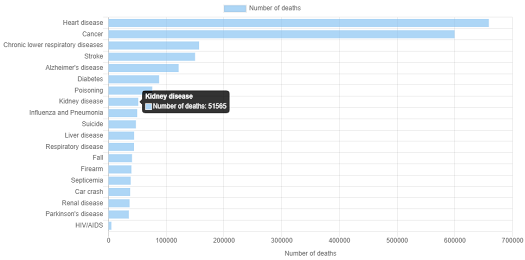
Graphs:

Deaths from all causes since 1999:


Deaths  from all causes in 2021:


Deaths from all causes in 2020:


Deaths from all causes in 2019:


2019 aggregate:


2020 aggregate:


2021 aggregate:


Friday, March 26, 2021

Shutting down the Suez Canal

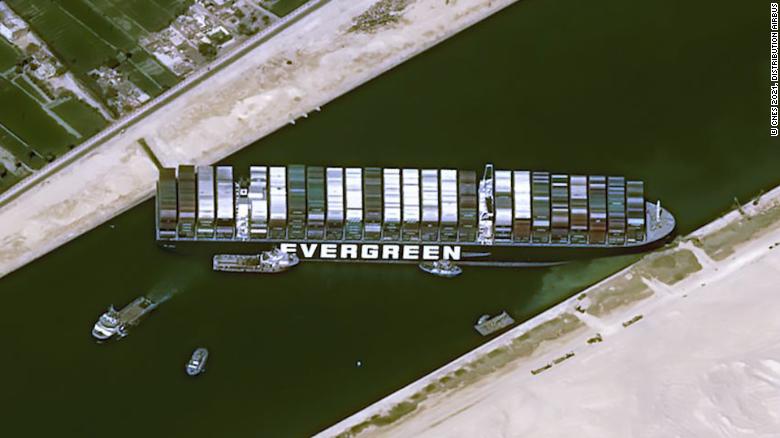
By now I assume everyone knows that the Suez Canal is closed because of the container ship Ever Given ran aground while transiting:
 
Yep, it is blocked all right!

(The ship is operated by by the Taiwanese shipping line Evergreen, but the vessel is owned by a Japanese company, Shoei Kisen.)  

But the canal's operations were slowed (though not stopped) 10 years ago because the service workers linked to the waterway went on strike. At the time, about 2.1 million barrels per day (MBD) of oil and oil products were trans-shipped through the Canal in both directions. There is also the Sumed pipeline, running from the Red Sea to the Mediterranean coast, that has a capacity of about the same (crude only, though) which can easily pump 1 MBD.

Market speculators say that the canal's closure will cause the spot price of crude oil to rise. That is very possible, and near-certain if the closure lasts more than the two weeks initially estimated. Suez-transit costs are far below costs of sailing all the way around Africa's Cape of Good Hope, but this is mainly because ships' fuel oil ("bunker oil") is priced so high right now.

In 2011, shippers said that bunker fuel oil prices would need to fall to $370 per tonne to make the Africa Cape route economically attractive. It was priced about $100 more. Today, EMEA (Europe, Middle East and Africa) fuel oil prices are ranging between $454-485


Adding to total costs of Suez transit is the added costs of sailing the piracy waters off Somalia, although these risk costs are much lower now than in years past. At present, cost about $10 million more per year for a single Very Large Crude Carrier (VLCC, the second-largest crude-oil tanker afloat) to sail around the Cape rather than the Canal. "Need for rethinking about when to sail around the Cape of Good Hope?" explains the implication of routing through the Canal compared to sailing around Africa. A summary:

1. "... a fully laden VLCC cannot go through the Suez Canal without a partial discharging of cargo to the Sumed Pipeline at Ain Sukhna Terminal in the Rea Sea before picking up an equivalent shipment at Sidi Kerir Terminal on the Mediterranean Coast." The reason for the stop is that the Canal has a maximum depth of 66 feet; VLCCs cannot transit the Canal fully laden. And the offload/onload stops costs money.

2. "One important issue that has changed the picture dramatically is the potential repercussions for ship owners of the executive order issued by US President Obama." The order is still in effect. It is called, "Executive Order Blocking Property of Certain Persons Contributing to the Conflict in Somalia." For shippers, the order lay additional compliance requirements before they can deal with pirates who capture a vessel and/or crew. For example,
... the shipping company whose vessel is captured off of the coast of Somalia, in addition to determining whether to negotiate with the pirates, will also have to determine whether any sanctioned pirates are involved anywhere in the chain of events. Out of an abundance of caution, one would expect that a U.S.-based shipping company would presume an SDN is involved and would work with his insurance company and its financial institution to obtain the necessary authorization from OFAC before dealing with the pirates. One also would expect that OFAC will institute expedited licensing procedures to reflect the danger and urgency of pirate hostage-taking situations. Where a non-U.S. shipper is a victim of piracy but a U.S. insurer, reinsurer or financial institution is involved, the compliance burden is likely to shift to those parties.
Passage into out out of the Suez Canal in the south unavoidably entails sailing through piracy waters. The executive order raises compliance costs of the risk, though in a rather fuzzy way. However, these costs are part of the total costs of Canal passage, which are also affected by:

3. Bunker fuel oil prices, as discussed, plus daily charter rates and ship values for container vessels in relation to totals shipping costs of Suez transit.  
What matters the most in the cost calculations?

For a liner company it is primarily a question of higher bunker expenses due to the large consumption of fuel oil for the very powerful engine, while a tanker company primarily is concerned with the added capacity costs even though the fuel consumption also plays a significant part.
4. Comparing costs of the Canal versus around Africa:
The costs incurred from going round the Cape is related to the extra fuel consumption but also to the extra capacity required and related insurance premium increase in order to lift the same quantum of cargo in the same amount of time. Conversely, the costs incurred in going through the Suez Canal consist of canal tolls, extra insurance risk premium and the use of services such as tugs, pilotage and mooring. 
Bunker fuel today is about the same price as 10 years ago. But freight markets are low because of the pandemic. This makes the Canal option much less costly than sailing around the Cape. If bunker fuel's price drops below $370 per tonne, the Cape route becomes more economical even though much longer. But no one is forecasting that. 

The bottom line is, well, the bottom line. Costs of Canal transit would have to increase very sharply to make the Cape route more economical for crude and container ships. For example, piracy insurance premiums would have to more than quadruple.

One month ago, before the Ever Given problem, container ship charter prices reached a 13-year high of more than $21,000 per day for a one-year term, reaching into the $30s for a three-year term. There was already a shortage of shipping containers driving costs up, and now the Ever Given's capacity of 20,000 twenty-foot equivalent units (TEUs) is stuck going nowhere. However, there are a large number of other container vessels sitting dead in the water in Suez approaches on both ends of the canal. They and their container capacities are off the market also. 

The depressed oil markets because of Covid drove down VLCC charters costs to about that of container ships. However, VLCCs are much more fuel efficient than container ships, so total daily costs from all sources have to be compared. Dry bulk vessels have an altogether different calculation since they are chartered for each voyage, so total revenue weighs more heavily than costs, per se.

Here is a handy Excel calculator of comparative costs of sailing the Cape or the Canal that informs just how complex and assumptive the decision can be - click here.

My assessment:

Oil spot market prices will rise not long from now (they are up today) because of the blockage. Even when the blockage occurred, oil prices fell, but that was because EU countries had just announced stricter pandemic-lockdown-type measures, depressing economic activity forecasts. 

For those who are adventurous enough, buying "long" oil ETFs such as USO may pay off. (I am not so buying, however.) 

Related:

-- a primer on the world's oil-transit choke points.


Bookmark and Share

Monday, May 11, 2020

The white privilege of the Covid-19 shutdown

This was posted on Facebook recently:


I am almost at a loss for words at how genuinely moronic this is, and how cruel it really is. Almost.

So let's talk about "privilege:" 

Who is it that is insistently calling for the lockdowns to continue no matter the costs in actual lives taken by the shutdowns themselves, estimated, says CBS News, to range from 75,000 to 150,000?

Who is it that dismisses well-reasoned and dispassionate calls to reopen the economy so that lives are not shattered, families no longer suffer deprivation, and the elderly are not abandoned?

Who is it that dismisses the documented forecasts that continuing the shutdowns will devastate rural medical facilities and quality of health care of rural Americans?

It is college-degreed white men and women who are financially secure, and who do not themselves think for a moment about how to pay for their next grocery trip or whether they will ever regain employment even approximating what they had before they were laid off.

It is college-degreed white men and women who think that the masses leave their homes merely to get haircuts or go shopping or - as one left-wing friend of mine posted on Facebook - to go bowling.

Minorities and lower-income Americans are being literally killed by the shutdown and their lives are being broken (NPR: "Why The Government Shutdown Has A Disproportionate Effect On African-Americans" and Center for American Progress, "The Impact of the Government Shutdown on People of Color").

But at least no one is turning a fire hose on them, so all is well! (But let us ignore for the meme's sake the political party of the men who turned the hoses on the marchers or loosed the dogs.)

So college-degreed, financially secure, upper-middle class and up white people simply, comfortably dismiss both the non-white and white unwashed, uneducated, poor deplorable-classes as mere untermenschen who have no idea how good they actually have it.

As for black Americans, what this meme really says to them is, "Shut up about how we have thrown you back into poverty and want. It is more important for us to feel safe! We are not attacking you with dogs any more, so what's your beef?"

Memes like this are frankly the most stunning examples of white privilege that I have seen in a long time. I will go further: to post this marks one as an actual white supremacist. 


Updates as they come in: 

'Our life is in danger': Unemployment hits 34% in Hawaii with no end in sight

Yep:

WSJ: Medical Lockdown Will Cause a Disease Surge -- Patients who are sick with conditions other than Covid-19 aren’t seeking screening and treatment.


Wednesday, April 22, 2020

For those who demand we trust the "experts" . . .

... how do you respond to these experts?

The New England Journal of Medicine, one of the most highly-regarded medical publications in the country, puts it plainly: the C19 medical regimes put in place weeks ago are killing non-Covid patients.
Although canceling procedures such as elective hernia repairs and knee replacements is relatively straightforward, for many interventions the line between urgent and nonurgent can be drawn only in retrospect. As Brian Kolski, director of the structural heart disease program at St. Joseph Hospital in Orange County, California, told me, “A lot of procedures deemed ‘elective’ are not necessarily elective.” Two patients in his practice whose transthoracic aortic valvular replacements were postponed, for example, died while waiting. “These patients can’t wait 2 months,” Kolski said. “Some of them can’t wait 2 weeks.” Rather than a broad moratorium on elective procedures, Kolski believes we need a more granular approach. “What has been the actual toll on some of these patients?” he asked.

Mr. R., a 75-year-old man with advanced heart failure, is another of Kolski’s patients for whom the toll has been great. Because he had progressive volume overload and delirium, Kolski referred him to a hospital for an LVAD workup in early March. Then, as his wife, Ms. R., told me, “the world went wonky, and everything went down the toilet.” Having begun admitting patients with coronavirus, the hospital told the couple it was kicking everyone else out. “They are telling me my husband has 6 to 12 months to live without this procedure,” Ms. R. said, “and now they are canceling it on us.” They were then quarantined at home — 2 hours away from the hospital — with no plan in place. Mr. R.’s health quickly deteriorated again, but his wife had been advised to keep him out of the hospital. When they finally had a video visit on April 9, he’d become so ill that the heart failure physician didn’t recognize him. Mr. R. was promptly admitted, and the LVAD was placed. Though Ms. R. is relieved, ongoing challenges include her husband’s persistent delirium, a visitor policy that allows her to be at the bedside only intermittently, and the need for nearby lodging that they can’t afford.
Thankfully, states are starting to wake up to the reality. Georgia, Tennessee, and even Colorado will transition out of strict regimes within the next week or so.

I have asked before (to receive no answer from anyone at all) so I will ask again: How many non-Covid-infected persons, especially children, are you personally willing to see die to keep the lockdowns in place? Give me an actual number and explain why preventing those persons' deaths is less desirable than preventing deaths from C19.

We need to heed what the NEJM says explicitly: these are "Trade-offs We Don’t Have to Make." The Economist knew in early April.
Covid-19 presents stark choices between life, death and the economy - The trade-offs required by the pandemic will get even harder

Imagine having two critically ill patients but just one ventilator. That is the choice which could confront hospital staff in New York, Paris and London in the coming weeks, just as it has in Lombardy and Madrid. Triage demands agonising decisions. Medics have to say who will be treated and who must go without: who might live and who will probably die
And that same kind of tradeoff has already cost the lives of non-Covid patients who were denied lifesaving procedures because of the possibility that the medical facility might have a sudden, large inflow of C19 patients.

I have to be frank: I simply dismiss anyone's view that pretends there is no such tradeoff.

Updates:

Stanford University's Hoover Institution Senior Fellow Scott Atlas, MD, former head of neuroradiology at Stanford University Medical Center, writing in The Hill, makes these points:
  • The overwhelming majority of people do not have any significant risk of dying from COVID-19.
  • Protecting older, at-risk people eliminates hospital overcrowding.
  • ital population immunity is prevented by total isolation policies, prolonging the problem.
  • [Non-Covid] People are dying because other medical care is not getting done due to hypothetical projections.
  • We have a clearly defined population at risk who can be protected with targeted measures.
"The recent Stanford University antibody study now estimates that the fatality rate if infected is likely 0.1 to 0.2 percent." [That is almost exactly the same as seasonal flu. Important you note that it is .01% of the people who actually get the virus, not of the whole US population!]
Critical health care for millions of Americans is being ignored and people are dying to accommodate “potential” COVID-19 patients and for fear of spreading the disease. Most states and many hospitals abruptly stopped “nonessential” procedures and surgery. That prevented diagnoses of life-threatening diseases, like cancer screening, biopsies of tumors now undiscovered and potentially deadly brain aneurysms. Treatments, including emergency care, for the most serious illnesses were also missed. Cancer patients deferred chemotherapy. An estimated 80 percent of brain surgery cases were skipped. Acute stroke and heart attack patients missed their only chances for treatment, some dying and many now facing permanent disability.
Also: "Pandemic 2020: Layoff-related deaths exceed covid-19 deaths by 41%"
According to data from the National Bureau of Economic Research and the Lancet, a medical journal, every one percent hike in unemployment will likely produce a 3.3 percent increase in drug-overdose deaths and a 0.99 percent increase in suicides.

For the year ending February 2019 (NCHS), 69,029 people died of drug overdoses, almost 7 out of 10 the result of opioids. Suicide, the tenth leading cause of death in the United States, accounted for 48,344 deaths (CDC), more than twice the number of homicides (19,510).

Lockdown-related deaths will likely exceed the base-case number of covid-19 deaths by 141%—and this offsets 60% of the highest estimate of 140,381 predicted by IMHE researchers.
NBC News: "Social distancing could have devastating effect on people with depression"
In our studies of suicide in my Master program at Vanderbilt University, we learned that while not everyone with clinical or deeper depression commits suicide, almost every person who commits suicide was suffering from depression.

Toronto Sun: "The secondary harms caused by the lockdown get worse every day"

Tens of thousands of people in the UK and Canada have already died because their own non-Covid medical conditions were not treated in order to save beds for C19 patients. Who did not materialize in near the numbers predicted. [Ontario Health Minister Christine] said last week that,
... a number of hospitals and medical associations are actually saying that they now want to proceed with these postponed and cancelled surgeries. It’s the government that’s holding them back.

“We want to make sure we’re not going to have increased pressures with COVID-19 cases before we can start opening up those surgeries,” Elliott said on Tuesday.

But that FAO report appears to have answered that question. They found that, as of April 23, there were 9,345 empty acute-care beds and 2,191 empty critical care beds across Ontario, which is Canada’s second hardest hit province.

We were originally told that the point of the lockdown was to guarantee we don’t overwhelm the health care system. We haven’t.

So what’s the hold up on safely re-opening the Canadian economy? The secondary harms are getting worse by the day.

Monday, April 20, 2020

Deliberately inflating the Covid count - why?

Consider this FB post, which I have personally verified (I deleted the person's name).

Now, why is that the rule? Having been a federal bureaucrat, I will say (in my view, authoritatively) that the reason is simple: money.

Understand that this listing decision was not originated by physicians or nurses, but by administrators. And the overwhelming desire of every bureaucratic administrator everywhere is this: Increase his/her department's budget.  Because bureaucrats get promoted by showing they can manage ever-larger budgets, not for managing programs or people.

Medical bureaucrats know very well that C19-related, enormous streams of money are already flowing from federal spigots and will continue to do so for months or even years to come. And the amount any operation or agency will get will relate very directly to the number of C19 cases they report, especially the fatalities.

If you think this sounds cynical, I assure you: It is far from cynical enough.

And the beat goes on:
The Big Apple’s new death toll is 10,367. That figures combines the 6,589 victims who tested positive for the virus plus another 3,778  who were never tested, but whose death certificates list the cause of death as “COVID-19 or an equivalent,” according to city Health Department data from March 11 through April 13.
Italics mine, to illuminate what is being done here. What exactly is an "equivalent" cause of death to C19? Why, something that killed them, duh. You know, like lung cancer.

I said on my FB page, "First, let’s kill the children."
 Serious question: How many people are we willing to kill to stop people from dying of Covid-19?  
More specifically: How many children are we willing to kill to do it? Read this and weep:
"Hundreds of thousands of children could die this year due to the global economic downturn sparked by the coronavirus pandemic and tens of millions more could fall into extreme poverty as a result of the crisis, the United Nations warned on Thursday. ...

But the U.N. report warned that “economic hardship experienced by families as a result of the global economic downturn could result in an hundreds of thousands of additional child deaths in 2020, reversing the last 2 to 3 years of progress in reducing infant mortality within a single year.”
The full report is here, including the shocking nugget that 368 million children across 143 countries rely on school lunches as a source of nutrition, and,
"Hastily implemented lockdown measures risk disrupting food supply chains and local food markets,” which “pose potentially grave consequences for food security.”
Do you remember when, "Let's do it for the children!" was a rallying cry? Yeah, me, neither.

However, the sanguinary calculus is real: If we do not do lockdown/distancing by shutting down the economy, people will die. And if we do lockdown/distancing by shutting down the economy, people will still die - and the UN says that "hundreds of thousands" of them will be children. But as Roger Kimball explains,
We have often been presented with a false dichotomy between saving the economy and saving lives. This is a false dichotomy because, as Geach points out, “the state of our economy is not just a monetary risk, it is a health risk.” For one thing, “when people lose their jobs, they typically lose their health insurance.” He notes that there were more than 10,000 “economic suicides” as a result of the 2008 recession. There is also a spike in cancer deaths, drug abuse, domestic violence, and other pathologies.
This is not a guess, it is fact:
Every 1% hike in the unemployment rate will likely produce a 3.3% increase in drug overdose deaths and a 0.99% increase in suicides according to data provided by the National Bureau of Economic Research and the medical journal Lancet. These are facts based on experience, not models. If unemployment hits 32%, some 77,000 Americans are likely to die from suicide and drug overdoses as a result of layoffs. Scientists call these fatalities deaths of despair.
There are protests around the country against long-continuing the restrictions from now. I frankly would be far more impressed with the protesters if they would leave their guns and flags at home and at least substantively acknowledge that the C19 threat is real.

But lockdown absolutists need to under stand this: More than 22 million Americans have become unemployed in the last month. The longer we are told to stay "safe at home" instead of going back to work, the less safe homes will become because of the despair and depressions that unavoidably will manifest. More people will kill themselves or a family member, more spouses and children will suffer abuse and injury, more alcoholics will be made, more people will suffer fatal non-Covid illnesses, more drug addicts will be made - that list goes on and on.

To be clear: 
I am not saying that the lockdown and distancing measures should not have been imposed. I am saying as clearly as I can that the time will come when continuing them will become more costly and lethal than lifting them. 

It is long past the time when we must stop having a false debate about the lockdown.
"At some point," [Princeton bioethicist] Peter Singer says, "we are willing to trade off loss of life against loss of quality of life. No government puts every dollar it spends into saving lives. And we can't really keep everything locked down until there won't be any more deaths.

We need to think about this in the context of the well-being of the community as a whole….We are currently impoverishing the economy, which means we are reducing our capacity in the long term to provide exactly those things that people are talking about that we need—better health care services, better social-security arrangements to make sure that people aren't in poverty. There are victims in the future, after the pandemic, who will bear these costs. The economic costs we incur now will spill over, in terms of loss of lives, loss of quality of life, and loss of well-being.

I think that we're losing sight of the extent to which that's already happening. And we need to really consider that tradeoff.
 The "false debate," in other words, is not the discussion that considers the enormous human cost of suppressing economic activity. It's the discussion that pretends there is no such tradeoff. 
If lockdowns are not substantially lifted much past the middle of May, I predict very large numbers of the American people will start concluding that the real point of these restrictions is not the health of Americans at all, but something politically sinister. And no podium appearances by Dr. Fauci or Dr. Birx is going to persuade them otherwise.

Monday, March 23, 2020

The coming crash and what it portends

If we continue on the present course, we will enter a depression that might make the 1930s a distant competitor. The number of jobless Americans could reach tens of millions.


WSJ: Rethinking the Coronavirus Shutdown:
Yet the costs of this national shutdown are growing by the hour, and we don’t mean federal spending. We mean a tsunami of economic destruction that will cause tens of millions to lose their jobs as commerce and production simply cease. Many large companies can withstand a few weeks without revenue but that isn’t true of millions of small and mid-sized firms. ...

The deadweight loss in production will be profound and take years to rebuild. In a normal recession the U.S. loses about 5% of national output over the course of a year or so. In this case we may lose that much, or twice as much, in a month.

Our friend Ed Hyman, the Wall Street economist, on Thursday adjusted his estimate for the second quarter to an annual rate loss in GDP of minus-20%. Treasury Secretary Steven Mnuchin’s assertion on Fox Business Thursday that the economy will power through all this is happy talk if this continues for much longer.
This is the first time ever that the US Government has deliberately shut the economy down, and the idea that it can just be turned back on like flipping a switch is delusional.

Consider: We will never be able to determine how many lives were saved from the virus. But we will easily know how many people died because of the economic crash to come - just count increased suicides and even some homicides, to say nothing of untold numbers of people thrown into permanent poverty.

The lockdowns and stay-at-home orders are saving lives now. But if they continue much longer, they will cost lives later and cause economic, literal suffering for years and years to come.

Also, The Atlantic, "Suicide and the Economy."
On April 12, 1937, the express train to New York roared across the New Jersey countryside. The train, a Pennsy Railroad electric locomotive the color of bull’s blood, usually passed through the station at Elizabeth at about 50 miles per hour. On this particular morning, it came to an unanticipated stop. As the express rounded the curve, my great-grandfather jumped down from the platform, where witnesses reported he had been pacing for 10 minutes, and lay down across the tracks.

When the engineer was finally able to halt the train 100 feet past the platform, Roy Humphrey had disappeared beneath its wheels. His last act: raising his head to look at the oncoming train.

Roy was one of at least 40,000 Americans who took their own lives that year and the next, the two-year span that suicide rate spiked to its highest recorded level ever: more than 150 per 1 million annually. 
Related: Why we cannot afford 99-cent gasoline.

Update:

"US unemployment could surge to 30% next quarter and GDP might plunge 50%, Fed's Bullard warns"

Also relevant: "The luxury of apocalypticism -- The elites want us to panic about Covid-19 – we must absolutely refuse to do so."

The point is, there is such a thing as doing too little and also such a thing as doing too much. Doing too little against Covid-19 would be perverse and nihilistic. Society ought to devote a huge amount of resources, even if they must be commandeered from the private sector, to the protection of human life. But doing too much, or acting under the pressure to act rather than under the aim of coherently fighting disease and protecting people’s livelihoods, is potentially destructive, too. People need jobs, security, meaning, connection. They need a sense of worth, a sense of social solidarity, a sense of belonging. To threaten those things as part of a performative ‘war’ against what ought to be treated as a health challenge rather than as an End Times event would be self-defeating and utterly antithetical to the broader aim of protecting our societies from this novel new threat. To decimate the stuff of human life in the name of saving human life is a questionable moral approach.
And why cheap gasoline is unaffordable.

Friday, March 20, 2020

Cheap gas, nowhere to drive, and the real pain it is causing

If you like the very low gasoline prices, even though we are not supposed to drive anywhere, get used to it. Oil's spot price may drop some more, yes (it plummeted today after Thursday's highest-rate increase ever in one day). But production is going to drop. Usually, that means gas prices rise. Not this time. And that is actually very bad news.

Cheap gas and nowhere to go. That's bad.
American oil frackers operate at a loss much below $60 per barrel (depending where they are located). The largest such operation, the Permian Basin, needs about $65 per barrel to make a profit. It straddles Texas and New Mexico.

The drop in oil price was triggered by Russia's refusal to cut production at the Saudis' request. So the Saudis jacked production up to drive the price down and punish the Russians. Well, good luck with that:
After oil prices collapsed in the worst drop in nearly three decades—courtesy of the renewed Saudi-Russia rivalry on the oil market – Russia’s Finance Ministry said on Monday that Moscow had enough resources to cover budget shortfalls amid oil prices at $25-30 a barrel for six to ten years.  
Not coincidentally, both the Saudis and the Russians would like to see America's frackers permanently closed and the United States to return to a major importer of oil, not net exporters as we are right now.

One way or another oil prices will rise - eventually. That seems a cloud but actually it is the silver lining. The cloud is cheap oil. Active-rig counts fell this week in the US by 160, year over year, to 722. On the other hand, US oil production remains near an all-time high at 13.1 million barrels per day. Go figure.

And next month may be even more dramatic.
Analysts say that the month of April could see the largest supply overhang in the history of the oil market.

“We now expect the y/y demand loss to peak in April at 10.4 million barrels per day (mb/d), and annual demand to fall by a record 3.39mb/d in 2020,” Standard Chartered wrote in a note.

In the short run, the oil market surplus could reach a peak of 13.7 mb/d in April, Standard Chartered said, with an average surplus of 12.9 mb/d for the second quarter. The inventory buildup could reach a gargantuan 2.1 billion barrels by the end of the year, “stretching the midstream of the industry to its limits,” the bank wrote. That figure represents an upward revision of 50 percent from the 1.4-billion-barrel inventory surplus the bank predicted…just a week ago.

Other analysts have even more dramatic scenarios. Eurasia Group says demand could fall by as much as 25 mb/d in the next few weeks and months. The historic glut means that the world could run out of storage space. “The combination of weakening demand and excess supply is hardly going to be accommodated by onshore storage,” Giovanni Serio, head of analysis at Vitol, told the FT. “At a certain point…we will need to fill all the boats.”
 So severe is the situation that for practically the first time in long memory, "Texas Weighs Curtailing Oil Production for First Time in Decades."

Texas regulators are considering curtailing oil production in America’s largest oil-producing state, something they haven’t done in decades, people familiar with the matter said.

Several oil executives have reached out to members of the Texas Railroad Commission, which regulates the industry, requesting relief following an oil-price crash, the people said. U.S. benchmark oil closed around $25 a barrel Thursday.

Texas, which hasn’t limited production since the 1970s, was a model for the Organization of the Petroleum Exporting Countries, which has sought to control world-wide oil prices in recent decades. OPEC and Russia were unable to reach a deal on reducing output in response to the coronavirus pandemic, which helped trigger the current collapse in prices.

It is unclear whether regulators will ultimately act to curtail production, but staffers are examining what would be required in such an event, the people said.
Oil prices have always been manipulated by producers. Even so, at the end of the day, demand has always been in control. And now the worldwide demand has dropped like an anvil and will continue to do so. The largest users of petro products - shipping and aviation - are harboring vessels and canceling flights. That will likely accelerate.

That said, oil production is going to plummet because, as stated above, we are running out of places to put it. That does not mean that gas prices will suddenly rise. The huge over-supply will see to that. But cheap gas prices are not going to offset the real pain dropping demand will cause: higher unemployment not only of oil-industry workers, but businesses whose revenues depend on customers using oil just to buy or get to their products or locations, such as hotels, tourist attractions, airline workers, dock workers, gas station owners and workers, the list is very long.

I am not an economist by a long shot, but unless we stop our "insane over-reaction," there is going to be a lot of pain to come that 99-cent gasoline will not pay for.

Update: How low can it go? "How Low Can Oil Go? One Forecast Sees $5 a Barrel." Which means that gasoline will be not much higher than free - and yet it will be also more difficult to find because gas stations will be closing at accelerated rates as oil prices plummet.

Sunday, March 15, 2020

Covid-19 is not the zombie apocalypse!

This is a zombie:


A zombie is actually dead, it is just too stupid to know it. And all it wants to do is find you, a non-zombie, and bite big chunks of flesh from your body. This turns you into a zombie, too.

Key point: Zombies are very bad! Avoid zombies, even if it means staying holed up in your house, never leaving, stocked with 500 rolls of toilet paper and all the hand sanitizer you can buy!

However, this is a Covid-19 sufferer:


Please note the difference. Covid-19 patients do not attack you. They do not eat your living tissue. They are not dead, like zombies are. The great majority of them recover and the ones who do not are too sick before death to track you down and infect you, even if they wanted to. Which they do not.

Key point: It's time to stop treating social distancing like prepping for a zombie apocalypse.  Even as Covid worsens in America - and it will - it will not cause the collapse of our civilization. Workers will still work, although many businesses and industries will take a hit. Farmers will still farm. Ninety percent of the toilet paper we use is made right here in the USA. Almost all the other 10 percent comes from Canada and Mexico.

Social distancing does not mean you can never leave your house. It does not mean that you will become infected by walking down the street. Even if you are at high-risk for the infection, it does not mean you must now stockpile 500 rolls of toilet paper and all the hand sanitizer you can get.

We are not going to run out of hand sanitizer or toilet paper. Or food. And even if you do not want to risk going to a (potentially) crowded store to buy more, someone else will go for you. Ask a family member, neighbor, friend. Ask a local church or synagogue for help.

There was never a reason for this to have occurred across the country:


In a week or so, those who did this are going to wonder why. And people who bought cases and cases of vegetables, two-dozen pounds of chicken or beef will wind up throwing a lot away, spoiled.

Buying as if there is going to be a shortage is a self-fulfilling prophecy. It is what creates the shortage.

So chill, Americans. Just chill. Take all the proper precautions against the virus. But nothing about this disease requires stockpiling. Face the future with confidence and planning, not panic. We simply are not at this point, not by a long shot:


Don't let us get there for no reason other than we act like it.

A world without nuclear weapons - what would it look like?

 From Pope Leo this week, according to the National Catholic Reporter : " Pope Leo quotes Bob Dylan song in book foreword calling for n...