Thursday, August 15, 2019

Ban on driving while using cell phone - just a cash cow?

Last July 1, a law went into effect here in Tennessee that makes it illegal for anyone driving a car to hold a cellular phone in his or her hand. Reports the Knoxville News Sentinel,
The Tennessee law banning hand-held cell phones went into effect July 1. Drivers can eat, drink, converse, sing, look at roadside sights, talk to their kids in the back seat, and it’s all perfectly legal. Pick up a cell phone, however, and you’re a distracted-driving lawbreaker. Law enforcement and first responders, however, are exempt from the safety measure that the legislature and governor determined is required for Tennessee drivers.
The Sentinel is not a fan of the law, mainly because such bans, in effect in some other states for many years, have not once been shown to affect the accident rate at all. They cite a number of such studies.

But it does roll cash into county and state coffers.
At $50 per ticket, the Tennessee Highway Patrol’s cell phone ban enforcement netted, it would appear, a minimum of $21,200 for the 424 tickets the THP wrote in July, Knox News reported. Tickets increase up to $200 depending on the situation.
And yet . . .

Yes, the ban here in Tennessee is really just another way to tax people. OTOH, the worst accident scene I ever got called by the sheriff's dept. to go work was directly caused by a young woman driving on a two-lane state highway in Franklin, Tenn. It was before smart phones were invented. She was trying to punch a number into her cell phone and wandered into the other lane. An oncoming 18-wheeler swerved to miss her, bounced back onto the road and went head on into a Chevy pickup behind the woman's car. 

The impact was so violent that it completely separated the truck's body from its frame, knocking the truck body 20 or more feet away from the frame assembly, which was solely occupied by the driver, married only three weeks, on his way home from work. He had been ripped into three separate pieces. The 18-wheeler's driver was injured.

The woman phone caller was wholly uninjured but when I spoke with her she was not very coherent. She was still holding the phone in her hand, up next to her head, though of course there was no call connected, and basically just walking in a small circle at the rear of her car.

A highway patrol trooper told me that in his 26 years in the THP, this was the most violent accident he had seen. After seeing the truck driver's remains, I could see why. Before the medical examiner's team went to retrieve the remains, I held a time of prayer and Holy Communion for them (I always took my Communion kit responding to sheriff's department calls).

So I cannot argue with Tennessee's law.

Wednesday, August 14, 2019

The latest plan to replace the UMC

It's called this:


The Indianapolis Plan envisions a Traditionalist United Methodist Church that would maintain the denomination’s current restrictions on same-sex weddings and ordination of “self-avowed practicing” gay clergy.
 
A separate Centrist/Progressive United Methodist Church would remove those restrictions, as well as church teaching that the practice of homosexuality is incompatible with Christian teaching.

The names in the plan are placeholders. Each denomination would decide what it would be called and could incorporate “United Methodist” into that name. 

The Indianapolis Plan also holds out the possibility of a third denomination, a Progressive United Methodist Church that would practice immediate full inclusion of LGBTQ persons.

Significantly, the plan avoids dissolution, suggesting that “legal continuation” and most general church agencies would remain with the Centrist/Progressive United Methodist Church. ...
 
The Indianapolis Plan’s basic provisions include:

  • Central conferences could align with either of the denominations or become autonomous affiliated denominations. Those that don’t decide would automatically be part of the Traditionalist United Methodist Church.
  • U.S. annual conferences would decide by majority vote which denomination to join. Those who don’t take a vote would by default be part of the Centrist/Progressive United Methodist Church.
  • Local churches disagreeing with their annual conference’s decision could decide by majority vote to align elsewhere, retaining their property, assets and liabilities.
  • Clergy would decide on a denomination to join, but by default would go with their annual conference’s decision. Bishops could also choose a denomination.
  • Each denomination would develop a new General Conference, as well as its own Book of Discipline, structures, polity and finances.
  • Wespath, the United Methodist Committee on Relief, United Methodist Women and the United Methodist Publishing House would be independent 501(c)3 organizations positioned to serve the two or three denominations.
  • All other agencies would be part of the Centrist/Progressive United Methodist Church.
  • The 2020 General Conference would provide funding for central conference ministries through the 2021-2024 quadrennium, and the separated denominations would share the costs.
  • A process would be devised for dividing current general church assets, including creation of an arbitration board.

Friday, August 9, 2019

Rule Number One: Don't be stupid

One would think that in the wake of the horrific mass murders in El Paso and Dayton, that people would understand that everyone's anxiety is elevated about copycat attackers. But apparently, not everyone thinks about that.

Case number one: Panic in Springfield Walmart as man walks around with tactical rifle wearing body armor in Missouri (CBS).
Springfield, Mo. – Police here say they arrested a man who went into a Walmart store Thursday with a rifle around his neck and wearing body armor and military-style clothes, prompting terrified shoppers to flee. Springfield police tweeted that "an armed individual" was confronted and arrested. No shots were fired.

CBS Springfield affiliate KOLR-TV says Lt. Mike Lucas told reporters police got a call about an active shooter at 4:09 p.m. and arrived within three minutes. According to Lucas, a 20 year old put on body armor in the parking lot, then walked inside with a tactical rifle around his neck and a handgun on his side. He had more than 100 rounds of ammunition, according to The Springfield News-Leader.
The manager pulled the fire alarm and people headed for the exits. Smart thinking. The gunman never pointed his rifle at anyone. He did take smart-phone video of the scene (police think he was Facebook live streaming) and then walked out of the store, where he was confronted by a legally-armed former firefighter, who held him at gunpoint until police arrived about three minutes later. Police have neither released the man's name nor established his motive. The police lieutenant at the scene told reporters, "He is lucky to be alive." And he is right. The armed former firefighter who held him at gunpoint police arrived showed remarkable restraint, IMO.

Here in Tennessee there is no such thing as a "concealed" carry permit. The law requires a permit to carry at all, whether concealed or "open carry," which the term of art for carrying a firearm unconcealed.

Not a long time ago I was in a Best Buy where I saw a man - not a staffer - wearing a full-size semiauto pistol on his right hip, not tucked inside his shorts. When he turned I saw he was wearing another one in the middle of his back. And then by gosh he was wearing a third one on his left hip. Fortunately, he was turning to head for the doors and he left the store.

This is not something mentally healthy men do, regardless of having a carry permit or what the Second Amendment says. It was legal, yes (assuming he had a permit, I sure did not inquire) but it was stupid. And there are times when stupidity brings on its own penalty, as the police lieutenant in Springfield implied.

Case Number 2Florida man who asked Walmart clerk about a gun to kill people was 'making political statement'

In Port St. Lucie - at another Walmart (what is it about dumbbells and Walmarts?) - a man identified as Phil Attey, an anti-gun activist, walked into a Walmart "and asked the clerk about a gun to kill people with."
"Can you sell me anything (or a gun) that would kill 200 people?" When the worker replied, "That isn't funny," Attey said, "I know," and asked again if they could sell him anything that would kill 200 people.
Police were called, but Attey had left the store by the time they arrived, so this APB was put out.


Attey was soon apprehended but not charged since he had not made actual threats and no one was harmed.
He admitted to WPTV the remark was in poor taste, but he was trying to make an anti-gun statement because he saw someone who looked like a white nationalist purchase a gun.
If you know what "someone who looked like a white nationalist" means, then you are ahead of me on that.

Case Number 3SunTrust Park worker allegedly threatened to ‘blow up’ stadium, ‘shoot everyone there. That's the Braves' stadium.
A man who worked at SunTrust Park is behind bars after getting into an argument with
Jamar Antonio Golfin, police photo
his boss and threatening to “blow up” the stadium and “shoot everyone there,” according to his arrest warrant.

Jamar Antonio Golfin, 30, has been in jail since Saturday on a felony charge of making terroristic threats or acts, Cobb County jail records show.

Golfin, a temporary employee assigned to clean a seating area of the stadium, got in trouble Friday morning for walking off during a break and was asked to leave the ballpark, according to his warrant.  ...

As he was walked out, Golfin ... allegedly threatened to “kill them all” and told his supervisor he “would come back and shoot everyone there,” his warrant said. Golfin also allegedly said he’d be back to “blow up the place.”
Golfin has been charged with "making terroristic threats or acts," according to reports.

You know, when people do or say stuff like this, it makes me believe the reports that the human race is literally getting stupider every year.

Thursday, August 1, 2019

What next for us?


There is said to be a Chinese curse that simply says, “May you live in interesting times.” Whether a curse or not, I’d say we are certainly living in interesting times!

I think most of you know that the United Methodist Church is facing an uncertain future as a denomination. The General Conference (GC) is the only body that makes denomination-wide policy. It is useful to recall that the UMC is a worldwide church with several million members outside the United States.

Since the GC of 1972, the UMC has been wrestling with what shall be the denomination-wide position regarding homosexuality. Presently, the UMC's position is that homosexuals, like all other peope, "are persons of sacred worth" and are invited to become part of the body of Christ through baptism, to celebrate Holy Communion, and to serve in the church as fully as everyone else, with two exceptions:
  • "Self-confessed, practicing homosexuals" may not be ordained as ministers of the UMC, and
  • No UM minister, whether ordained or licensed, may officiate a same-sex wedding anywhere, nor may such ceremonies be conducted on the grounds of UM churches, no matter who officiates. 
By the time of the 2016 GC, the durability and mounting intensity among progressives and traditionalists had reached the point where a special General Conference was set for February 2019. It was intended that this GC would provide the definitive position of the church, for no other business was to be brought before it.

Last February, the General Conference retained the existing position and strengthened it. Some provisions of what was passed were subsequently nullified by the UM Judicial Council. But the core parts were retained. See here.

Even so, the debate is far from finished. The GC regularly meets every four years and will convene again in May 2020. There is, as of now I think, a widespread belief among all sides of that issue that no compromise-outcome is really possible. I am reminded of Abraham Lincoln’s observation in his 1858 “House Divided” speech, that every solution to the slavery question had been attempted and failed and no more compromising was possible. The nation, he said, would eventually either legalize slavery in every state or in abolish slavery in every state. What it could not do any longer was maintain the status quo.

I think that is what progressives and traditionalists alike are concluding about the UMC’s position on homosexuality. Everything that can be tried has been tried, and the subject is still not settled within the denomination. The One Church Plan, endorsed by the Council of Bishops, was rejected last February and no one today is promoting it for next May.

If I could forecast now the GC will decide next May, I could make a fortune on the stock market. I know that many influential progressive and traditionalist Methodists across the country are in ongoing conversation. I am gratified not have seen or read of spite-filled language or personal attacks by either side.

But what about us?

I echo what Bishop McAlilly told the annual conference in June. I am pastor of all the people of the church and I will not be drawn into partisan positions. Of course, I have my beliefs about this issue, but as I told the annual conference, “I could be wrong” (an admission I wish everyone progressive or traditionalist would also make).

TNAC 2019 Bishop's Remarks from TNUMC on Vimeo.

"It's tough to make predictions, especially about the future." Even so, here are my predictions:

Our calling to be disciples of Jesus Christ will not change even though our denomination is going through “interesting times.” Jesus’ Great Commandment to go make disciples shall remain before us.

We shall face the future unafraid because
  • we are still united in our baptism even if not by certain beliefs on this (or other) topics,
  • we therefore will continue to worship together and move on to Christian perfection through deeds of devotion, charity, and justice.


These "interesting times" are temporary. Christ’s church is eternal!

Regardless of the future of the United Methodist Church, we remain united in our prayers, our presence, our gifts, our service, and our witness.

The Lord is with us! Let’s remain with the Lord -- and with one another!

Thursday, July 18, 2019

Doctor shortages and medical-school loan payoffs


The LA Times reports, "California doesn’t have enough doctors. To recruit them, the state is paying off medical school debt."
Federal, state and local governments have increasingly turned to loan forgiveness programs as the competition for doctors has become more aggressive nationwide. Two-thirds of physicians finishing their training said they’d been contacted more than 50 times by job recruiters, according to a 2019 survey by physician staffing firm Merritt Hawkins.

California will spend $340 million paying off doctors’ debts using Proposition 56 tobacco tax revenue. This month, the state offered its first awards — 40 dentists received $10.5 million in debt relief while 247 physicians received $58.6 million.

California’s program is aimed at increasing the number of doctors who see Medi-Cal patients in a state experiencing a shortage of healthcare providers. The number of physicians who accept Medi-Cal patients — and the low reimbursement rate that comes with them — hasn’t kept pace with the rapid expansion of the state’s healthcare program for the poor, which covers 1 in 3 residents in the state.
One of my son's medical degree was paid by the US Air Force. He owes them years of service for the payoff. He is presently an Air Force surgeon, and by the time his years of payback are done, he will have 13 years on active duty - more if he elects to pursue a medical fellowship certification.

The states' doctor shortage (California is not the only one) was fully predictable. I even predicted it 10 years ago in my essay, "Doctor shortages and health-care price controls." (I have to say, though, that I was far from the only voice saying this.)
However one might describe the economic system of American health care, "full free market" ain't it. Probably the best description of how we get medical care is that it is brokered to us: "Health care does not equal health insurance."

The costliness of health care rests largely on the fact that its provision became brokered long ago by insurance companies. We buy "coverage" from insurance companies instead of medical care from providers. The insurance company is intermediate between the consumer and the provider. Unlike say, stock brokerages, which have to compete with each other for consumers and so lower both costs and price, health insurance companies operate in monopolistic fashion. The competition between health-insurance companies is so low that there are no competitive pressures to reduce price, only internal costs. The result? Lower reimbursements to providers and higher premiums to consumers.

We have almost a doubling effect of price controls in play here. First, the government, command rations medical care by controlling the prices its insurance programs will pay, especially Medicaid but also Medicare. Then we have health-insurance companies effectively price controlling medical care because they often, if not usually, tell doctors that they won't pay more (or much more) than the Medicare rate. As Healthsymphony.com puts it, Medicare is such an important part of the health-care economy "because of the precedence set by its claims payment practices."

The inevitable result of price controls, no matter by what mechanism implemented, is shortage of the price-controlled good or service. That doesn't mean that the service is scarcer, that is, physically rarer. Medicaid's low payments schedules have not reduced the total number of doctors. It has produced a shortage of medical care available to patients by halving the number of doctors who will accept Medicaid payments.
We are in the mess we are in because we make two (at least) critical errors of understanding. The first is that health care is a resource that is simply available for those who need it, or that can be made mostly-equally available through proper legislation and regulation. The second error is that medical care and access to it can be rationed by command more equally, economically and fairly than by demand.

But health care is not a resource to be exploited. Medical facilities and doctors are not phenomena of nature, like water or petroleum are. Hospitals don’t just appear. They are produced. Medical care is not a resource that can be "mined" through more regulation to be more plentiful. Medical care is a contracted, individual service.

Hence, before we uncritically head-nod to the claim that health care is a human right, we might ponder what commentator Philip Niles observed: the real question is not whether health care is a human right, but "How much health care is a human right?" Good question, since health care is finite.

Medical care is always going to depend on these three things:

  1. Availability -- Can you see a doctor reasonably quickly and reasonably near?
  2. Quality -- Will you receive good, appropriate, and effective medical care?
  3. Price -- Can you afford to pay for it, either through insurance or through the massively-higher taxes that, for example, candidate Bernie Sanders said would have to be enacted?

Basically, pick two. Because no matter how medical care is structured, all three will not operating at the same time, and it may not even be two of the three.

Tuesday, July 16, 2019

The post-2020 UMC

"For now we see through a glass, darkly ... ." 
1 Corinthians 13.12

For those who have heard that two bishops of the UMC have proposed a plan to schism the denomination while trying to maintain some level of connectionalism, here are two good analyses. The plan is the product of Bishops Scott Jones and David Bard. It is proposed for next year's general conference to enacted (or not) by a simple majority vote. The plan envisions “two or three self-governing” denominations being birthed from United Methodism.

First the United Methodist News Service release is here.

Second, "Thoughts on the Bard-Jones Plan," by Chris O'Ritter. 

Third, "The Bard-Jones Plan: 'Cooperative Separation',” by David F. Watson.

Saturday, June 15, 2019

Speaking my language

Yesterday in his closing homily of the annual conference of the Tennessee Conference, Bishop Bill McAlilly urged the people of the conference to understand that while times for the UMC today are rocky, we should, "Take a breath and carry on" with the full ministries of the church.

I turned to my wife, Cathy, and said, "That is speaking my language" since I am a retired US Army officer. So that deserves a meme!


Or as we put it in my former career:


Tuesday, June 11, 2019

Electric cars pollute more than diesel

So says the University of Cologne as reported by The Brussels Times, Belgium: "Electric vehicles emit more CO2 than diesel ones, German study shows."

Electrics' killer? Life-cycle pollution, compared to diesel cars - what it takes industrially to obtain the raw materials and turn them into finished, operating vehicles, operate them during their life span, and dispose of them when the reach the end. And the core of the problem is batteries.
When CO2 emissions linked to the production of batteries and the German energy mix – in which coal still plays an important role – are taken into consideration, electric vehicles emit 11% to 28% more than their diesel counterparts, according to the study, presented on Wednesday at the Ifo Institute in Munich.

Mining and processing the lithium, cobalt and manganese used for batteries consume a great deal of energy. A Tesla Model 3 battery, for example, represents between 11 and 15 tonnes of CO2. Given a lifetime of 10 years and an annual travel distance of 15,000 kilometres, this translates into 73 to 98 grams of CO2 per kilometre, scientists Christoph Buchal, Hans-Dieter Karl and Hans-Werner Sinn noted in their study.

The CO2 given off to produce the electricity that powers such vehicles also needs to be factored in, they say.

When all these factors are considered, each Tesla emits 156 to 180 grams of CO2 per kilometre, which is more than a comparable diesel vehicle produced by the German company Mercedes, for example.

The German researchers, therefore, take issue with the fact that European officials view electric vehicles as zero-emission ones. They note further that the EU target of 59 grams of CO2 per km by 2030 corresponds to a “technically unrealistic” consumption of 2.2 litres of diesel or 2.6 litres of gas per 100 kms.

These new limits pressure German and other European car manufacturers into switching massively to electric vehicles whereas, the researchers feel, it would have been preferable to opt for methane engines, “whose emissions are one-third less than those of diesel motors.”
ZeroHedge explains:
A battery pack for a Tesla Model 3 pollutes the climate with 11 to 15 tonnes of CO2. Each battery pack has a lifespan of approximately ten years and total mileage of 94,000, would mean 73 to 98 grams of CO2 per kilometer (116 to 156 grams of CO2 per mile), Buchal said. Add to this the CO2 emissions of the electricity from powerplants that power such vehicles, and the actual Tesla emissions could be between 156 to 180 grams of CO2 per kilometer (249 and 289 grams of CO2 per mile).
An electric car such as a Tesla is not powered by electricity. It is powered by coal; the electricity is just a means of transfer.


The same problem, btw, exists in the nearly-mythical hydrogen-powered car. The hydrogen has to come from somewhere. Atoms of H It do not exist in nature unbound to other elements. And you always use more energy to obtain free hydrogen than you get from oxidizing it. Guess where that energy comes from?

Here is a good video that explains hydrogen's potential advantages but very present difficulties very well.


And then there's this:
 
GAO: "Biofuels Don't Lower Gas Price or Emissions" But biofuels give so much political mileage that this report will disappear without a sound.

Friday, June 7, 2019

Slavery and abortion - what's the diff?


What's the difference in the arguments offered today supporting abortion and the arguments used to support slavery until 1861?

None really: "Arguments for Abortion Mimic the Arguments for Slavery Before the Civil War."
Both the arguments for slavery in the 1800s and the arguments for abortion rely on a central claim: that a human being is less than human. The dehumanization of black people relied on pseudoscientific claims that they were inferior. The dehumanization of unborn babies relies on claims that they are "just a clump of cells" or part of a woman's body. In both cases, a growing movement of moral clarity demands that the dehumanized be granted a fundamental right long denied them: freedom and life. (Note: I am not saying abortion and slavery are the same, only that the arguments for them are similar.)
Read the whole thing.


In his debates with Stephen Douglas, Abraham Lincoln said, "If slavery is not wrong, then nothing is wrong." Slavery was the brutal exploitation of one class of human beings by another. Abortion is the actual destruction of one class of human beings by another. But that's different, we are told, because abortion is medical care.

God save us.

Update My colleague, Rev. Allan Bevere, links to a column by Frederica Mathewes-Green, whom he accurately says,
... is one of the best moral theologians alive today. She is substantive and nuanced in her arguments and is not carried away by the temptation to offer theology and ethics in quaint clichés and social media memes, which is sadly so prevalent today.

This is a must-read.
Here: "When Abortion Suddenly Stopped Making Sense"

Bookmark and Share

Monday, June 3, 2019

Surprise! Parents are the key influence on children

From the United Methodist Church News Service, "The secret to faith after high school? Parents!"
Parents’ faith is key 
The National Study on Youth and Religion found a factor that is “nearly deterministic” in turning this around. Eight out of ten (82%) young adults ages 24-29 who were still participating in their faith after being active in high school, had one thing in common.

The secret? Their parents.

Youth leaders agree. “Parents are the critical discipler, period,” said Seth Martin, former Lead Student Pastor and now Lead Director of The Road at Faithbridge United Methodist Church in Spring, Texas. “Student ministries aren't (or shouldn't be, rather) the primary spiritual mentors of students, but should instead subsidize the discipleship already taking place in the home.”
Read the whole thing.

And this, from Harvard University: "Kids Raised Going to Church Are Happier Adults, Study Finds"

But don't be these parents: "After 12 Years Of Quarterly Church Attendance, Parents Shocked By Daughter's Lack Of Faith"

Sunday, May 26, 2019

Why it's not about us

Why Memorial Day is not about us living veterans.


___________


Bookmark and Share

Wednesday, May 8, 2019

School shootings and social margins

We know about the shootings yesterday in Colorado:
Authorities have identified one of the two suspects in a shooting Tuesday at a public charter school in Colorado just eight miles from Columbine High School.

Devon Erickson, 18, has been held in the attack at STEM School Highlands Ranch in which seven students were injured and one killed, reported 9News, the Denver NBC news outlet.
The Wall Street Journal reports that the second suspect has been identified and is a juvenile girl, which crosses a threshold of feminine equality that we never would have wanted. I wrote most of what follows a year ago, just after a school shooting in Texas, but I hardly need to change a word.

It is chilling to think that what used to be outside the margins regarding guns and schools is now becoming normalized: "The Best Explanation for Our Spate of Mass Shootings Is the Least Comforting."
Writing in 2015, Malcolm Gladwell wrote what I think is still the best explanation for modern American mass shootings, and it’s easily the least comforting. At the risk of oversimplifying a complex argument, essentially he argues that each mass shooting lowers the threshold for the next. He argues, we are in the midst of a slow-motion “riot” of mass shootings, with the Columbine shooting in many ways the key triggering event. Relying on the work of Stanford sociologist Mark Granovetter, Gladwell notes that it’s a mistake to look at each incident independently:
But Granovetter thought it was a mistake to focus on the decision-making processes of each rioter in isolation. In his view, a riot was not a collection of individuals, each of whom arrived independently at the decision to break windows. A riot was a social process, in which people did things in reaction to and in combination with those around them. Social processes are driven by our thresholds—which he defined as the number of people who need to be doing some activity before we agree to join them. In the elegant theoretical model Granovetter proposed, riots were started by people with a threshold of zero—instigators willing to throw a rock through a window at the slightest provocation. Then comes the person who will throw a rock if someone else goes first. He has a threshold of one. Next in is the person with the threshold of two. His qualms are overcome when he sees the instigator and the instigator’s accomplice. Next to him is someone with a threshold of three, who would never break windows and loot stores unless there were three people right in front of him who were already doing that—and so on up to the hundredth person, a righteous upstanding citizen who nonetheless could set his beliefs aside and grab a camera from the broken window of the electronics store if everyone around him was grabbing cameras from the electronics store.
It works like this:


This "infectious" behavior is well known and described by people who study and teach leadership. Here are two real problems: First is what Granovetter describes: once there are enough early adopters of a behavior, then mass adoption easily follows. Hence, Gladwell describes school shootings as a "slow motion riot." But portents are that it won't stay slow.

Second is what is revealed by retired Army officer and psychologist Dave Grossman, who documents in Assassination Generation: Video Games, Aggression, and the Psychology of Killing and other works that more and more boys are growing up learning to kill vicariously through both popular media and electronic gaming - and that for increasing numbers the vicarious violence will give way to actual.

In one of his early works, On Killing, Grossman documented the great difficulty the US Army had in World War II in training its soldiers, especially infantrymen, actually to take the enemy's life. The leadership found that American men came into the military with deeply-inbred reluctance to harm other human beings, and that only a small minority of infantry even fired their rifles once in a firefight.

Grossman's thesis in what is happening to America today is that we have, as a whole society, widened the boundaries of what constitutes prohibited violence. Prior generations had mass murderers, of course, but even the most depraved killers in the not-too-distant past would never have even thought of shooting schoolchildren at their desks. Now it is, as Gladwell notes, becoming increasingly within the boundaries of conduct that society has moved.

In the coming days the editorialists and TV commentators will have a lot more to say. I do not expect their offerings to be much different from what they said after the Parkland, or Aurora, or Sandy Hook massacres or ... well, pick one. The media’s talking heads will recycle the same things they said before. We’ll hear a lot about America’s gun culture, and all the talk will be about guns and not about the culture.

Does America have a "gun culture?" You bet it does, and it this is it:

This movie was to open in Newtown, Conn., on Dec. 14, 2012, the
day of the killing rampage in Sandy Hook Elementary School.
Warner Bros. pulled the opening

The Hollywood gun culture:

Business Insider reprints part of an AskMen piece on
"
The 99 Most Desirable Women Of The Year."
Here is no. 99, 
Bérénice Marlohe, who plays Severine in Skyfall.
Glorifying violence, especially gun violence, is the present purpose of America's entertainment industry. This is what untold numbers of our children are doing in their homes:


The margins continue to be moved, whether we want it or not. Because there is too much money being made by murder-as-entertainment to give it up, and we the people are willingly paying for it.

One of the ways that the Columbine shooting remains key is in how subsequent school chooters have imitated it to some degree. Not every shooter, but enough to see that Columbine still forms a template. For example,
Some aspects of Friday's [Texas] shooting had echoes of the massacre at Columbine High School in 1999. The two teenaged killers in that incident wore trench coats, used shotguns and planted improvised explosives, killing 10 before committing suicide themselves.
As did the accused killer in Texas, except for the suicide. Reports say, though, that he told police he intended to commit suicide but found he could not go through with it.

As for this week's shootings? The WSJ article linked above concludes,
George Brauchler, the district attorney for the area, noted at the Wednesday morning news conference the number of mass shootings that the Denver region had endured over the years.

“If you had suggested to anyone behind me that within 20 years and 20 miles, we would have dealt with Columbine, the Aurora theater, Arapahoe High School,” he said, rattling off Colorado mass shootings, flanked by officials. “We would have thought you were mad.”

Steve Holley recalled being at his son’s school to pick him up just as the school was put on high alert because of the scare involving the woman obsessed with Columbine.

“It was just like, ‘Here we go again,’ ” Mr. Holley said of Tuesday’s shooting. “I remarked to one of the other parents we were waiting in the gym with: ‘This is the new norm.’ ”
"The new norm" - the slow-motion riot is not happening slowly any more.

Tuesday, April 30, 2019

State and other persecution of religious people

In last Sunday's lectionary passage from the book of Acts, the apostles are arrested for preaching that Christ is risen. They are questioned before the Jewish priestly Sanhedrin. The high priest reminds them that they had been ordered to stop such preaching.

Peter, speaking for all the apostles, responds, "We must obey God rather than any human authority." Acts records that had not a Sanhedrin member named Gamaliel argued otherwise, the apostles would have been executed that day.

Fast forward to today, and understand that there are still human authorities who will not countenance any resistance to their authority. China, for example, this month:


This was the destruction of one of the largest church buildings in the country. The Guardian reports,
Witnesses and overseas activists said the paramilitary People's Armed Police used dynamite and excavators to destroy the Golden Lampstand Church, which has a congregation of more than 50,000, in the city of Linfen in Shanxi province.

ChinaAid, a US-based Christian advocacy group, said local authorities planted explosives in an underground worship hall to demolish the building following, constructed with nearly $2.6m (£1.9m) in contributions from local worshippers in one of China's poorest regions.

The church had faced "repeated persecution" by the Chinese government, said ChinaAid. Hundreds of police and hired thugs smashed the building and seized Bibles in an earlier crackdown in 2009 that ended with the arrest of church leaders.

Those church leaders were given prison sentences of up to seven years for charges of illegally occupying farmland and disturbing traffic order, according to state media. 
And it is not just Christians. Muslims who have lived in China for centuries have suffered even worse: "Before-and-after photos show how China is destroying historical sites to monitor and intimidate its Muslim minority."
China is waging an unprecedented crackdown on a Muslim minority called the Uighurs, who live in the country's western frontier region, Xinjiang.

Muslims have for centuries settled in the region, sometimes referred to as East Turkestan.
As part of its crackdown, which has seen the installation of facial-recognition cameras and seemingly arbitrary detentions, China's government has also destroyed traditional Uighur architecture including mosques and large parts of an ancient city called Kashgar.

Before-and-after images show the extent of some of the destruction of these historical locations.

When the state is the religion, it will always crush or suborn all others. Could never happen here, though, right? Oh, the ground is being tilled already. I give you Harvard University, April 25, 2019, and the keynote speaker of the Faculty of Arts and Sciences "Diversity Conference."
We are pleased to announce that our keynote speaker will be Tim Wise, prominent anti-racism writer, educator, and activist. A moderated discussion with Tim will be led by Renee Graham, an associate editor and columnist at the Boston Globe.
This is the same Tim Wise who posted on his Facebook page in 2015:


This is America…people basing their beliefs on the fable of Noah and Ark, or their interpretation of Sodom and Gomorrah…rather than science or logic…If you are basing your morality on a fairy tale written thousands of years ago, you deserve to be locked up…detained for your utter inability to deal with reality…NO, we are not obligated to indulge your irrationality in the name of your religious freedom…but we will provide you a very comfortable room, against which walls you may hurl yourself hourly if your choose. Knock yourself out….seriously, knock yourself out, completely, for weeks at a time…I’m sorta kidding but not by much…I don’t believe lunatics like this should be locked up, but I do think they have to be politically destroyed, utterly rendered helpless to the cause of pluralism and democracy …the world is not theirs. They have no right to impose their bullshit on others. They can either change, or shut the hell up, or practice their special brand of crazy in their homes…or go away. Their choice. And this argument applies to any fundamentalist religionist of any faith who thinks they have a right to impose their beliefs on a secular, pluralistic society. Go away.
That is not only no problem for Harvard, it is positively commendable. However, persecution of Jews in America (though thankfully, not by the government) is growing. Not only the violent kind, such as the anti-Trump, anti-Jew gunman, John Earnest, who killed one and shot two others in the Chabad of Poway synagogue in Poway, California. Take for example, this cartoon published by The New York Times in its overseas pages this month:


Yes, that infamous propaganda rag of the alt-right, The  New York Times - oh, wait, you say, the NYT is not alt-right? Really? How can you tell?

No wonder that this week Serge Klarsfeld, France's most famous Nazi hunter, said, "There is no safe place on earth right now for Jews." In Washington to receive the Elie Wiesel Prize, the highest award given out by the United States Holocaust Museum, Klarsfeld told reporters,
... the cartoon was "insulting," for Trump as much as for Netanyahu who was "treated like a dog."

"It is an anti-Semitic cartoon, that is to say that Jews are guiding the world and that corresponds to a stereotype very common among the far right, which one also finds on the far left," he said.

Klarsfeld, who spent decades working to commemorate the victims of the Holocaust, is worried about the future of Europe and called on centrists to mobilize ahead of the next European elections.
 "Never has a far-right or far-left regime made its people happy and prosperous, inevitably the extremes of power lead to misery and barbed wire."
In rhetoric, the far left and the far right differ only in whom they identify as class enemies. Religiously, the alt-right hates Muslims. The alt-left hates Christians. And they both hate Jews even more. So in practice, there is no distinction with a difference.

Sunday, April 28, 2019

What the Judicial Council's rulings mean

An excellent, non-partisan summary by the rev. Katie Dawson, pastor at Immanuel United Methodist Church, which I have simply pasted below.

SUMMARY OF 2019 GENERAL CONFERENCE DECISIONS – MODIFIED AFTER JUDICIAL COUNCIL RULING

Decisions of the 2019 General Conference
Timeline for Implementation in Central Conferences
  • In general, when legislation before a GC is approved, it goes into effect on January 1 of the following year.
  • Central Conferences (outside the U.S.) have additional time because they are allowed to adapt and change the Book of Discipline to fit their context. These groups will not be meeting until after the 2020 General Conference.  This legislation gives them until May of 2021 to implement any of the legislation we approved at this special session.
 WESPATH Pension Liabilities and CRSP amendment.
  • These two pieces of legislation give guidance for if a local church leaves the UMC or if a clergy person terminates their conference relationship regarding pensions. The local church that leaves has to pay their share of unfunded pension liabilities.
  • An amendment was made that also notes that nothing in this legislation prevents the Annual Conference from collecting other obligations.
  • Clergy that terminate their relationship will have their pension benefits converted to the actuarial equivalent balance, which can continue to be invested in their personal defined contribution account through Wespath.
Traditional Plan
  • The eight petitions that will be implemented as of January 1, 2020 are:
    • 90032 #1 Update of the footnote that describes what a “self-avowed practicing homosexual” is according to recent Judicial Council decisions. This does not essentially change our Book of Discipline, rather notes current rulings.
    • 90036 #5 Expands episcopal responsibilities by adding that Bishops are prohibited from consecrating, commissioning, or ordaining people who are self-avowed homosexuals. (NOTE: Everywhere else in our Book of Discipline we use the word “practicing.”  This word was inadvertently left off of this piece of legislation, but it was never amended by the body.  This means that if someone is openly gay or lesbian, even if they are celibate, they cannot be consecrated/commissioned/ordained.)
    • 90042 #11 Mandatory Minimum Penalties for clergy who have been convicted of conducting same-sex weddings or celebrations of homosexual unions: First offense – one year suspension without pay. Second offense – termination of conference membership and revocation of credentials.  (Note: this is the ONLY mandatory penalty we have in the Book of Discipline)
    • 90043 #12 The District Committee on Ordained Ministry and Board of Ordained Ministry cannot approve/recommend for candidacy, licensing, commissioning or ordination, someone who does not meet the qualifications for ordained ministry (which include being a self-avowed practicing homosexual). The bishop shall rule unqualified candidates out of order.
    • 90044 #13 When a complaint/charge is brought to the Bishop regarding a violation, the Bishop has discretion about how to proceed. Now, the Bishop cannot dismiss the complaint, unless it has no basis in law or fact.
    • 90045 #14 One of the results of a complaint/charge is a Just Resolution. Now, Just Resolutions have to name all identified harms and how they will be addressed. The unconstitutional part is that it has to also include a commitment not to repeat the violation.  This line is removed and the rest remains.  
    • 90046 #15 One of the results of a complaint/charge is a Just Resolution. This changes the process so that the complainant has to be part of the process and has to agree with the resolution.
    • 90047 #16 One of the results of a complaint/charge is a church trial. Previously, the Church could not appeal those decisions.  This legislation allows the Church to appeal to the committee on appeals or to the Judicial Council.
Disaffiliation – Taylor/Minority Report Version
  • If a local church wants to disaffiliate over matters of human sexuality this is the process that can be used from Feb 27, 2019– Dec 31, 2023. It requires a 2/3 majority vote of professing members present at the charge conference.  Terms will be negotiated with conference Board of Trustees w/ advice of cabinet, and other conference officers. Standard terms will include: being able to leave with property with the exiting church paying for legal/transfer fees, any unpaid apportionments from the previous 12 months plus an additional 12 months of apportionments, its share of unfunded pension liabilities, and payment or assumption of all debts/loans/liabilities prior to departure.  The annual conference has to approve such an exit by a simple majority.

Thursday, April 25, 2019

Gendercide and the problem of millions of extra young men


Science Alert:
A deep-rooted preference for sons over daughters has skewed the world's sex ratios more than we thought.

A massive five-year analysis has found that since 1970, sex-selective abortions in a dozen countries have resulted in 23 million 'missing' girls.

These are women that were never born, and yet today, their absence is palpable, especially in eastern Europe and Asia. In China alone, the study found there were 11.9 million missing females, and India had 10.6 million.
Males are normally born at a rate of 105 males birth for every 100 female births. It evens out over the next 20 years or so because males die at a higher rate before maturity than females. But now females die in the womb at a much higher rate than males.
After years of a controversial single-child policy, China was unsurprisingly at the top. At one point in 2005, the authors found that the most populated country in the world actually had a male birth ratio of 118.
So what do you do with tens of millions of young, virile and frankly horny young men who have zero chance of getting married because there are zero women available to marry them? Maybe more importantly, what do those men do? The question practically answers itself.
Today, in China and India, men outnumber women by 70 million, and it's causing an epidemic of loneliness, a distortion of labour markets, and an increase in female trafficking and prostitution.

Not only that, but those nations will lose one of the natural restraints of going to war that inhibited prior generations, though of course not always successfully: the fear of massive casualties. China could invade Taiwan and if it lost three million men conquering the country, so what? It still has 30 or 40 million more that can die invading somewhere else.

More insight is provided by the US National Library of Medicine of the National Institutes of Health in, "Abnormal sex ratios in human populations: Causes and consequences."
In parts of China and India, there will be a 12–15% excess of young men. These men will remain single and will be unable to have families, in societies where marriage is regarded as virtually universal and social status and acceptance depend, in large part, on being married and creating a new family (45).

An additional problem is that many of these men are rural peasants of low socioeconomic class and with limited education (46). When there is a shortage of women in the marriage market, the women can “marry up,” inevitably leaving the least desirable men with no marriage prospects (47). For example, in China 94% of all unmarried people age 28–49 are male and 97% of them have not completed high school (48). So, in many communities today there are growing numbers of young men in the lower echelons of society who are marginalized because of lack of family prospects and who have little outlet for sexual energy. A number of commentators predict that this situation will lead to increased levels of antisocial behavior and violence and will ultimately present a threat to the stability and security of society (31, 45–49).

There is some empirical evidence to fear such a scenario. Gender is a well-established individual-level correlate of crime, and especially violent crime (50). It is a consistent finding across cultures that an overwhelming percentage of violent crime is perpetrated by young, unmarried, low-status males (50–52). In India, a study carried out between 1980 and 1982 showed a strong correlation between homicide rates in individual states across the country and the sex ratio in those states, after controlling for potential confounders such as urbanization and poverty (53). The authors concluded that there was a clear link between sex ratio and violence as a whole, not just violence against women as might be assumed when there is a shortage of females. These analyses were repeated by Hudson and Den Boer (46), who showed that the relationship between sex ratio and murder rates at the level of the Indian state persisted through the late 1990s. In China, young male migrant workers are thought to be responsible for a disproportionate amount of urban crime, especially violent crime. It is reported that migrants account for 50% of all criminal cases in the major receiving cities for migrants, with some cities reporting up to 80% (54).

There is also evidence that, when single young men congregate, the potential for more organized aggression is likely to increase substantially (45, 53). Hudson and Den Boer, in their provocative writings on this subject (45, 46), go further, predicting that these men are likely to be attracted to military or military-type organizations, with the potential to be a trigger for large-scale domestic and international violence. With 40% of the world's population living in China and India, the authors argue that the sex imbalance could impact regional and global security, especially because the surrounding countries of Pakistan, Taiwan, Nepal, and Bangladesh also have high sex ratios.
It will get worse until 2050, when the number of "missing girls" will peak at present trend lines.

What about the United States? Wikipedia:
While the majority of parents in United States do not practice sex-selective abortion, there is certainly a trend toward male preference. According to a 2011 Gallup poll, if they were only allowed to have one child, 40% of respondents said they would prefer a boy, while only 28% preferred a girl.[107] When told about prenatal sex selection techniques such as sperm sorting and in vitro fertilization embryo selection, 40% of Americans surveyed thought that picking embryos by sex was an acceptable manifestation of reproductive rights.[108] These selecting techniques are available at about half of American fertility clinics, as of 2006.[109]
But I guess that's okay because abortion on demand is a woman's sacred right. Kidnapping young girls and women into sex-trafficking rings for unmarriageable men? That's a crime. That it occurs at increased numbers because of abortion does not matter - because abortion? That's medical care.

Bookmark and Share

Wednesday, April 24, 2019

A Muslim wants to know


Muslim writer Dr Rakib Ehsan:
Following the mosque massacres in Christchurch, political figures across the Western world did not hesitate in accurately describing what they were – white-supremacist terrorist attacks on Muslims in their places of worship during Friday prayers.

In the aftermath of Christchurch, Hillary Clinton expressed her solidarity with the global Muslim community – the Ummah – and said ‘we must continue to fight the perpetuation and normalisation of Islamophobia and racism in all its forms’. Former US president Barack Obama tweeted that himself and his wife Michelle were grieving with the people of New Zealand and the ‘Muslim community’. Our own prime minister, Theresa May, correctly labelled Christchurch as a ‘horrifying terrorist attack’.

Now, contrast this with the language used by the same three figures following the coordinated series of Islamist-inspired terrorist attacks in Sri Lanka. Affectionate expressions of solidarity with persecuted Christian communities have been missing. The Christians killed in their own churches have been referred to by Clinton and Obama as ‘Easter worshippers’. Despite the clearly sophisticated, well-planned nature of the terrorist attacks, which very much had the aim of killing a large number of Christians, the British PM – a vicar’s daughter – referred to them as ‘acts of violence’.

The differences in tone and nature between the condemnations of the Christchurch and Sri Lanka terrorist attacks are striking. After Christchurch, there was no hesitation about stating the religious backgrounds of the victims and directing emotion and affection towards Muslim communities. Politicians took no issue with categorising the events in Christchurch as terrorism.

In contrast, the words ‘terrorism’ and ‘Christianity’, along with their associated terms, have so far failed to feature in much of the reaction to the attacks in Sri Lanka. ...
The fact is that the persecution and victimisation of Christians continues to take place in many parts of the world, often at the hands of Islamists.
Would that we had such clarity from our own religious and political leaders.

Saturday, April 20, 2019

As Jesus lay lifeless

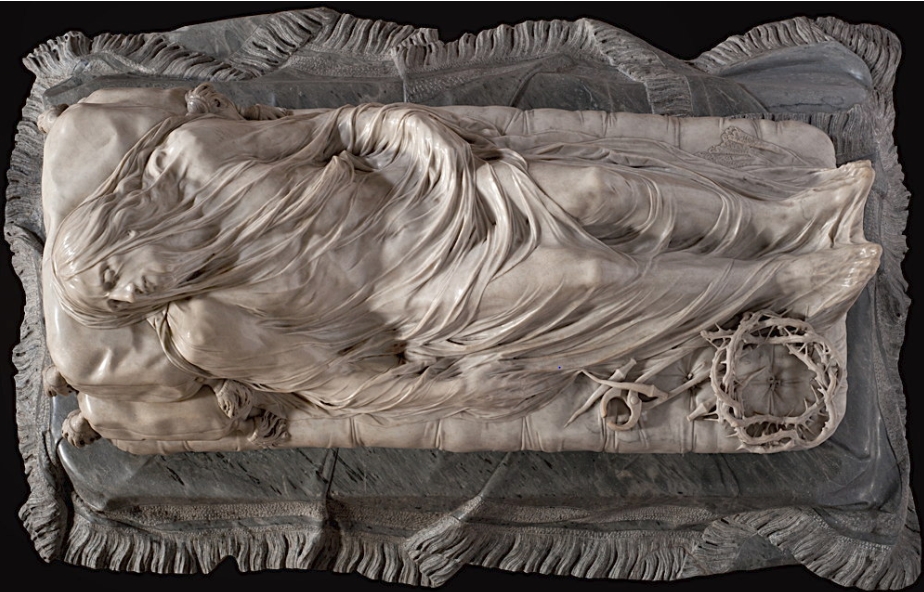
“Lord Jesus Christ, Son of the living God, who as on this day rested in the sepulchre, and thereby sanctified the grave to be a bed of hope to Your people: Make us so to abound in sorrow for our sins, which were the cause of Your passion, that when our bodies rest in the dust, our souls may live with You; who lives and reigns with the Father and the Holy Spirit, one God, world without end.” – Titusonenine

Friday, April 19, 2019

Execution Day - The Case Against Christ

"The Three Crosses," by Rembrandt

Sometime on the Friday after Passover, almost 2,000 years ago, Roman soldiers, acting on orders of Pontius Pilate, prefect of Judea, took Jesus of Nazareth to a low hill outside Jerusalem and crucified him to death. As crucifixion deaths went, Jesus' death came pretty quickly, within a few hours. It was not unusual for victims to linger on the cross for days.

There were two criminals also crucified alongside Jesus. Because it was Passover week, emotions ran high among the Jews who had made pilgrimage to Jerusalem for the holy observances. There were many thousands of pilgrims there, some historians say more than 100,000. At sunset on Fridays the Jewish Sabbath began, and even hardened Roman soldiers were uneasy about the execution of these men continuing when the Sabbath began during this particular week. So they decided to break the victims' legs in order to make quick their suffocation to death. Crucifixion is, after all, a form of hanging, killing by suffocation. With their legs broken, the victims could not push up to take a breath and so would die a quicker, though still brutal death ("excruciating" derives from the same root as "crucifixion," and it is no accidental relationship).

But when they came to Jesus to break his legs, they discovered he had already died. Another soldier, probably more experienced and thus leaving nothing to chance, took his long spear and plunged it into Jesus' side, almost certainly penetrating his heart, since that would have been the whole point of spearing him to begin with.

Before sundown, the Romans permitted some of Jesus' friends to retrieve his body and entomb it.

One of the vexing problems about Jesus' execution is that we really don't know exactly why Jesus was crucified. Of course, we know why the Romans crucified people - sedition against the empire - but just what Jesus did, or was accused of doing, relating to that is not fully clear. Even stipulating that the Jewish high council, the Sanhedrin, wanted to be quit of Jesus, they could have ordered him stoned to death for religious offenses without getting the Romans involved. The Gospels are clear enough that religious charges against Jesus not only could easily be made, they were made.

"Ecce homo" - Behold, the man.
Pilate, we know from Roman historians, was a weak man, inclined to violence to solve his problems, and was unskilled as a procurator. In fact, most modern historians have concluded that Judea had the singular misfortune among Roman provinces to suffer uncharacteristically inept Roman governance for several decades, including those on both ends of Jesus' life.

Certainly, Pilate thought almost nothing of crucifying Jews; during Jesus' own lifetime Pilate had sentenced hundreds of Jews, perhaps more, to the cross and had killed numberless more by other means.  The first-century Jewish historian Philo wrote that Pilate was not much worried about niceties of the law such as a proper trial for the accused. So one more was not even a statistic. (Jesus himself spoke of a time when Pilate had sent his cavalry, swords swinging, into a group of men making sacrifices, killing the lot of them, for reasons not related. Pilate seems to have been extremely paranoid about crowds of Jews who gathered for any reason.)

There are no notes from the trial of Jesus before Pilate. The accounts of the Gospels were written down many years later, decades, in fact. Even so, some historical facts are not disputed. The Sunday before Passover, 33 AD, Jesus and his disciples arrived in Jerusalem. The crowd that greeted them joyfully soon dissipated. Jerusalem was packed with Jewish pilgrims in the city to celebrate Passover. Having been under Roman (hence pagan) occupation for many decades, and the pagan Greeks before that, the Jews' nationalistic fervor ran high during the holy season, so high, in fact, that Pilate abandoned his offices in Caesarea, seventy-five miles northwest, to come to Jerusalem along with a couple of thousand soldiers.

The level of collusion between the Jewish high council (the Sanhedrin) and Pilate is unclear. It was mediated by the high priest, Caiaphas, in any event. All four Gospels present Jesus as being hauled before the Caiaphas at his house and three say that there were other Jewish leaders present; Luke calls them "the elders of the people, both the chief priests and teachers of the law." Whomever they were, they are only presented as an echo board for Caiaphas.

What did Caiaphas have against Jesus? The synoptic Gospels indicate that Caiaphas's charge against Jesus was blasphemy. Matthew 26 records that after he was arrested and was brought before Caiaphas,
… the high priest said to him, "I put you under oath before the living God, tell us if you are the Messiah, the Son of God." 
Jesus said to him, "You have said so. But I tell you, From now on you will see the Son of Man seated at the right hand of Power and coming on the clouds of heaven." 
Then the high priest tore his clothes and said, "He has blasphemed! Why do we still need witnesses? You have now heard his blasphemy. What is your verdict?" 
They answered, "He deserves death."
I think the Gospel of John's explanation, which differs from the others', gives important insights to the dynamics of Caiaphas's relationship with Pilate, showing that the high priest was primarily concerned with preserving the lives of the people. John presents a more nuanced case of Caiaphas against Jesus that makes Caiaphas more concerned with politics with Pilate than internal affairs of religion. Chapter 11 records that Caiaphas was deeply fearful of Pilate's propensity to violence, so much that Caiaphas was willing to plot Jesus's death in order to prevent Pilate from slaughtering the crowds who followed Jesus and then turning his soldiers loose to ravage the country itself.

There was Roman precedent for this. A few years after Jesus was born, a would-be revolutionary named Judas the Galilean led a rebellion against Rome centered in the city of Tzippori (Sepphoris) in Galilee. This was before Pilate became prefect, but the Roman response was crushing. According to Tacitus, the Roman Syrian governor sent two legions who laid waste to the entire city, crucified up to 2,000 men and sold the rebels' families into slavery. The shock of this savagery would have been vivid in Caiaphas's mind. It was the sort of thing, or worse, that he reasonably feared Pilate would render to Judea if Jesus continued unchecked.

The crowds Jesus drew were particularly worrisome because they signified that Jesus was gaining a growing following. There were royal politics involved here. The last king of the Jews had been Herod the Great, who had died in 1 BC (references that he died in 4 BC are incorrect). He was never accepted by the Judeans as a proper king because there was question of whether he actually was Jewish at all. Herod the Great’s throne was at the time vacant – when he died his territory was divided by the Romans into four parts, each ruled by a different descendant. What if, with the masses supporting him, Jesus attempted to claim the throne of David, to which he was by descent from David entitled? A power play by Jesus for the throne would have been brutally extinguished by the Romans.

To both the Jewish leaders and the Romans, a Jew with messianic intentions was foremost a political figure and in the minds of many Jews (and certainly Pilate), a potential military leader as well. That Jesus had said and done nothing to demonstrate such intentions would have been of no comfort to Caiaphas; as we say today, absence of evidence is not evidence of absence. After all, what insurrectionist or revolutionary announces his goals before acting on them? Jesus knew that such suspicions were harbored against him. In Mark 14, when Jesus is arrested, he demands directly, "Am I leading a rebellion that you have come out with swords and clubs to capture me?"


On Thursday evening of what would become known as Holy Week, Judas Iscariot, one of the disciples, traitorously brought the Temple police to Gethsemane, just outside Jerusalem. They arrested Jesus and bound him. Jesus’ disciples fled, leaving Jesus isolated.

The simplest narrative of events from then on is John's. Jesus was taken to the home of Annas, a former high priest, also Caiaphas’ father-in-law. Whereas in the synoptic gospels Jesus appears before a council of some kind and is found guilty of blasphemy at a drumhead court, in John no such council is present nor is there any sort of trial. Jesus, remaining bound, speaks only to Annas, who instead of pronouncing him guilty of some crime, "questioned Jesus about his disciples and his teaching." Jesus doesn't play along. An official present struck him on the face for responding insolently to the high priest.

Annas dispatches Jesus to Caiaphas, who quickly sends Jesus to Pilate. John 18 records,
Pilate came out to them and asked, “What charges are you bringing against this man?”
“If he were not a criminal,” they replied, “we would not have handed him over to you.”
Pilate said, “Take him yourselves and judge him by your own law.”
“But we have no right to execute anyone,” they objected.
Pilate’s response strikes me as entirely reasonable. Here is a Jewish man, Jesus, charged with – what? Well, he’s guilty of something or he would not be here. Pilate sees no Roman interest here so he tells the Jewish leaders, you can take care of that yourself. They protest that they have no right to execute anyone.

But of course, they do have that right – for capital offenses under Jewish law. Their response to Pilate reveals to him that they are claiming Jesus is an offender against the imperium, for which only Pilate could adjudge death.

Pilate was personally despicable but that doesn’t mean he was stupid. Any Roman prefect would have relied on an extensive network of Jewish informers, probably paid, and his own Roman soldiers and officials to stay apprised of developments and rumors among the ruled. Pilate would have not been caught flat-footed when Jesus was brought to him. He would likely have known that the crowds hailed Jesus as a messiah, or deliverer, when Jesus entered the city on Palm Sunday, but deliverer from what? In Pilate’s mind, it could only be delivery from Roman rule.

Pilate would have known long before this day that Jesus was a celebrated teacher and preacher, reportedly a miracle worker, who was drawing ever-increasing crowds. So he got straight to the point and asked Jesus directly: “Are you the king of the Jews?” The dialog on John 18 is succinct:
“Is that your own idea,” Jesus asked, “or did others talk to you about me?”

“Am I a Jew?” Pilate replied. “Your own people and chief priests handed you over to me. What is it you have done?”

Jesus said, “My kingdom is not of this world. If it were, my servants would fight to prevent my arrest by the Jewish leaders. But now my kingdom is from another place.”

“You are a king, then!” said Pilate.

Jesus answered, “You say that I am a king. In fact, the reason I was born and came into the world is to testify to the truth. Everyone on the side of truth listens to me.”

“What is truth?” retorted Pilate. With this he went out again to the Jews gathered there and said, “I find no basis for a charge against him.”
Luke’s Gospel is more specific about the charges related to Pilate by Jesus’ Jewish captors, who tell Pilate, “We have found this man subverting our nation. He opposes payment of taxes to Caesar and claims to be Messiah, a king.” This does explain why Pilate asked Jesus whether he was a king. As for Jesus opposing paying taxes, it was (a) false and (b) even if true would not exactly have set him apart from 98 percent of all the Jews in the country. “Subverting the nation”? That’s nothing but Luke’s equivalent of their claim in John that Jesus was simply a criminal.

In any event, Pilate is unpersuaded. He attempts to placate the accusers by having Jesus scourged. But Caiaphas and his allies want death. All four Gospels agree that Pilate attempts to grant Jesus amnesty by letting the crowd either pick either Jesus or a cutthroat insurrectionist named Barabbas to be executed. But that crowd had been hand-picked by Caiaphas and allies and so, “... the chief priests stirred up the crowd to have Pilate release Barabbas instead,” reports Matthew.

(NB: the people that joyfully greeted Jesus on Palm Sunday were not the people who yelled, "Crucify him!" to Pilate on Friday. Ninety-nine percent-plus of the people in Jerusalem had no idea that Jesus had been arrested.) 

Finally, Pilate caves and order Jesus crucified. But why?

For someone whom Caiaphas feared would decimate the whole country because of Jesus, Pilate seems awfully peaceable when he had the chance to get rid of Jesus. He had to be cajoled, even threatened, into it. In John, "the Jewish leaders kept shouting, “If you let this man go, you are no friend of Caesar. Anyone who claims to be a king opposes Caesar.” They were almost openly accusing Pilate of incipient treason for not dealing with this accused kingly pretender!

However, Pilate might have been trying all along to shift the blame for Jesus's execution from himself onto the Jewish leadership. It was Passover week, remember, when Jewish religious-nationalist passions ran high. Passover was the Jewish celebration and commemoration of their liberation from chattel slavery in Egypt, and here they Jews were in their own ancient homeland, under foreign occupation and rule.

Pilate himself had personal experience with such passions. Unlike previous prefects, Pilate ordered the imperial standards into Jerusalem with the symbols and images of Caesar Tiberius and had them planted on the Temple Mount. The Jews naturally saw this as a direct affront to the Second Commandment (Exodus chapter 20), which was,
You shall not make for yourself an idol, whether in the form of anything that is in heaven above, or that is on the earth beneath, or that is in the water under the earth. You shall not bow down to them or worship them … .”
Being ruled by Caesar was bad enough, but for images, or idols, of Caesar (whom the Romans claimed was divine) was intolerable, period. A crowd of angry Jews gathered in Caesarea, where Pilate lived and did most of his work. They demanded removal, which Pilate refused. After five days, he ordered his soldiers to surround the demonstrators and told them he would have them all slain if they did not disperse. The Jews replied they would rather die than submit to the desecration of the holy city. Finally, Pilate had the images removed.

Later, Pilate had gold-plated shields set up in Herod’s palace in Jerusalem, though not with graven images. Again the Jews protested and when Pilate refused to relent, they sent a letter of protest to Tiberius. Tiberius sent a letter to Pilate, rebuking him harshly for such offenses and violations of precedent, and ordering the shields' prompt removal to Caesarea.

On the day Jesus was brought to him, Pilate surely thought his standing with Tiberius was shaky. Pilate knew that Jesus' devotees in the city could number in the thousands. Might they riot in protest? It was a real danger, as Matthew explicitly records the chief priests realized; it was the reason they decided not to snatch Jesus during the daytime. 

If a riot there could be, Pilate might have thought, best to preemptively divert its rage away from the Romans and onto Caiaphas and company. Pilate would not be able to sit it out, but reporting to Rome that the people were rebelling against their own religious authorities, not Pilate, was infinitely better than the other way around.

But while Pilate was trying to play Caiaphas, the high priest, knowing well Jesus's popularity among the masses (as well as his allies among some members of the Sanhedrin, Nicodemus, for example) may well have been trying to set up Pilate to take the heat for him, also. Both men probably wanted to put the monkey on the other's back. This would help explain why Caiaphas gave Jesus such a cursory hearing before trundling him over to Pilate and the resistance to executing Jesus that Pilate gave right back to Caiaphas.

Caiaphas finally played his trump card. Caesar Tiberius was one of the greatest generals Rome ever produced, which, with family connections, led him to become Caesar in AD 14. But he had checked out of affairs of state in 26, moving to isle of Capri to live in debauchery as only wealthy Romans knew how to do. He had left state affairs to Praetorian Prefect Lucius Sejanus. It was Sejanus who had appointed Pilate to his prefecture.

Tiberius learned in 31 that Sejanus had begun actively plotting to assassinate Tiberius and seize the emperorship. Tiberius sent word to the Roman Senate ordering the arrest and execution of Sejanus, which was done after a kangaroo court. Returning to Rome, Tiberius then began executing Sejanus' partners and political appointees, starting with the most recent ones. Pilate had been appointed by Sejanus. Pilate escaped the purge probably because his appointment was made very early in Sejanus' rule, long before Sejanus had turned traitor. 

Pilate knew that his political, and perhaps physical survival depended on demonstrated devotion to the emperor. This was Pilate's political Achilles' Heel and it was there that Caiaphas aimed a nearly-explicit threat: if you free Jesus we will report to Rome that you failed to defend Caesar against an insurrectionist, a pretender to the still-vacant throne of Herod the Great, who was a Roman vassal we did not recognize as legitimate in the first place, but that matters not, for, "We have no king but Caesar," Pilate. How about you?

It is a baseless and grievous error to blame "the Jews" categorically for Jesus's death, but there is no way to get around Caiaphas's deep involvement. Pilate, fearing Caiaphas might start a riot against him, yielded to Caiaphas’s political machinations and attempted to announce that the whole sordid affair really had nothing to do with him or Rome (“he took some water and washed his hands before the crowd, saying, ‘I am innocent of this man’s blood’ …” – Matthew 27.24).

He sent Jesus to be crucified and, over Caiaphas’ protest, ordered a sign affixed to Jesus's cross identifying him as "King of the Jews," a sign probably intended to implicate Caiaphas directly in Jesus's death, for whom else could have made such a charge?

Despite their antagonism, both Caiaphas and Pilate came to see that executing Jesus was win-win for them. By giving up Jesus to Pilate, Caiaphas would prevent the Jesus movement from getting out of hand before it was too late to prevent the unspeakable horror of Pilate's superior in Syria from sending a legion or two to teach Judea to stop raising up such troublesome sons. Jesus himself had showed he would not yield in his demands of religious and social reformation. When Caiaphas brought Jesus to his house Thursday night, Jesus swatted away any potential compromise with finality. Faced with such intransigence, Caiaphas handed Jesus over to Pilate and made sure that Pilate never gave him back.

As for Pilate, his win would be twofold:

1. Stop an incipient Jesus-centered political movement cold by the very simple, effective expedient of killing Jesus. After all, he could not continue to send taxes and goods to Rome by destroying the country that produced them.

2. His loyalty to the vengeful Tiberius would not be challenged.

Jesus, it seems, had become too threatening to be allowed to live. Both Caiaphas and Pilate had the motive and the opportunity that week to stop him but only Pilate had the means to stop him permanently. There was a meeting of minds between Caiaphas and Pilate, antagonists though they were, and Jesus got caught in the middle.


But here's the kicker: Jesus cooperated with what they had planned for him because he understood that his own fate was inextricably linked to the collusion between them. That Jesus could have effectively defended himself seems of little doubt; there are many clues in the Gospels of what he might have said. But instead, he let himself be found guilty because he knew that Golgotha was the reason he was there. And so, he carried a cross to Golgotha and the world has never been the same.
_________________________

My homiletics professor once said that one thing the Easter story proves is that sin, and the will to sin, is more deeply rooted in human beings than we really can imagine. Roman justice, he pointed out, was the best system of justice the world had ever seen until then; after all, it still forms the basis for most Western jurisprudence today. And among the lands and peoples of the empire, he said, the Jews were enormously respected for their religion, which was considered ancient even then. In the case of Jesus (his point being), the best justice and the best religion somehow, and not altogether clearly how, came together to cause the execution of a man entirely innocent of every capital charge brought against him. "Even the best we can do has no promise of freedom from sin."

So Joseph of Arimathea and the women disciples of Jesus (the men having gone into hiding) took Jesus's corpse and began to prepare it for burial in Joseph's own tomb. They did not finish the job because of the beginning of the Sabbath, a day on which they could do no work. They laid the body in the tomb, had it sealed, and left. The women agreed to return on Sunday morning to finish anointing Jesus' body, that being the first daylight hours after the end of the Sabbath at sundown Saturday.

The sun set and mercifully brought an end to execution day.

A world without nuclear weapons - what would it look like?

 From Pope Leo this week, according to the National Catholic Reporter : " Pope Leo quotes Bob Dylan song in book foreword calling for n...