
OneAmerica CEO says death rates among working-age people up 40%
 |
| OneAmerica CEO Scott Davison |
With COVID-19-related deaths in the U.S. now surpassing 800,000 according to the Centers for Disease Control (CDC), a life insurance company executive sounded the alarm about working-age death rates recently during a Dec. 30, 2021 virtual news conference sponsored by the Indianapolis Chamber of Commerce and the Indiana Hospital Association.
“We’re seeing right now the highest death rates we’ve ever seen in the history of this business,” said OneAmerica CEO Scott Davison. And it’s not just at OneAmerica: “The data is consistent across every player in that business.”
Davison said death rates among working age people—those 18 to 64-years-old—are up 40% in the third and fourth quarter of 2021 over pre-pandemic levels.
“Just to give you an idea of how bad that is, a three sigma or a 1-in-200-year catastrophe would be a 10% increase over pre-pandemic levels,” Davison said. “So, 40% is just unheard of.” ...
“What the data is showing to us is that the deaths that are being reported as COVID deaths greatly understate the actual death losses among working-age people from the pandemic,” Davison said. “It may not all be COVID on their death certificate, but deaths are up just huge, huge numbers.”
He went on to point out that insurance premiums are rising accordingly.
At the same news conference where Davison spoke, Brian Tabor, the president of the Indiana Hospital Association, said that hospitals across the state are being flooded with patients “with many different conditions,” saying “unfortunately, the average Hoosiers’ health has declined during the pandemic.”
In a follow-up call, he said he did not have a breakdown showing why so many people in the state are being hospitalized – for what conditions or ailments. But he said the extraordinarily high death rate quoted by Davison matched what hospitals in the state are seeing.
"What it confirmed for me is it bore out what we're seeing on the front end,..." he said.
The number of hospitalizations in the state is now higher than before the COVID-19 vaccine was introduced a year ago, and in fact is higher than it’s been in the past five years, Dr. Lindsay Weaver, Indiana’s chief medical officer, said at a news conference with Gov. Eric Holcomb on Wednesday.
Just 8.9% of ICU beds are available at hospitals in the state, a low for the year, and lower than at any time during the pandemic. But the majority of ICU beds are not taken up by COVID-19 patients – just 37% are, while 54% of the ICU beds are being occupied by people with other illnesses or conditions.
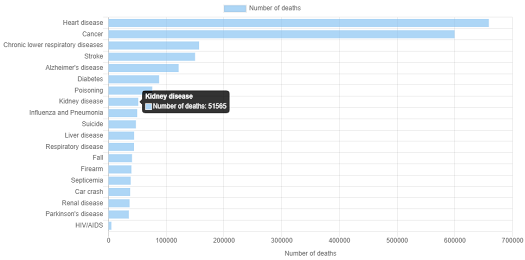
Deaths from all causes since 1999:




Luke 2:8-20:
8 In that region there were shepherds living in the fields, keeping watch over their flock by night. 9 Then an angel of the Lord stood before them, and the glory of the Lord shone around them, and they were terrified. 10 But the angel said to them, “Do not be afraid; for see—I am bringing you good news of great joy for all the people: 11 to you is born this day in the city of David a Savior, who is the Messiah, the Lord. 12 This will be a sign for you: you will find a child wrapped in bands of cloth and lying in a manger.” 13 And suddenly there was with the angel a multitude of the heavenly host, praising God and saying,
14 “Glory to God in the highest heaven, and on earth peace among those whom he favors!”
15 When the angels had left them and gone into heaven, the shepherds said to one another, “Let us go now to Bethlehem and see this thing that has taken place, which the Lord has made known to us.” 16 So they went with haste and found Mary and Joseph, and the child lying in the manger. 17 When they saw this, they made known what had been told them about this child; 18 and all who heard it were amazed at what the shepherds told them. 19 But Mary treasured all these words and pondered them in her heart. 20 The shepherds returned, glorifying and praising God for all they had heard and seen, as it had been told them.

My name is Isaac. I was one of the shepherds on that first Christmas night, two thousand years ago. I had been a shepherd all my life. My father, Abraham, had also been a shepherd. There were five of us on the top of a low rise in the ground when the angels announced the Messiah to us. We were tending our sheep. We had brought together three flocks for the night. It was safer for the sheep for them to be brought together and easier for us to watch them. Three of us would keep watch while the other two got some sleep, taking turns, of course.
Just before darkness fell, we made a makeshift pen for the sheep by setting out rope strung between stakes to make a broad circle. When a lamb is small you simply whack it if it tries to cross the rope. After a few whacks it will not try any more, even after it is grown.
We built a fire near one side of the rope pen to give us light and warmth and we warmed some broth to sip. Around us were the hills of Bethlehem. King David had been a shepherd in these same hills about a thousand years before, so Bethlehem was nicknamed the "City of David." The grazing areas had been wilder in David's day. He had contended with wild bears and lions. We never faced those beasts but at night the wolves and the thieves liked to come out. So, two of us would sleep while three of us stood watch: one standing close to the fire where thieves could see we were alert, and the other two walking quietly around the pen, armed with hefty staffs.
Halfway to midnight I had spent two shifts patrolling the perimeter of the sheep pen and it was my turn to stand by the fire. Then I would get some sleep. We would walk first, then stand by the fire so we could go to bed warm. I scanned the sheep pen with my back to the fire. Occasionally I caught a dim glimpse of Benjamin or Jacob walking their posts. All was normal. The fire behind me began to flicker low. One reason for the fire was to show my silhouette standing guard, so I decided that when Jacob reach the left side of the sheep pen, I would put more wood on the fire.
But just then fire got brighter, so I knew that either Gedalya or Penuel, sleeping behind me, had stirred enough to add some wood. I kept watching the sheep.
But something was odd. The firelight had increased quite a bit but there was no greater warmth. A brighter fire should give more heat. Just when this thought occurred to me, I heard Benjamin's urgent voice come from the darkness:
"Isaac! Isaac! Behind you! Behind you!"
My heart leapt to my throat. Someone must be approaching me from the rear! Without a thought I lunged quickly to my left, whirling and bringing up my heavy staff, ready to strike.
I stopped frozen with astonishment. I was struck dumb by what I saw.
Gedalya and Penuel were sitting bolt upright, hands raised before their faces, shielding their eyes. Without thinking I was raising my hands before my eyes, too, because from a single point about five feet above the fire shone a light of such bright purity and dazzling intensity that I could not look directly at it. It seemed to grow larger and even brighter until it shone round about us.
There was no sound except the pounding of my heart. I was suddenly aware that Benjamin and Jacob had run up and stopped, open mouthed, beside me. I was more frightened than I had ever been in my life. In fact, I was terrified.
The light began to change before our eyes. Its blinding brightness became softer until we could look directly at it. As we watched the light expanded in size. In mere seconds it took a shape much like a human being, but far larger. It hovered above the ground and then the light actually spoke to us:
"Do not be afraid! I bring you good news of great joy that will be for all the people. Today in the city of David a Savior has been born to you; he is Christ the Lord. This will be a sign to you: You will find a baby wrapped in cloths and lying in a manger."
I caught my breath. Our visitor was an angel of the Lord God Almighty! A messenger announcing a Savior born of God! It was too glorious to comprehend!
Suddenly another, tiny point of light appeared beside the angel, incredibly bright though as small as the tip of knitting needle. Another appeared, then all at once so many shining points burst into view that I could not keep up with their advent. They swirled and swarmed around us in every direction, up, down, right, left, back and forth – a small galaxy of angelic visitors. We shepherds were encompassed in every direction by a countless heavenly lights! I laughed aloud, and I heard my friends laughing, too. I raised my arms giddy with joy, astounded that the God of all creation would favor such lowly ones as us shepherds with the announcement of the birth of the Savior and this celebration by a multitude of the heavenly host.
I raised my face toward Heaven, overcome by joyous excitement, and shouted, "Glory to God in the highest!"
Immediately, the heavenly host took up my phrase. They sang in the purest tones of praise, "Glory to God in the highest!" Then they added, "And on earth peace, goodwill among those whom God favors!" I had never heard voices like those before and I know that in this life I never will again. But that night was enough. The angels sang it again and again and we joined in, also, beside ourselves with amazement and thanksgiving, nearly delirious in our rejoicing. In a time – I don't know how much time – the lights dimmed. Their singing grew growing softer until at last there was only darkness again and the faint whispers of their chorus.
We stood speechless, warmed all the way through even though our fire was only embers. At last Jacob said, "We need to go the Bethlehem."
"Yes," I breathed, "Let us go down to Bethlehem and see this thing that has happened, which the Lord has told us about."
With no further thought we hurried off to the city of David. "What of our sheep?" Penuel asked halfway there. Benjamin huffed while we trotted, "The Lord will never abandon them. The angel told us to go." That was good enough for us. Was not our Lord a Good Shepherd for his flock?
We found the manger quickly, almost as if we were led to it. And I suppose we were. We found Mary and Joseph and the baby, who was lying in the manger, just as the angel had said: Christ the Lord.
"Angels sent us," I said to Mary.
Mary smiled. "I believe you," she said. "We've had some experience with angels ourselves."
I said, "The angel told us that this child is our Savior, who is known as Christ the Lord. What does it mean?"
Joseph said, "When an angel appeared to me in a dream, he said that this child was conceived from the Holy Spirit. We have named him Jesus, as the angel said to do, because he will save his people from their sins."
Mary added, "The angel Gabriel told me, 'He will be great, and will be called the Son of the Most High, and the Lord God will give to him the throne of his ancestor David. He will reign over the house of Jacob forever, and of his kingdom there will be no end.'" She fell silent for a moment, then said, "That's really all we know."

We stayed no longer, for it was late and the Savior was sleeping. Mary and Joseph looked like they wanted to sleep, too. We had seen the child, so we left the manger. But it was impossible to keep this amazing thing to ourselves. We went about Bethlehem spreading the word concerning what had been told us about this child, and all who heard it were amazed at what we said to them. Then we returned to the fields, where our sheep safely waited, and we glorified and praised God for all the things we had heard and seen, which were just as we had been told.
-----------------
When our Christmas season is over and we have returned to our usual routines, let us remember that the gospel we have and the salvation we are given is just that which we have been told. The grace of God is not mysterious. It is just as we have been told in God's Word: A savior was born in Bethlehem two thousand years ago.
Like the shepherds, we live in a world when the memory of Christmas will be overcome by other events. The shepherds' sheep would still get sick or be attacked by wolves. Our cars will still break down and we'll still have bills to pay. On the outside, nothing will seem different.
But we are different. God is with us! The glory of the Lord has shone around us, and there are heavenly words: Fear not, for behold, there are glad tidings of great joy. Unto us was born a Savior! God’s grace has been given to us. From a stable in Bethlehem our savior has come. We have seen the glory of the Lord revealed in the Christ who was born to us. Tell the world. Treasure the story. Ponder it in your heart. We will Glorify and praise God, for all we have heard and seen! Rejoice! Rejoice! Christ has come!
May the love of God, the redemption of his Son, our Savior Christ the Lord, and the strengthening company of the Holy Spirit fill you and fulfill you this day and all days. For unto us a child is born. Unto us a Son is given, and the government shall be upon his shoulders. And his name shall be called Wonderful Counselor, the Mighty God, the King of Kings! Merry Christmas!
 Matthew 1:18-25:
18 Now the birth of Jesus the Messiah took place in this way. When his mother Mary had been betrothed to Joseph, but before they came together, she was found to be with child from the Holy Spirit. 19 Her husband Joseph, being a righteous man and unwilling to expose her to public disgrace, planned to dismiss her quietly. 20 But just when he had resolved to do this, an angel of the Lord appeared to him in a dream and said, “Joseph, son of David, do not be afraid to take Mary as your wife, for the child conceived in her is from the Holy Spirit. 21 She will bear a son, and you are to name him Jesus, for he will save his people from their sins.” 22 All this took place to fulfill what had been spoken by the Lord through the prophet: 23 “Look, the virgin shall conceive and bear a son, and they shall name him Emmanuel,” which means, “God is with us.”
He was a man faced with a detestable duty. He was a man of compassion, even tenderness. But he was also a man of honor, a man of a stern code. His obedience to the Law was unwavering. The moment he learned that his betrothed wife was pregnant he knew that it was the end of their betrothal, and potentially even the end of her life.
It was two millennia ago in the Roman-occupied land of Judea. Mary, was going to have a baby and it was not his. Compassion, honor, and duty dueled within Joseph. He could not pretend there was no problem. She obviously had betrayed him. The whole town of Nazareth was watching.
It would have been easy for Joseph to put Mary through the spectacle of public denunciation and cancellation of their betrothal, which would have disgraced and humiliated Mary before the entire community. But Joseph was both righteous and compassionate, so he decided to send her away quietly.
It had to have been a tough decision. It wasn’t that Joseph was head over heels in love with Mary. In the arranged marriages of his day, it’s quite possible that Joseph did not even know Mary very well. Joseph’s conflict of conscience was likely not about what to do to one he loved, but over the ever-present tension of how to do what the Law required.
To say that Joseph was a righteous man meant that he adhered to the Law. Righteousness and religious lawfulness were the same thing to Judean Jews. As a righteous man, Joseph knew he could not pretend Mary had not transgressed, and transgression it could only be since Mary was pregnant and Joseph knew he was not involved. As a righteous man, Joseph could not be blamed for choosing to have Mary disgraced before the community, for the Law did authorize at least that. Joseph’s crisis was that his righteousness impelled him to do the right thing by the Law, but he didn’t like it. Finally, Joseph decided Mary would have to pay the price for infidelity as the Law required, but on his terms. He would break his betrothal to Mary and send her away without fanfare, leaving her to fend for herself. Doubtless from Mary’s point of view that would have been unpleasant, but she would not be subjected to public humiliation.
After Joseph had made up his mind, he dreamed of an angel. The angel filled Joseph in on the rest of the story that Mary’s unborn child was from the Holy Spirit.
In Joseph’s dream the angel gave Joseph two instructions. First was to take Mary home as his wife and second to adopt Mary’s child as his own, giving him the name Jesus.

The Son of God receives an ordinary name, uniting him with the people of this world rather than separating him from them. In Hebrew the name is Yeshua, which means “God helps.” In Joseph’s day, when a Jewish man gave a name to the child born to his wife, he was announcing that the child was his own. Maybe Joseph’s and Mary’s families knew that Joseph was not the baby’s natural father, maybe they didn’t. It didn’t matter. When Joseph publicly named the baby Jesus, he was also giving to Jesus his own identity, his own lineage, and that settled that. Jesus then could truly be said to be of the line of David, because Joseph was of David’s line and Joseph announced Jesus as his own son. “This child belongs to me, this child is my child,” is what Joseph proclaimed when he named the child Jesus.
Joseph gets the short end of the Christmas stick. Mary gets a lot more play. Did you know that Joseph never speaks in the Gospels? Joseph hears, Joseph dreams, Joseph acts and Joseph obeys, but there is no record of even one syllable he uttered. Mary is the one with the speaking part. Mary is the one of whom Michelangelo carved the Pieta, one of the most beautiful statues ever made. Her role is the most sought after in Christmas pageants.

In 1993, my wife Cathy played Mary in the Christmas pageant at our church in Virginia. They asked her to play Mary because they wanted an actress who was gracious and beautiful and devout. Also, because they needed a woman with a newborn infant, our two-month-old daughter, Elizabeth, to play the baby Jesus. Elizabeth and Cathy, Jesus and Mary, were a package deal, couldn’t get one without the other. But any guy off the street could have played Joseph. In fact, the associate pastor asked me, “Did you want to play Joseph, or should we get a man from the choir to play him?” I said I would but talk about feeling like a fifth wheel … .
Which made me think: We should ponder theologically where Joseph fits in with God’s redemption of humankind. Joseph’s adoption of Jesus is not insignificant. In Paul’s letter to the Ephesians, Paul says that through Jesus Christ we are adopted as children of God. It is a common and emphatic theme with Paul. Paul calls followers of Christ sons of God and children of God, and let’s be fair, if Paul were alive today, he would say daughters of God, too.
Before God adopted us as children of God in the family of Christ, God sent his son to be adopted by Joseph into the family of humankind. Jesus really is Immanuel, God with us. We really are brothers and sisters with Christ and through Christ with one another. Joseph affirmed on behalf of all humanity that God belongs with us.
What if Joseph had said no to the angel and had sent Mary away anyway? Can we imagine Jesus growing up in the home of an unwed, single mother in first-century Judea? In what way would Jesus have ever known God as his heavenly Father if Joseph had never taken on the role of Jesus’ earthly father? It took courage for Joseph to claim Jesus as his own. His example calls for us to muster the courage to make Jesus our own as well.
Hear then anew the Word of God, Matthew 1.18-25:
18 Now the birth of Jesus the Messiah took place in this way. When his mother Mary had been betrothed to Joseph, but before they came together, she was found to be with child from the Holy Spirit. 19 Her husband Joseph, being a righteous man and unwilling to expose her to public disgrace, planned to dismiss her quietly. 20 But just when he had resolved to do this, an angel of the Lord appeared to him in a dream and said, “Joseph, son of David, do not be afraid to take Mary as your wife, for the child conceived in her is from the Holy Spirit. 21 She will bear a son, and you are to name him Jesus, for he will save his people from their sins.” 22 All this took place to fulfill what had been spoken by the Lord through the prophet:
23 “Look, the virgin shall conceive and bear a son, and they shall name him Emmanuel,” which means, “God is with us.”
24 When Joseph awoke from sleep, he did as the angel of the Lord commanded him; he took her as his wife, 25 but had no union with her until she had borne a son; and he named him Jesus.
Joseph adopted the Son of God as the child of humankind, and through Christ God adopts human beings as children of God. There seems to be a symmetry of salvation and relationship at work. It is a Marvelous Exchange! We see in Joseph’s story that we and God belong to each other in and through the one whom Joseph named Jesus, “God helps.”
Endnote: Engagement and marriage were different in first-century Judea than for us today. For us, there are two stages of becoming married: engagement and then the marriage ceremony. Joseph and Mary and other men and women of their day and place went through three stages: engagement, or something close to what we think the word means, then betrothal, in which the couple was considered the same as married, but they did not live together nor consummate the marriage. This stage usually lasted about a year, after which they would live together and husband and wife in the normal sense of the word. (Some historians say that engagement and betrothal were actually the same thing back then.) Mary was still betrothed to Mary when he learned she was with child.
The final organizational meeting of the not-quite-achieved Tennessee-Western Kentucky Conference was held Dec. 4 via Zoom teleconferencing. The Tennessee and Memphis Conferences will be officially merged in January 2022 into the new Conference.
The entire video record of the Dec. 4 meeting is here and embedded below. Bishop Bill McAllily's message for the day begins at the 33.05 mark. I highly recommend it!

It's the oldest shop in Black Mountain, North Carolina. None of the other shop keepers can remember a time when it wasn't here. Nobody in town can remember a time when Pellom himself wasn't here. The Time Shop and Pellom may well have been here before the town was here; before even the Cherokee were here. Nobody can say. ...
Most people look into the cluttered and dust-layered window of the Time Shop and walk on by. After all, most are retired and have, they think, all the time in the world.
Pellom doesn't mind. He knows what time it is. He also knows what can happen to time. How it can come unsprung. How it can run slow and still run fast. How time runs down. How time goes by. How time runs out. That's why he's careful, when he can, to save time.
You can, if he decides he likes you, buy some time at the Time Shop. All you have to do is to step through the seldom used door of the Time Shop and say "Good afternoon, Mr. Pellom." Then you need to look around the shop carefully and slowly. You need, most of all, to take your time.
In time, if the time is right, Pellom will glance up at you from behind his bench, his green eyeshade shadowing his eyes, and say, "What can I get you?" Not "What are you looking for?," or "How can I help you?," but "What can I get you?"
You'd be well advised to take him at his word and say, "I'd like to buy some more time."
Then, if your request is timely, Pellom will nod and fetch a small loud-blue glass-stoppered bottle from the shelf behind him and bring it over to the counter and put it down in front of you with a sharp, satisfying clack on the glass of the counter. Looking into it all you will see is, towards the center, the faintest mist made from the color out of space and inside that, towards the core of the mist, a shovel of stars.
"Very good, sir," Pellom will say. "How much time would you like?"
I'd advise you to buy as much time as you can afford, as often as you can afford it, time after time.
Just because Pellom has some extra time today doesn't mean he won't be out of time tomorrow. Most of the time, time is always in short supply. Tonight, while you sleep, your government will be awake printing more money. Nobody is printing more time.
Which is why you should be careful how you spend time in the first place. Just ask Pellom down at the Time Shop."Nobody is printing more time."

When the Lord returns in his glory, he will say to those at his right hand,.“Come, you that are blessed by my Father, inherit the kingdom prepared for you from the foundation of the world; for I was hungry and you gave me food, I was thirsty and you gave me something to drink, I was a stranger and you welcomed me, I was naked and you gave me clothing, I was sick and you took care of me, I was in prison and you visited me.”.“A new command I give you: Love one another. As I have loved you, so you must love one another.By this everyone will know that you are my disciples if you love one another”Love the Lord your God with all your heart and with all your soul and with all your mind.This is the first and greatest commandment. And the second is like it: ‘Love your neighbor as yourself.’"
My message for the First Sunday of Advent, Nov. 28, 2021:
I left the following as a comment on a FB friend's post. He is a somewhat progressive Methodist minister whose post was about how the Bible does or does not inform us on our obligations regarding immigrants illegally entering the United States. (That the same obligations would apply regarding those entering legally is not ever brought up, of course.)
Below was my sole comment, which FB deleted because it "violated" Facebook's nebulous, never-public and ever-changing "community standards," which means it somehow presented a point of view that FB does not want to permit.
See what you think. This is the verbatim, unedited comment except that I have deleted the name of the FB friend who posted it, nothing else.
I am not disagreeing with you. But I am going to point out what a quite progressive pastor of my conference said at a ministers' meeting some years ago, I do not recall the context but I do recall her response. It was, "We are all biblical fundamentalists; it just depends on the topic."
There are definitely teachings, requirements, and admonitions in the Tanak about how the people of Israel were to interact with resident aliens. Should we adopt ALL of them as in force for our modern day and time? For example, there are clear, unambiguous mandates that marriages of Jews to foreigners is strictly prohibited. Can we go all fundamentalist with that today?
Then there are modern-day Jewish scholars of biblical Hebrew who say that the term "resident alien" is a mistranslation of the Hebrew word "toshav."
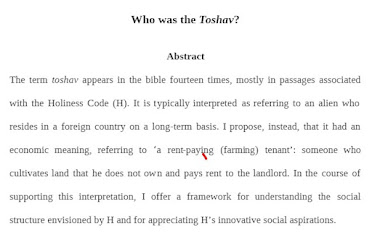
And finally, to close this comment, this article: "The Use and Abuse of the Bible in the Immigration Debate."
Here is the link to the article about the toshav by Joram Mayshar of The Hebrew University, Jerusalem.
So what exactly are the "community standards" that this violates? What are the biblical-interpretation credentials of the FB "fact checker" who yanked the comment (or more likely, what algorithm of FB's scanning software got triggered)?
There is no logic or rationality to how or why of Facebook's cancel culture.

Yesterday while taking my daily deck break, I paged through what was available on the Fire TV we use out there. I spotted Groundhog Day, a cult classic movie starring Bill Murray and Andie MacDowell, now acclaimed as one of the best films of the 1990s. The movie was about one-fourth done and even though I have it in my collection and have watched it a fair number of times, I clicked it on.

Henceforth, Phil awakens every morning to discover it is Feb.2, Groundhog Day once again, the very same day it was when he woke up the last morning, and the same Feb.2 it will be the next time. Apparently forever.
For the first several of relived days, Phil decides to hit on women, steal from an armored car to buy a Mercedes, and generally sate his fleshly desires. He even hits on his producer, Rita. But she tells him he is a jerk and rebuffs him.
This where is struck me that Phil is in Hell. An apparent eternity of repeated Feb.2s, all identical, stretch before him. Nothing he does changes that. He comes to realize he can do anything he wants and no matter how criminal or virtuous he is, the alarm will awaken him again to yet another same old Feb. 2.
Driven finally to despair, Phil commits suicide - day after day after day, only to wake up afterward on Feb. 2 all over again. He is living in damnation: sure, certain, and unending.
 |
The screenwriter’s initial plan was to have Connors trapped in the time loop for several millennia. The original script contains a final confession by Connors to his love interest Rita that “I’ve been waiting for you every day for ten thousand years.”

Finally he succeeds in romancing Rita. She finally does love him and willingly returns with him to his hotel room. She had been there before, several thousand days ago in Phil's reference, when Phil's manner became so revolting she had slapped him hard and walked right out. But on this trip, Phil makes no advances at all. He yields control of his love to the one whom he loves.
She goes to bed with him, but importantly, they are both fully clothed just as they had been decades before. This time, though, Phil has not merely suppressed his fleshly desires. He has discarded them as he became filled with other-centered love. And so the night passes.
As usual, Phil is awakened by the radio alarm clock blaring the same tune it has blared for 34 years worth of Feb. 2s. But the announcers' dialog afterward is different. Phil opens his eyes and suddenly realizes the radio is not playing the same old thing. And then he sees Rita still lying next to him.

Can we really believe in Hell?
One thing to realize is that Hell is not a future abode of the damned. Human beings are born damned to begin with. Jesus himself said so in John 3, beginning with verse 16, which we usually recite by itself, thus omitting the basic rhetorical point. Here is the whole quote (italics added):
16 “For God so loved the world that he gave his only Son, so that everyone who believes in him may not perish but may have eternal life.
17 “Indeed, God did not send the Son into the world to condemn the world, but in order that the world might be saved through him. 18 Those who believe in him are not condemned; but those who do not believe are condemned already, because they have not believed in the name of the only Son of God. 19 And this is the judgment, that the light has come into the world, and people loved darkness rather than light because their deeds were evil.
Once Jesus was asked by the Pharisees when the kingdom of God was coming, and he answered, “The kingdom of God is not coming with things that can be observed; 21 nor will they say, ‘Look, here it is!’ or ‘There it is!’ For, in fact, the kingdom of God is among you.” Luke 17.20-21
36 “Teacher, which commandment in the law is the greatest?” 37 He said to him, “‘You shall love the Lord your God with all your heart, and with all your soul, and with all your mind.’ 38 This is the greatest and first commandment. 39 And a second is like it: ‘You shall love your neighbor as yourself.’ 40 On these two commandments hang all the law and the prophets.”
And so, at the end of modernity, each of us who is true to the times stands facing not God, or the gods, or the Good beyond beings, but an abyss, over which presides the empty, inviolable authority of the individual will, whose impulses and decisions are their own moral index.

God abides in those who confess that Jesus is the Son of God, and they abide in God. 16 So we have known and believe the love that God has for us.God is love, and those who abide in love abide in God, and God abides in them. 17 Love has been perfected among us in this: that we may have boldness on the day of judgment, because as he is, so are we in this world. 18 There is no fear in love, but perfect love casts out fear; for fear has to do with punishment, and whoever fears has not reached perfection in love. 19 We love because he first loved us. 20 Those who say, “I love God,” and hate their brothers or sisters, are liars; for those who do not love a brother or sister whom they have seen, cannot love God whom they have not seen. 21 The commandment we have from him is this: those who love God must love their brothers and sisters also. 1 John 4.15-21
The Greek Philosopher Aristotle taught that the happiness for which human beings strive is not about pleasure, contentment, or satisfaction, but is rather an act. It is specifically the activity of moral and intellectual virtues in human life that is the fulfillment, happiness, and ultimate goal of human life (what Aristotle calls “telos”). This kind of philosophy, then, is not predicated upon something that will result in the future, but in the completion of the act itself, in the moment, for its own sake.This is the conclusion that Phil finally reaches after all of his mistakes and detours through destructive philosophy. Reaching the understanding illustrated by Aristotle, he begins to cultivate precisely those moral and intellectual virtues. He learns to play the piano and make ice sculptures, he learns a generosity of spirit in helping others, and comes to the humbling realization that there are some things he cannot control when he comes up against the brick wall of the homeless man who dies on Groundhog Day every time, no matter what Phil does.It is the structure of the plot itself that causes this character development, and the audience can see at the end that the story was leading to this point from the beginning: when every day is the same, it finally forces Phil to realize that the ultimate meaning in his life is never to be found over the hill in some distant future, but rather in the dedicated activity of building the habit of virtue, in the present moment, every single day. It takes him years of the same day to come to this realization, but it turns out that the time loop was ultimately a blessing, as it is only when he learns the true meaning of life and happiness that he wakes up on February 3rd, finally knowing how to live.There’s nothing better for a lesson in moral virtue than falling into a cosmic temporal wormhole in a small Pennsylvania town.

Word quickly spread. Within a day, work teams entering the wreckage started going to the cross first, praying before it or leaving notes on it.
On October 3 it was moved to a pedestal on the WTC plaza on Church Street. In October 2006 the cross was moved the St. Peter's church, which faces WTC plaza, bearing a plaque which read, "The Cross at Ground Zero ‑ Found September 13, 2001; Blessed October 4, 2001; Temporarily Relocated October 15, 2006. Will return to WTC Museum, a sign of comfort for all."
On July 23, 2011, the cross was blessed by Rev. Brian Jordan during a short ceremony and then was taken by a flatbed truck back to the scene of the attacks, where it was emplaced in the National September 11th Memorial and Museum.

“There has never been any unitary organisation of Western culture apart from that of the Christian Church,” explained the medieval historian Christopher Dawson in Religion and the Rise of Western Culture, written shortly after World War Two. “Behind the ever-changing pattern of Western culture there was a living faith which gave Europe a certain sense of spiritual community, in spite of all the conflicts and divisions and social schisms that marked its history.”
The West, in short, was Christendom. But Christendom died. If you live in the West now, you are living among its ruins. Many of them are still beautiful — intact cathedrals, Bach concertos — but they are ruins nonetheless. And when an old culture built around a sacred order dies, there will be lasting upheaval at every level of society, from the level of politics to the level of the soul. The shape of everything — family, work, moral attitudes, the very existence of morals at all, notions of good and evil, sexual mores, perspectives on everything from money to rest to work to nature to the body to kin to duty — all of it will be up for grabs. Welcome to 2021.

Nothing but a new Great Awakening can save America. Sadly, we have had an awakening of sorts, but in the form of an immanentized apocalypse—climate change—and the substitution of Woke cultishness for the old awareness of sin and redemption. Mr. Johnston has done a great service with his comprehensive survey of our follies and their consequences. His indictment of America’s national decline and its causes in economics, culture, and politics is incisive and convincing, and his overreach in history and philosophy is a minor distraction in the construction of his case. His belief that America has the wherewithal to restore itself shines through, especially in his concluding chapters. During the 1930s we sank into Depression and isolationism, but emerged as the most powerful nation on earth and the leader of the Free World in the 1940s. We languished in what Jimmy Carter called a national malaise during the 1970s but came roaring back with the Reagan Revolution. We have yet to see which spirit will move us.
From Pope Leo this week, according to the National Catholic Reporter : " Pope Leo quotes Bob Dylan song in book foreword calling for n...


