Wednesday, March 1, 2017

No, God does not love you just the way you are


It has become something of a meme in some circles of American Christianity for preachers and ministry leaders to tell their congregations or youth groups or Sunday school classes, “God loves you just the way you are.”


I remember one rally I attended just a couple of years ago at which the keynote preacher was the Rev. Derrick Lewis-Noble, a Methodist from New York. I had heard him preach before and have always learned a lot from him. That “God loves you just the way you are” was an emphatic proclamation of his. I am forced to admit, though, that with each repetition I became increasingly uneasy. It’s not that the claim is wrong, exactly, it’s that it is irredeemably incomplete. For if the statement is understood as a complete theology of redemption and salvation, it poorly represents the Gospel and, indeed, puts at risk the potential of a person’s salvation at all.

Writer Zack Hunt put it this way,[1]
[T]his one liner has become a core tenant of modern, American evangelicalism. … There’s a problem with that line of thinking, however. … If Jesus loves us just the way we are, then why bother with all that crucifixion mess? After all, if Jesus loves us just the way we are, then dying for our sins was just a terrible waste of time. 
Ironically, if Jesus loves us just the way we are, then the church … has no reason to exist.
That God does love, of course, is not the issue before us. God is love, so the pertinent questions Lent asks us to ponder are:

·        What is the nature of God’s love?
·        What does God love?
·        Whom does God love?

In this, we must not be led astray by our own fallen culture, which maintains that love is either sex or a warm, gooey sort of emotionalism or perhaps just enthusiasm for a thing or activity – you know, I just love chocolate ice cream.

But the love of God is not any of that. The love of God is a combination of desire and ability. God desires the best that is possible for his creation and God, being God, is able to bring it about. And this combination is what we really mean, I think, when we say “redemption” or “salvation,” that what God knows is best for you and me is what God is indeed accomplishing. This is what we call the will of God and it may be helpful to consider that God’s will and God's love are indistinguishable from one another.

What God loves, then, is anything that accords with his intentions for creation. That’s why the Bible has a lot to say about righteousness and virtue, because the character of human beings either helps or hinders God in the working of his will. Simply put, righteousness is partnering with God in his love while sin is doing something else.

So who does God love? We immediately reach for the self-satisfying answer that “God loves everybody.” Well, not so fast. Psalm 5.5 says that God hates “all who do wrong,” God destroys “those who tell lies,” and God detests “the bloodthirsty and deceitful.” Pretty hard words!
 
But such passages are far overwhelmed, both numerically and in emphasis, by those that explain God continually, unrelentingly calls to all people to receive his grace and cooperate with him in working his will and his love. The wrath of God is always presented conditionally. The love and saving righteousness of God are always unconditional. God's love is not presented as dependent on some prior status on our part. God's love is always prior; do we not confess this every Communion service?
“But God shows his love for us in that while we were still sinners, Christ died for us.”
British cleric Erroll Hulse wrote, “We are left in no doubt that the desire and will of God is for [our] highest good, that is, [our] eternal salvation through heeding the gospel of Christ.”[2]He continued,
We will not be disposed to invite wayward transgressors to Christ, or reason with them, or bring to them the overtures of the gospel, unless weare convinced that God is favorably disposed to them. Only if we are genuinely persuaded that he will have them to be saved are we likely to make the effort. If God does not love them it is hardly likely that we will make it our business to love them.
   
Biblically, we cannot escape the conclusion that God’s benevolent, merciful love is unlimited in extent. He loves the whole world of humanity.
In that sense, then, God does indeed love you just the way you are. God loves you in this moment. It is God’s wrath we have to earn, not his love. If we understand that “God loves you just the way you are” is a beginning point of the Christian proclamation then we are on solid footing. But unfortunately, it seems that many evangelists seem to present it also as the ending point, or at least, they don’t move off the starting point to what must follow if we are to partner with God in in his love and in faithful discipleship.
 
Reverend Lewis-Noble did tell a true story of his own church that helps illustrate this point. One Sunday morning a woman came in who was dressed exactly as if she had just got off the night shift at the downtown strip club. She was in evident emotional distress and before long two or three ladies of the church came and sat beside her during the service and helped her pray.

As it turned out, this visitor was indeed employed as a stripper. She came back the next Sunday, dressed the same way, and a third Sunday, at which some people in the church got together and bought her some decent clothing. Through their prayers, generosity and faithfulness to the call of Christ to love their neighbors as themselves, this woman came to confess Christ. She left the nightclub life and now works full time as the secretary of the church.

You see, God loved her just the way she was. Just as crucially, God loved her through the hearts of those who already followed him. But God, through the ministries of the church, was not endorsing the way she was. To say that God loved her just the way she was is definitely not to say that God approved of the way she was. In fact, it might be more accurate to say not that God loved her just the way she was, but that God loved her without regard to the way she was, or that he accepted her confession the way she was. But God did not leave her the way she was.

There is the story in John’s Gospel of the woman caught in the act of adultery. As some men were preparing to stone her to death, a few of them asked Jesus his advice. He told them to go right ahead, but only a sinless man could throw the first stone. So they grumbled and left. Then Jesus told the woman two things:
 
First, “I do not condemn you.” Which is to say, even though you are a sinner, I still love you.

Second, “Go and sin no more.” This was not a suggestion, it was a command, and in John's Greek it is pretty rough and direct. Jesus brooks of no dissent. And this command is wherein lies my unease with the mantra, “God loves you just the way you are.” For the love of God is not to be accepted passively on our part, not to be confused with God’s endorsement of our sinful state, sinful deeds and sinful tendencies.

I said earlier that, “God loves you just the way you are” is not really wrong, it is just incomplete. So let’s try to fill in the rest. What do you think of these accords with God’s character and commandments?
· “God loves me just the way I am – and I don’t have to change a thing.”
· “God loves me just the way I am – and there’s a few tweaks here and there, a few rough edges that need attention, but otherwise I’m pretty much in Christian perfection now.”
· “God loves me just the way I am – and my next step is to repent of my sins, confess Christ as risen Lord, to be inwardly transformed, to set aside habits of sin and death, and to devote myself to Christlikeness every day.”
God's love is always forward looking. God's love is not a mere endorsement of the status quo. Even when the status quo is pleasing to God, there is always a next level, always another step to take.

That’s the hard part, usually, isn’t it, that to know that God loves us is not simply to get warm, fuzzy feelings of divine acceptance, but also to acknowledge that God's love is both a revealing love and a commanding love?

It is a revealing love because at a basic level we are unlovely creatures. We are sinners top to bottom. We rebel against God, we ignore God’s law. “If we say that we have no sin, we deceive ourselves, and the truth is not in us.” Sin is not simply what others do; it is not merely social structures of wrong such as racism. Sin is personal. You are each one a sinner and so am I. And this is unacceptable to God. God's love reveals our nature: we are, as John Calvin put it, depraved in all our faculties. There are none of us who does good, no not one. Every one of us falls short of the glory of God. We are plunging headlong for hell-bound and there is nothing we can do about it. This is the “just as you” (and I) are. If that is what we think that God loves about us then we will be worse off than ever. It would be as if a doctor said to a cancer-ridden, diabetic, obese patient with heart disease, “You are fine just the way you are.”

But God knows all this infinitely better than we do, so he commands, “Go and sin no more.” This is a command of love because sin is a fatal condition. There is life eternal waiting and only the love of God can get us to it. Hence God summons us not because of what we have done but what God can do, not for who we are but who we can be, not because we deserve condemnation (even though we do) but because Christ did not come into the world to condemn the world, but that the world may be saved through him.
There is therefore now no condemnation for those who are in Christ Jesus. For the law of the Spirit of life has set you free in Christ Jesus from the law of sin and death. For God has done what the law, weakened by the flesh, could not do. By sending his own Son in the likeness of sinful flesh and for sin, he condemned sin in the flesh, in order that the righteous requirement of the law might be fulfilled in us, who walk not according to the flesh but according to the Spirit. For those who live according to the flesh set their minds on the things of the flesh, but those who live according to the Spirit set their minds on the things of the Spirit. Romans 8:1-5
God loves us just as we are …becoming.
   
“Just as I am, poor, wretched, blind; sight, riches, healing of the mind, yea, all I need in thee to find, O Lamb of God, I come, I come.”


[1] http://zackhunt.net/2012/07/11/jesus-doesnt-love-you-just-the-way-you-are/
[2] http://www.gty.org/resources/questions/QA193/Does-God-Love-Whom-He-Does-Not-Save

Tuesday, February 28, 2017

Europe has simply given up

 Here is a chart by Eurostat showing European nations' birth rates by decade beginning at 1960 and by year 2012-2014. See a trend there? And do you see that Turkey is the only nation to show a steady, upward trend? 

Demographer s agree that a birth rate of 2.1 live births per woman is what it takes to maintain a level population level. When the rate falls below 1.8 it becomes increasingly difficult to reverse and below 1.5 it approaches near-impossibility. That's why rates that low are often called a "demographic death spiral."

And that is one reason why I have for many years advocated America's disentanglement from the military part of the NATO alliance. As I have said before, if NATO’s countries will not have enough children to preserve protect themselves, why should American women have children to protect them?

The chart:


Spain's government is so alarmed that it has literally set up an official office to address the problem and,
... has tasked demographic expert Edelmira Barreira with sorting out the problem. The move comes after the country reported a higher number of deaths than births for the first time in 2015.

Spanish women between 18-49 reportedly had an average of 1.3 children in 2015 - below the European Union’s (EU) figure of 1.58. Spain’s birthrate has fallen by 18 percent since 2008, according to figures from Eurostat.

And between 1977 and 2015, the number of childless couples tripled from 1.5 to 4.4 million... .
As a demographer, though, Senora Barreira cannot be optimistic since once a society's rate drops to 1.3, more than a marginal increase over the long term is almost impossible. And besides, Spanish couples "blamed long working hours and late nights for the decrease" - whatever that really means.

Long ago Europe's countries decided to build a welfare state instead of bear children. But as the birth rate correspondingly fell, who would provide the labor and wealth to pay for Europe's very generous retirement payouts and nationalized health care? They answered that question, too, but did not foresee or did not care the long-term outlook: "The Mohammed Retirement Plan Will Kill Europe."
Once again, European values are in conflict with European survival.

The European values that require Europe to commit suicide are about ideology, not language, culture or nationhood. But the incoming migrants don’t share that ideology. They have their own Islamic values.

Why should 23-year-old Mohammed work for four decades so that Hans or Fritz across the way can retire at 61 and lie on a beach in Mallorca? The idea that Mohammed would ever want to do such a thing out of love for Europe was a silly fantasy that European governments fed their worried citizens.
Then there is this informative little chart: "Muslims have an average 3 children per family (or woman? The data does not clarify this). Not hard to calculate how large the population will explode into within the next three decades."


This is one reason Europe's future decades will be decidedly non-European in ways that we recognize Europe now.

Update, March 1: The trend is also worldwide:
Islam is the fastest growing religion in the world and will overtake Christianity as the most popular before the end of this century, according to an analysis of religious surveys published Tuesday by the Pew Research Center.

With 1.6 billion, Muslims made up 23 percent of the world’s population, according to a 2010 Pew estimate. That figure was still some way short of the 2.2 billion Christians which comprised 31 percent of the population.

However, by 2050 there could be near parity between the numbers of adherents of the two religions for the first time in history. The reasons for this rapid growth are thought to be the greater number of children Muslims have compared to other religious groups and the comparatively young age of Muslims.

Sunday, February 12, 2017

We become what we focus on


The severest punishment God ever lays upon us is to let us have what we want.
"Where there is no vision, the people perish: but he that keepeth the law, happy is he."
Proverbs 29.18, King James Version

This is probably the most well known rendering of that short verse, but it poorly communicates what the verse is trying to say. The KJV was done in the very early 1600s and for today, it just is not a good translation.

"Vision" refers to spiritual sight, more properly, spiritual insight. The verse, properly understood in its context and intention, is actually one of the most important warnings and assurances in the entire Bible.

Try this: When the people lose sight of God’s will, they go astray, but they prosper when they keep God’s law.

"The people" in the verse does not refer just to a worshiping congregation, but in the context of its time, a national people, the people of ancient Israel. The verse is talking about national consequences of ignoring God and the benefits of cleaving to God's commandments.

Bible Gateway has a long list of different translations and renderings. The ERV's translation is probably the best: "If a nation is not guided by God, the people will lose self-control, but the nation that obeys God’s law will be happy."

One Hebrew word study I read said that the real thrust of the verse is that when the nation loses sight of godliness, it descends into anarchy. We become what we focus on. When we lose sight of God and God's will for our lives, we become ungodly. That never ends well, either for individuals, churches or nations.

Here is a key point: God commandments were revealed to humanity. We did not make them up. We are so far removed from their revelation that we think that morality, as we understand it, is the natural way that people live together. In fact, the societies around the ancient Jews and early Christians were brutal. The Romans considered mercy, charity and forgiveness to be vices, not virtues. Roman parents beat their children for the showing weakness of mercy. Human morality absent divine commandment is base and as Proverbs says, descends finally into anarchy. We will either rule our passions or be ruled by them. As St Paul put it, "God can't be disregarded" -- note well, not "should not be" or "must not be," but cannot be disregarded; it is not possible. He continued, "You will harvest what you plant."

Morally, our capacities are weighted toward the negative side of the scale. People intend greater good than they achieve. Treaties, alliances, aid organizations, political parties, civic groups, even churches – all begun for good reasons to accomplish good things, and all fall short of what their founders intended.

 Hence the necessity of God giving the moral law. My friend and former co-author Rabbi Daniel Jackson wrote, "There are obvious logical elements of the Law of Sinai that might be deduced logically (or rationally). Yet, much of the Scriptures is based on directives and rules that [we] would not have known if the Scriptures did not tell [us] so."

God's Law frees us from the baser demons of our being so that we may discover the better angels of our nature. Every choice to depart from God's Law chips away at our integrity as persons belonging to Jesus. Integrity matters!

During his time as a rancher, Theodore Roosevelt and one of his cowpunchers lassoed a maverick steer, lit a fire, and put a branding iron in it to heat. The part of the range they were on was actually owned by Gregor Lang, one of Roosevelt's neighbors. According to the cattleman's rule, the steer therefore belonged to Lang. Roosevelt saw his employee, the cowboy, raise the glowing branding iron toward the steer, but it was Roosevelt's brand. "Wait, it should be Lang's brand," he said.

"That's all right, boss," said the cowboy. "Lang will never know."

"Drop that iron," Roosevelt demanded, "go back to the ranch, get your things and get out." Roosevelt later explained, "A man who will steal for me will steal from me."

Integrity, says Webster's, is "adherence to moral and ethical principles; soundness of moral character; honesty." And that takes the willingness and ability to cleave to a standard, whether you call it the law or a code or something else. Choices matter, and the choices we make are not isolated from one another.

The issue is more acute for young people than for me or those older than me. It sounds trite to say but it's nonetheless true that we grew up in a different time than you. The advice to "do your own thing" was unknown to us and we would never have even thought of agreeing that something may be right for you and wrong for me, or vice-versa, depending on our own inclinations, points of view and what we simply want to believe.

The problem is that to be a modern man or woman is to believe in nothing. Or more accurately, to believe in nothing in particular. Americans have come to prize personal autonomy so much that the spirit of this age gleefully embraces that nothing underlies fundamental reality, making, in the words of David Hart, "a fertile void in which all things are [claimed] possible, from which arises no impediment" to our desires and therefore we may decide for ourselves what is right or wrong and what we choose.


Which is to say that modern America as a whole no longer believes that there are objective criteria by which to judge our choices because being able to choose in the first place is the highest good there is. Therefore, all judgment, whether divine or human, infringes on choosing – and being able to choose according to one's own standards exercises "an almost mystical supremacy over all other concerns."

This is a purely modern idea. In centuries past, even before Jesus was born, true human freedom was understood as liberation "from whatever constrains us from living a life of rational virtue" and that led to our intellectual and spiritual flourishing. Freedom was the ability to overcome "our willful surrender to momentary impulses, [including] our own foolish or wicked choices."
"In this view of things [said Hart], we are free when we achieve that end toward which our inmost nature is oriented ... and whatever separates us from that end -- even if it comes from our own wills -- is a form of bondage. We are free not merely because we can choose, but only when we have chosen well."
For to choose poorly is to enslave ourselves to the impermanent, the irrational and eventually the destructive. Simply choosing, unconnected from divine guidance and godly standards, is to choose ultimately to reject freedom and to be enslaved to what Paul called the body of death and finally to choose to perish rather than attain everlasting life.

God's law enables human beings to be freed from the shackles of spiritual and mental bondage that prevent us from being saved in this life and the next. Paul's advice of Romans 12 holds true: "Do not be conformed to this world, but be transformed by the renewal of your mind, that by testing you may discern what is the will of God, what is good and acceptable and perfect."

Even Jesus understood that a life of choosing rightly is not easy. "Enter through the narrow gate," he said, "for the gate is wide and the road is easy that leads to destruction, and there are many who take it. For the gate is narrow and the road is hard that leads to life, and there are few who find it."

What to do and how? Paul tells us that in Philippians 4:8: “… Whatever is true, whatever is honorable, whatever is just, whatever is pure, whatever is pleasing, whatever is commendable, if there is any excellence and if there is anything worthy of praise, think about these things.”

It's not easy to live rightly to remain free. It is bondage to death and sin that is easy. But we can break those chains if we keep focused on God. Then we will be free indeed.

See also, "How Jesus invented individual liberty."

Friday, February 10, 2017

At what point does it just become too hard?

by Donald Sensing

Utah's firing squad prisoner's seat. Presently, only Utah and Oklahoma
make firing squads a legal form of capital punishment. 
The death penalty, I mean:
JACKSON, Miss. (AP) - Mississippi lawmakers are advancing a proposal to add firing squad, electrocution and gas chamber as execution methods in case a court blocks the use of lethal injection drugs.

Republican Rep. Andy Gipson says House Bill 638 is a response to lawsuits by "liberal, left-wing radicals."

The bill passed the House amid opposition Wednesday, and moves to the Senate.

Lethal injection is Mississippi's only execution method. The state faces lawsuits claiming the drugs it plans to use would violate constitutional prohibitions against cruel and unusual punishment.

Mississippi hasn't been able to acquire the execution drugs it once used, and it last carried out an execution in 2012.
When lawmakers are going to this kind of exertion to make sure the state can kill someone, there is something at stake other than simply seeing justice done. It appears in Mississippi's legislature that capital punishment has at least become semi-idolatrous. As evidence:
Republican Rep. Andy Gipson says House Bill 638 is a response to lawsuits by "liberal, left-wing radicals."
And that, not justice, is real object - to show those Leftists a thing or two! Killing people in prison has become as much of a political statement by Republicans to define who they are as killing people in the womb defines the Democrats.

Once again, though with new meaning:


Just face the fact that killing prisoners has become too hard and commute the sentences to imprisonment for life without hope of parole. In fact, you can say they are still sentenced to death - by old age.

Then get on with life.

Thursday, February 2, 2017

Churches, taxation, and the Johnson Amendment

President Trump recently said he wanted to revoke the Johnson Amendment, under which churches and other religious organizations may gain tax-exempt status as long as they remain apolitical. This arrangement dates only to 1954 and the issue has come up before. I wrote this post about it in 2004, reposted here. 


Some debate has come up recently about legal restrictions on political activities by churches. For example, I linked, without comment, to Paul Greenberg's recent op-ed in which he claimed,
Now a Baptist minister in little ol' Springdale, Ark., has been accused of crossing the line. How did he get into trouble? Well, it seems that over the years a vague and mischievous distinction has been drawn between politics and partisan politics in the law — that is, churches may address political issues but not explicitly endorse a party or its candidate if they want to keep their tax-exempt status.
La Shawn Barber writes that a "group of conservative Christians" is "sending spies into liberal churches to find out if they advocate a particular politician while preaching in the pulpit." And if they do, "the group has said it will report that church to the Internal Revenue Service, which could revoke their tax-exempt status." La Shawn inexplicably seems to think this is a good thing. 

 
Both Greenberg and Barber misunderstand what the real situation is. They both think, erroneously, that the government's granting of tax-exempt status depends on preachers never being involved in partisan politics. 

 
I became deeply involved in Tennessee's political process as part of a formally-organized United Methodist group campaigning to defeat a ballot measure allowing a state-sponsored lottery in 2002 (we failed). I did a lot of research about what the IRS code actually has to say about this issue. So here's the deal. 

 
Partisan politics deals with the election of a particular candidate or slate of candidates for elective office. Issue politics deal with ballot matters, such as the lottery issue in Tennessee, that don't elect a candidate to an office. 

 
A common belief is that the latter are permitted to churches and the former are forbidden. No so. Remember that the only issue here is a church's tax exempt status, and as far as the IRS is concerned, there is no difference between a church's partisan political activities and its issue activities. 

 
The issue, you should be unsurprised to learn, is money, not speech (or not speech per se ). Overtly political organizations are not tax-exempt. Charitable organizations can apply for and receive tax exemption under Section 501(c)(3) of the IRS code. This exemption means the organization or church does not pay a corporate income tax on funds it earns or receives to do the charitable work. Likewise, it is much easier for churches to furnish donors with the certifications the IRS requires them to have in order to deduct their donations from their personal income taxes. 

 
The reason a church's political activities are related to tax code is to prevent a purely political organization from chartering itself as a religious organization, gaining tax exemption, and then doing nothing but campaigning, perhaps dressed up with some religious language now and then. Think about it: if your business could describe itself as a "charitable organization" and so gain tax exemption, why wouldn't it do so? 

 
If it were that simple, the DNC and the RNC and MicroSoft and General Motors would all call themselves churches or charities, file for 501(c)(3) and merrily oppress the working class even more! 
  Section 504 of the IRS code says that exempted organizations can lose their 501(c)(3) status by “carrying on propaganda” or attempting in influence legislation or elections. But the IRS has never described clearly (surprise) how it may decide that a church is doing so. The test seems to be (I say seems because with the IRS little is ever certain) how much money the exempted organization is spending on political activities. If a "substantial part" (the IRS's expression) of the organization's activities "consists of carrying on propaganda, or otherwise attempting, to influence legislation," then tax-exempt-status can be either denied or revoked. 

 
But - and there is always a "but" with the tax code - there is an expenditure ceiling for political activities in effect, below which political propagandizing is quite okay. Good luck trying to determine what the ceiling is. 

 
The point is that while churches do give up some measure of political influence to accept tax exemption, it is not what people think. The IRS doesn't care how political a preacher's sermon is; its concern seems to be how much money the church spends on political activities rather than religious and charitable ones. 

 
And again, the issue is also whether churches are "attempting to influence" legislation or other political matters (by extension). Problem is, as Servant News explains,
The Internal Revenue Service enforces Code sections at its own discretion—sometimes doing nothing for decades, then slowly beginning to enforce them. From 1956 through the 1960’s, very few churches lost their 501(c)(3) status for any reason. A landmark case occurred in Christian Echoes National Ministry, Inc. v. United States, 470 F.2d 849 (10th Cir. 1972); cert. denied, 414 U.S. 864 (1973). This description comes from the IRS web site (www.irs.gov/pub/irs-tege/topic-p.pdf), an article entitled “Lobbying issues”:
Christian Echoes National Ministry published articles and produced radio and television broadcasts that urged recipients to become involved in politics and to write to their representatives in Congress to urge that they support prayer in public schools and oppose foreign aid. The organization argued that attempts to influence legislation would occur only if legislation were actually pending. The Tenth Circuit concluded that the regulation properly interpreted the statute, and that the organization was engaged in attempting to influence legislation, even if legislation was not pending.
There are Christian ministries that do the same things today, and, for whatever reason, have not had the 501(c)(3) status removed. Nevertheless, this case did establish that obtaining section 501(c)(3) status is a privilege for which churches trade their constitutional rights Quoting from the Court opinion of Christian Echoes v. United States:
In light of the fact that tax exemption is a privilege, a matter of grace rather than right, we hold that the limitations contained in section 501(c)(3) withholding exemption from nonprofit corporations do not deprive Christian Echoes of its constitutionally guaranteed right of freedom of speech.
To show the arbitrariness of enforcement of section 501(c)(3), we include the following from the Charities and Non-Profits article from the IRS web site: www.irs.gov/charities/article/0,,id=96099,00.html, [bolding ours]:
An IRC Section 501(c)(3) organization may not engage in carrying on propaganda, or otherwise attempting, to influence legislation as a substantial part of its activities. Whether an organization has attempted to influence legislation as a substantial part of its activities is determined based upon all relevant facts and circumstances. However, most IRC Section 501(c)(3) organizations may use Form 5768, Election/Revocation of Election by an Eligible Section 501(c)(3) Organization to Make Expenditures to Influence Legislation, to make an election under IRC Section 501(h) to be subject to an objectively measured expenditure test with respect to lobbying activities rather than the less precise “substantial activity” test.
Churches do not have the option to use form 5768 (which is a paperwork nightmare anyway), so they are evaluated by the “less precise ‘substantial activity test’” that is “based upon all relevant facts and circumstances”—in other words, the IRS has no openly available standard that it must follow and can therefore do whatever it wants. There may be a more codified procedure in the future, or there may not be. It may be more or less restrictive. The IRS has free reign, since all 501(c)(3) status churches have already agreed that no substantial part of their activity will be “carrying on propaganda” (propagating information) about anything.
Yeah, that's clear. My overall point, though, is that the IRS is full of auditors, not speech critics, and when its auditors want to determine what a church is "substantially" doing, it will follow the money trail. 

 
There are nonpolitical things that can cause a church to lose its tax exemption. I knew of one church that leased land to a communications company for towers and relay stations. The IRS considered this - rightly - a commercial enterprise. Because the lease payments amounted to a majority of the church's income (it was a small church) the IRS said that the church had become a for-profit business, and yanked the exemption. 

 
My very large church in Virginia operated a bookstore inside the building. It didn't have to pay taxes on the profit because there was no exterior entrance to the bookstore. But if a church runs a bookstore with an exterior entrance, it has to pay taxes on the profit. That's how complex this issue can be. 

 
Church's that want to become deeply involved in politics may do so, but they have to be willing to be taxed just like any political organization. That means the congregants' tithes won't be tax deductible on personal income tax returns, too. Guess how many churches want to be political so much they'll accept a 30-50 percent reduction in offerings? Not mine, buddy.

Bookmark and Share

Wednesday, January 4, 2017

Until my dying day I will swear that this was normal


I realize that to adults today up to about age 40 or 45, I am an ancient curmudgeon, having passed from kindergarten to high school in the 1960s. But young people, trust me: what you see in the pic above is an example of what a normal childhood should be like.

There was a dense woods right on the other side of the fence along my yard when I was a lad. That property was owned by a private country club, but the nearest fairway was about 250 yards away. When I was still small, some of the older kids went into the woods and carved out an oval, dirt bicycle racing track. I rode on it later, and we had some really wild races. There were many collisions and spills and usually half of us would go home bleeding from some mishap, almost all were bruised. One guy (but only one) broke an arm.

Every parent knew about it and thought it was perfectly okay. Not one of us was told not to race. The big kids controlled who could race and who couldn't, based mostly on age but also they dismissed too-reckless riders. That didn't happen much because every kid knew the standards and who had the right to enforce them. We worked this out on our own, not under adult direction.

The only time I saw an adult there was a dad whose son had rushed home to tell him to come kill a big snake that came out of the woods onto the track. The dad came with a long-handled garden hoe. He lopped off the snake's head, threw the remains into the underbrush, looked around for other snakes, found none, and went home. The racing then continued. (And every one of us made sure we drove through the snake's blood staining the track!)

Here's another example of kids playing normally:


In my 1960s childhood, my mom would actually kick us out of the house at mid-morning with an advisory not to come home except for lunch and dinner.

After dark, weather permitting, there was almost always a group of neighborhood kids out playing kick the can or something, often until 9 p.m. or later. No adults hovered around, it was just us kids.

When I was 12 and older, my buds and I would go on long bike rides taking us many miles from home. We were gone for hours on end. We had no cell phones, so no text messaging, we had no bike helmets, no nuthin' but ourselves and what our parents had taught us about safety. And no problems ever encountered.

When we wanted to play ball, we went around the neighborhood rounding up the other kids. There was always a vacant lot we could play on and the owner was fine letting us play there because he'd done the same sort of thing when he was a kid. We'd choose sides and play. When there was a disputed  call, we had to work it out on our own. No adults refereed; there weren't any around anyway. And if we'd asked them to, they'd have laughed us to shame. Over time we learned what compromise meant, what fairness meant and how to navigate conflict because otherwise, no ball game. And we learned this the hardest but most effective way, on our own.

We didn't spend every Saturday from age 5 being hustled off to practice with some league team because there weren't any. We never thought that a grownup should always settle our disputes; that was our business and the grownups thought so, too. Sometimes (though rarely) disputes got settled with fists and everyone under the age of 125 understood that to be part of growing up, too.

Millennials, that is what a normal childhood is like. I weep that you never had one.

Wednesday, December 7, 2016

Japan's losses at Pearl Harbor were catastrophic

Today is the 75th anniversary of the attack by naval forces of Japan against American installations at Pearl Harbor, Hawaii. Here are two little-known facts about Japan's operations against Pearl Harbor, Hawaii, and one better-known fact.  


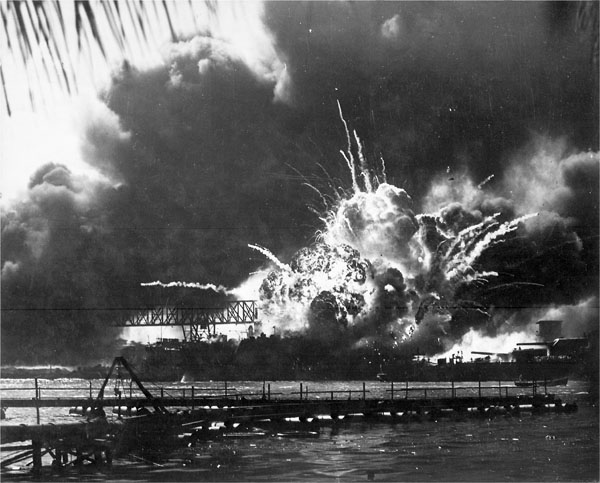
The destroyer USS Shaw explodes during the Imperial Japanese Navy's surprise attack on the morning of Dec. 7, 1941. The attack was a tactical success but its plan was a strategic failure from the beginning. In just a few hours that day, Japan's navy lost more than one-fourth of its annual pilot accessions.

Little-known fact 1, which I learned recently reading Jim Dunnigan's article about the perils of declining flight hours of present-day US Air Force pilots: "the 29 pilots [Japan's navy] lost at Pearl Harbor represented more than a quarter of the annual crop" of new pilots (emphasis added). The reason? Japan's navy pilot training and certification program was at that time among the most rigorous and difficult in the world. A trainee pilot needed 700 certified flight hours just to attain minimum status as a full-fledged fleet pilot. In contrast, at war's start, three-fourths of US Navy fleet pilots had fewer total flight hours than the least-experienced Japanese navy pilot. [See endnote for further discussion about these figures and assessment.] But the Japanese navy had shot itself in the foot enforcing such high standards. Its commanders deliberately, though not unreasonably, pursued very high quality over very high numbers, knowing that their country could not successfully wage a long war. Their intention was to put into the air such superior pilots that no enemy pilots could prevail even with larger numbers.
 
Early in the war many American pilots called their Japanese counterparts"Hell on wheels," and for good reason. 

But Japan's admirals did not account for the fact that their highly-skilled pilots would be just as vulnerable to American anti-aircraft fire as average pilots. They did not assess that American pilots, though not highly trained, would prove to be well trained. Consequently, in just the first year of the war the Imperial Japanese Navy lost so many pilots that it had to reform pilot accessions. By then it was too late. Japanese training flight hours steadily and finally sharply declined while US pilots' training hours steadily increased. In fact, from "late 1944 into 1945, nearly half the pilots in Japanese squadrons had flown fewer than 200 hours. The disparity of two years before had been completely reversed." The United States showed both in the Pacific and in Europe that it was possible to obtain both quantity and quality, but then, only the United States had both the human and material resources to do it. But it took time and cost many lives and aircraft. During the opening year or two of the war,
Some fighter pilots entered combat in 1942 with less than one hour in their assigned aircraft. 
The 357th Fighter Group (often known as The Yoxford Boys) went to England in late 1943 having trained on P-39s. The group never saw a Mustang until shortly before its first combat mission. A high-time P-51 pilot had 30 hours in type. Many had fewer than five hours. Some had one hour.
Despite such wartime exigencies, those American pilots did have an ever-increasing advantage that their enemies lacked: they were flying more and more hours in pilot training.
[T]he U.S. Navy was actually increasing its flight time, while keeping pilot training programs to about 18 months. In 1943, the U.S. Navy increased flight hours for trainees to 500, while Japan cut its hours to 500. In 1944, the U.S. hours went up to 525, while Japan cut it to 275 hours. In 1945, a shortage of fuel had Japanese trainee pilots flying only 90 hours before entering combat.
Only the United States had both the production capacity and the manpower to prevail under such conditions. "At its height in mid-1944, the Army Air Forces had 2.6 million people and 80,000 aircraft" and could absorb the loss of "14,903 pilots, aircrew and assorted personnel plus 13,873 airplanes — inside the continental United States" (emphasis added), or about 40 stateside accidents every day of the war. Another "43,581 aircraft were lost overseas" of which only a little more than half were combat losses.

But the same situation for both Japan and Germany was dire. "Through much of 1944, the Luftwaffe sustained uncontrolled hemorrhaging, reaching 25 percent of aircrews and 40 planes a month," an unsustainable loss rate for German industry and manpower to cope with, especially considering that Germany's aircraft plants were being bombed regularly. For both Germany and Japan, the main limiting factor in pilot training was fuel. Japan produced almost no domestic oil and America's submarine fleet priority-targeted Japan's tanker ships. It was very effective. Japan had rolled its dice on a short war. Its pilots took such severe losses in just a year that Japan's navy was never able to recover.

Little Known Fact 2: Japan's second air raid against Pearl Harbor was of much worse consequence strategically for Japan than the attack of 7 December 1941.
Another raid was planned just three months after the initial attack. The idea was to hit the carriers while in port and to disrupt the repairs of battleships that had been damaged in the December attack. This time, a large naval fleet would not be practicable as the element of surprise was lost. Instead, two giant flying boats - the most advanced in the world at the time - would make a daring attempt to attack Pearl Harbor at night.

The Japanese "Emily" long-range flying boat. Equipped with eight bombs each, two set out for a night attack against Pearl Harbor on March 4, 1942.
[T]he planes took off for a night bombing raid on Pearl Harbor. They flew to the French Frigate Shoals in the north western part of the Hawaiian Island chain, where they were refueled by the submarines I-17 and I-19, which had been modified with special tanks for carrying aviation fuel. Seven hours later, the planes approached Oahu.
Because there was no moonlight and it was raining, American air defenders could not locate the Japanese planes, though radar detected them.
Due to the cloud cover, the Japanese planes also could not find their targets and had to drop their bombs blind, some of which hit inland from the harbor and two at the harbor entrance. No ships were damaged. The flying boats returned to their base.
The raid was a worse failure than merely not hitting the targets. It didn't take long for US naval intelligence to figure out that the flying boats had to have refueled  at French Frigate Shoals, between Hawaii and Midway Island.


For the rest of the war, the US Navy made sure that Japan would never again use FFS for any reason. Only three months after this abortive air raid the US Navy sank four Japanese aircraft carriers and killed 2,500 officers and enlisted ranks at the Battle of Midway, losses that permanently placed Japan on the strategic defensive. Japanese intelligence had been convinced that the US could not defend against its fleet, mainly because USS Yorktown had been so badly damaged in May at the Battle of Coral Sea, where USS Lexington had been sunk. Yorktown did fight at Midway with full capability, though it was badly damaged by Japanese air attacks and was then sunk by a Japanese submarine.

Japan would have been better advised to use FFS as a station from which to refuel reconnaissance flights, not bombing missions, against Pearl Harbor. If so, it may have learned that Yorktown was en route to Midway along with two other carriers, and the outcome of the Midway battle might have been quite different.

Better-known fact: Japan's concentration on Dec. 7 against US Navy warships was incalculably bad planning and strategic analysis. Their target was the American fleet, mainly its aircraft carriers. But all the US carriers were at sea. The attacks against the US battleships were very successful, but they sank in shallow water, being moored next to Ford Island, and except for Arizona, suffered relatively few deaths of crew. American airfields were also bombed and strafed, resulting in wholesale losses of American aircraft.

What Japan practically ignored was Pearl Harbor's logistic and shore-based, support facilities. In particular, attacks against fuel storage and transportation systems would have been devastating. I remember reading that the Navy assessed that such an attack would have mostly immobilized the Pacific Fleet for almost two years. (Since the battle, many historians have persistently reported that Japan's air commander, Mitsuo Fuchida, insisted to Admiral ChÅ«ichi Nagumo, commanding the strike fleet, that a third strike be launched against Pearl's oil infrastructure and dry-docks, but that Nagumo refused, ordering the fleet to withdraw since the at-sea US aircraft carriers' location was unknown. The problem with that account is that the raid's chief planner, Minoru Genda, maintained after the war that no third strike was ever planned or contemplated and that Fuchida never even broached the suggestion.)

IJN planners and admirals may have ignored the harbor's logistics vulnerabilities because they were mostly ignoring their own.  David C. Evans and Mark R. Peattie argue in Kaigun: Strategy, Tactics, and Technology in the Imperial Japanese Navy 1887-1941 that Japan's main reason for taking over Borneo and other areas of the southwest Pacific was to secure oil supplies for the homeland - yet the IJN gave this requirement practically no consideration either of planning or equipping. "Before the war, Japan needed ten million tons of merchant shipping to meet its needs." Yet after hostilities began and merchant shipping was snapped up by other requirements,
Only 30,000 tons of tankers remained to ship the essential oil supply from Borneo to the refineries in Japan. This lack of attention to the very aim of the war – oil – helps to explain why the oil supplies at Pearl Harbor were never targeted. The refusal to deal with logistics and mobilization issues affected the conduct of the war from the very beginning. 
Japan's high commanders, with very few exceptions, simply did not deal with such matters for themselves, and this nearly automatically led them to ignore such issues regarding their enemies. The most serious catastrophe for Japan at Pearl Harbor was its short-term focus on ships as targets. Before the war,  Admiral Isoruku Yamamoto, commander of the Imperial Japanese combined fleet, argued strongly against going to war with the United States. He told the high command, "I shall run wild considerably for the first six months or a year but I have utterly no confidence for the second and third years." He was optimistic. In fact, the Japanese navy won battles for only four more months.

And that can be largely blamed (or credited, take your pick) on the tactical, rather than strategic focus of the Dec. 7 attack. Japan's lack of a national grand strategy or even the rudiments of deep strategic thinking are illustrated by asking one simple question: Why attack Pearl Harbor at all? Sherman Miles, who was serving at the highest level of the War Department on the day, wrote only three years after the war,
Had Japan not attacked us when the Washington conference failed, there were but two courses of action that could have resulted in our interference with her policy of conquest. The President might have persuaded Congress to declare war, or he might have interposed U.S. forces in the path of the Japanese advance. The Administration's difficulties would have been great and its success problematical in either case. And how the isolationist elements in the country—the “Hearst-McCormick-Patterson Axis,” “America First,” and others—would have howled! American lives to be sacrificed in defense of British and Dutch colonies, and Siam! All this the Japanese must have known. They certainly missed a bet, once they realized that their negotiations in Washington would fail, in not going about their southern business and leaving us out on a limb.
Japan's rulers seem to have simply assumed that the US would militarily block Japan's actions against the nations or European-ruled territories of the southwest Pacific area. But that betrays a severe misunderstanding, nay outright ignorance, of America's domestic politics and naval capabilities.

Japan's invasion of the US-ruled Philippines, started the same day as the Pearl Harbor attack, would certainly have evoked American military countermeasures. But what and for how long and with what result? The Navy Department did not conceive of the US Pacific Fleet as a force-projection fleet, but as a deterrent against Japanese movements against Hawaii and the American mainland. Hawaii was at that time considered to be the far-western bulwark against Japanese expansionism. In fact, says Miles, "I remember Admiral Kelly Turner expressing in a British-American staff conference, six months before Pearl Harbor, his confidence in our ability to hold the Japanese Navy in home waters simply by having our fleet cruise in the mid-Pacific." Moreover, US naval opposition to Japan's moves would have been militarily impossible, not just politically:
It has been argued that the Japanese were bound to attack our fleet on resuming their policy of conquest because it constituted an intolerable strategic threat on their flank. The fleet was certainly an important element in Pacific strategy, and its damage or elimination was highly desirable from the Japanese point of view. But as a matter of fact, it was not an immediate menace to Japan, nor could it have seriously deterred her in the early months of whatever campaign she might decide to initiate behind the shield of her mandate islands. For our fleet, in any operations in the Far East, would have been distinctly inferior to the Japanese in air and sea power and particularly in logistic support. We had no bases beyond Hawaii capable of handling the fleet. We lacked the “train,” the great force of supply and repair ships, that would be necessary for such distance operations. This also the Japanese must have known. Not even the most extreme misconception as to the relative efficiency of the opposing forces would have led our fleet so far from its base for a considerable period of time. Or if it had, Admiral Yamamoto could have solved his problem still more tragically for us.
Solving the problem "more tragically" means simply that had the Pacific Fleet attempted to engage Japan's navy on the open sea, it would have lost more severely than at Pearl Harbor, with ships, including our few aircraft carriers, sunk to the deep ocean bottom and enormously higher losses of crews. Such a likely outcome was explicitly stated by Admiral Chester Nimitz in 1964:
... Admiral Chester Nimitz, who took over as commander of the Pacific Fleet three weeks after the attack, concluded that "it was God's mercy that our fleet was in Pearl Harbor on December 7". If [Admiral Husband] Kimmel [commanding the Pacific Fleet on Dec. 7] had "had advance notice that the Japanese were coming, he most probably would have tried to intercept them. With the difference in speed between Kimmel's battleships and the faster Japanese carriers, the former could not have come within rifle range of the enemy's flattops. As a result, we would have lost many ships in deep water and also thousands more in lives." ... This was also the assessment of Joseph Rochefort, head of Station HYPO, who remarked the attack was cheap at the price.
Nimitz was clear that the fate of Pearl Harbor's fleet engaging the IJN on the open sea would have been its destruction. Station HYPO, btw, was the "United States Navy signals monitoring and cryptographic intelligence unit in Hawaii during World War II." One must wonder why Japan did not leave the US fleet alone at Pearl and make its moves against the Philippines and elsewhere, wait for the US fleet to sally forth, and then destroy it on the open ocean. That had after all been the IJN's basic planning template for 20 years. Miles explains that American Army and Navy planners badly and consistently underestimated Japan's military capabilities and skills. Might the Japanese have overestimated those of the Americans? This despite the fact that the US fleet of late 1941 was a mere shadow of that which would turn the entire Pacific Ocean into an American pond by the end of 1944.

The IJN's overarching strategy was called kantai kessen, "decisive battle." It came from Japan's resounding naval defeat of Russia in 1905 in the Russo-Japanese war's Battle of Tsushima. It was postulated on drawing an enemy into a single engagement where the enemy fleet would be crushed by attacking Japanese battleships and cruisers. Even though by the mid-1930s forward-looking Japanese officers knew the aircraft carrier and modern submarines had rendered the kantai kessen doctrine obsolete, they were neither numerous nor senior enough to change the high command's steadfastness to it.

Their basic plan since the 1920s was this: The decisive battle would take place north of the Marianas Islands within easy sailing distance by the Japanese Combined Fleet with total offensive combat operations phased over two weeks. Yet this long-held, well-developed operational concept was abandoned in favor of a three-hour air raid. Why?

Japan's Pacific empire before the Pearl Harbor attack

The answer is that they thought the attack against the US fleet at Pearl Harbor would be decisive, at least decisive enough to enable Japan to conquer its new targets and cement an unbreakable hold on them. But of course, this was a fatally-flawed calculation. Military historian Gary A. Gustafson summarized Japan's strategic deficiencies thus:
The Japanese way of war envisioned by Akiyama, validated at Tsushima, codified by Sato, and instilled in the IJN by the Naval Staff College, was an amalgamation of Western and Eastern thought combined with the samurai traditions of Japan. By ignoring the complete lessons of the outsiders, the IJN created a doctrine that was limited to a single mode of war. ... IJN doctrine created an offensive mindset; but, not to invade, conquer and annihilate. Rather, it was to lure in and ambush. Offensive action for the IJN meant raids that helped to dictate the course of battle and manipulate their enemy into a complex, inflexible trap at the time and place of their choosing. It was a tactical doctrine of battle, not a strategic doctrine of war. 
Miles says that neither America's estimate (overly low as it was) of Japan's abilities nor the disadvantages accruing to America if America bore the burden of initiating war with Japan (in response to its new territorial seizures) were lost on the American War and Navy Departments. They agreed that the US would go to war with Japan sooner or later.
The high command of our Army and Navy thought they had prepared for either eventual or immediate war, so far as it was humanly possible to do so. But still it was difficult to predict, and indeed we did not predict that the Japanese would commit so great a blunder as Pearl Harbor, gratuitously unifying the war spirit and potential of America. We overestimated their intelligence. That blunder in the realm of high policy eventually cost Japan her empire. But that was not all. On the lower plane of tactics the Japanese decision to attack Pearl Harbor by surprise involved enormous risks. As [US Army Chief of Staff] General Marshall later testified: “A surprise is either a triumph or a catastrophe. If it proved to be a catastrophe, the entire Japanese campaign was ruined.”
General Marshall understated the result. Not just a campaign but Japan itself, as a whole, was ruined by the catastrophe of its attack on Pearl Harbor. 
  
Update: Business Insider has a good photo essay of the attack. So does the Buffalo (NY) News. Update, Dec. 9: Retired US Navy Commander Dr. Alan D. Zimm of the Strike Systems Analysis Group of The Johns Hopkins University's Applied Physics Laboratory emails an inquiry of the claim, above, that Japanese navy pilots were as highly trained as I indicate, and that his own information is that,
... before Pearl Harbor, basic flight training for Japanese aviators was about 400 hours.  This did not include any advanced flight training or tactical training.  Advanced training and tactical training, and thing like gunnery training, was accomplished at the operational unit level.  As a preliminary to Pearl Harbor, most of the aviators below the Daitai leadership level (some of which were China veterans) got an additional 100 hours of training, that brought their average flight hours up to about 500-600 hours.
So I am sending him my source citation and we'll see where this shakes out. Dr. Zimm also has online at the US Naval Institute a very interesting article on how the Japanese air commander at Pearl, Commander Mitsuo Fuchida, botched the air raid significantly by signaling the strike aircraft that surprise attack had not been achieved (which it certainly had been), how this error reduced Japanese effectiveness, and how Fuchida tried to CYA about it after the war. See, "Commander Fuchida's Decision." 
 
Further, Dec. 14: Dr. Zimm holds in very high suspicion the figure of 700 training flight hours that Jim Dunnigan reported and that I used near the beginning of this post. Dr. Zimm says via email that the characterization of Japanese pilot training as "the most rigorous and difficult in the world" is also not justified by other Japanese accounts:
Two examples: the Shokaku and Zuikaku aviators could not get night flying certified, and so the launch time of the attack had to be put back to dawn, from the original concept that the attack would launch in the dark and arrive over Pearl Harbor at dawn. 
The second is that the Zero pilots got very little gunnery training before Pearl, because they had to concentrate on launch and recovery, deck handling, and basic airmanship such as formation flying.
This caused me to revisit the autobiographical account of the highest-scoring Japanese ace of the war, Saburo Sakai, who scored 64 kills, four of them after recovering from grievous wounds, including being blinded in one eye. His account is in the book, Samurai, as told to US aviation historian Martin Caiden. Sakai does not discuss in very great detail his months of flight training. So a point summary from chapter 3 is:
  • Constant aggressiveness was drilled into them and enforced ruthlessly, but this training was n0t oriented toward actually flying a plane. It was a quality desired, not a skill. 
  • The first month was ground training, after which began primary flight lessons.
  • The total course length was 10 months, during which 45 of the original 70 pilot trainees washed out. 
  • There was no physical punishment (such as beatings, which were commonplace in Japanese training) because the trainee's fear of being dropped made it unnecessary. One trainee was expelled literally the evening before graduation for a rules infraction.
  • The physical training courses were "among the severest in Japan" and included difficult swimming requirements (which makes sense for naval pilots). 
  • This training including diving lessons to improve sense of balance for later aerobatics. Diving was from high platforms into water and later onto the ground from height, always required to land on their feet. "Naturally, there were errors - with disastrous results."
  • Acrobatics was taught for the same reasons. 
In chapter 4: "Despite our excellent and arduous instruction, several pilots from my group [graduating class] were later killed by enemy pilots before gaining even a single victory." In fact, Sakai was the only pilot of his class to survive the war. After graduation he and the others were assigned to units for "service training." The pilots already there, he said, had skills that were "astonishing." This phase lasted three months, consisting of carrier qualifications and land-based flying and combat training. He found carrier landings especially challenging to master, though for the whole war he never flew even one combat mission from a carrier. 
 
So, was the training of Japanese pilots rigorous and difficult? Unquestionably. The IJN received 1,500 applicants for a place in Sakai's training class, accepted 70 and graduated 25. The course's rigor and difficulty can't be denied, but what can be questioned, as I believe Dr. Zimm is doing, is whether its rigor and difficulty were actually all that beneficial for combat performance. This is highly open to question. That at least some was can't be gainsaid; Sakai points out that developing very fast reflexes and improving eyesight cognition were literally lifesavers in battle. But it's pretty unclear what somersault dives from 10 meters onto hard ground deliver besides some unnecessary casualties. Here is what Sakai says about this post's topic, however:


And I will let that be the last word.

Bookmark and Share

Wednesday, November 9, 2016

Canada to build border wall, ask Trump to pay for it

OTTAWA, CANADA, Nov. 9, 2016 -- Canadian Prime Minister Justin Trudeau announced this morning that he will work closely with the Canadian parliament to rush building a wall along the country's border with the United States to halt the mass immigration to Canada of American leftists and celebrities fleeing after this week's election of Donald Trump as president of the United States.


Coming to a Canadian border near you
The prime minister, noting that Canada's immigration web site had crashed as American liberals panicked, said that action to stop the Americans' looming, illegal border crossings was urgently needed.

"We cannot accept large numbers of American, left-wing sore losers coming to Canada just because a former Democrat won their presidential election," Prime Minister Trudeau told a chapter meeting of retired Royal Canadian Mounted Police. "Anyone caught crossing into Canada without authority will be deported."

Loves American leftists, in America
"To that end," the prime minister continued, "I will go to Parliament tomorrow to ask funding to build a wall along the entire border of the United States and Canada, including with Alaska, to prevent mass, illegal immigration of angry mobs of Lefties from coming here.

"Yes, that distance is more than eight thousand, eight hundred kilometers and the wall will be fantastically expensive, but it must be done."

Asked how much money the project was expected to cost, the prime minister responded, "President-elect Trump campaigned that he would wall off Mexico, three thousand, one hundred kilometers, at a cost of ten billion dollars, so do that math yourself. Not cheap. But don't worry because I am going to get America to pay for the wall."

"How are you going to do that?" asked a reporter.

"I've got a plan," Prime Minister Trudeau replied. "It's a great plan, a fantastic plan, really. Best plan ever. Huge ideas about that, huge. You'll see."

A world without nuclear weapons - what would it look like?

 From Pope Leo this week, according to the National Catholic Reporter : " Pope Leo quotes Bob Dylan song in book foreword calling for n...