Friday, February 12, 2016

Where will you run to?

The Cleansing of the Temple statue at a Liverpool art gallery
The Rev. Richard Hall explains this photo:
Visitors to a Liverpool art gallery are being shaken by the sight of a new statue of Jesus. Called ‘The Cleansing of the Temple’, I don’t suppose it is meant to represent ‘Gentle Jesus meek and mild’, but reactions have been even more extreme than the artist intended. Some are convinced the statue is evil and recoil in terror. Others fall to their knees in prayer. Some say they see sparks coming from the statues eyes.
Gerard Van Der Leun quotes the lyrics of 16 Horepowers’ song, “Sinnerman.”
 o sinnerman where will you run to
sinnerman where will you run to
All on that day
Run to the mountain
The mountain wont hide you
Run to the sea
The sea will not have you
And run to your grave
Your grave will not hold you.
All on that day.
Gerard explains,
Many years ago, I was flipping through the pages of a newsmagazine and came upon a photograph of the machete-hacked corpse of a child floating like some half-chewed chunk of jetsam in a backwater of Lake Victoria. This was during what we now think of, because we have to think of it as something distinct from our normal run-of-the-mill massacres, as the Rwanda genocide.

It was a crystal clear photograph showcasing an act of genocide like any other, only the meaningless details changed: children, machetes, an African lake. As a professional in the pornography of violence, the photographer had gotten in close. The child’s eyes could be seen. They were without pupils, a dead fish-belly white; the white of clotted milk. …

The child was long since buried or left to dissolve as mere carrion. What had disturbed me was only the abstraction of a child snagged out of the world with photographic film, transmitted across the oceans via orbiting satellites. printed up on sheets of flimsy paper, and delivered to me and millions of others on a weekly basis…. to what purpose? To. What. Purpose.

Because I needed to know? What did I know? That we are, each and every one of us, capable of the darkest evil? This much I’d known long before I’d known it. Did I see it because I needed more confirmation? I’d long been confirmed. And yet the image stuck in my mind, not as an obsession, but as an unbidden harbinger. And in time, I came to know it’s purpose.

It’s purpose was to teach me to hate God. …
Ah, holy Jesus, how hast thou offended,
that we to judge thee have in hate pretended?
By foes derided, by thine own rejected,
O most afflicted! 

(Johann Heermann)


Gerard continues,
Childhood leukemia? God’s on the job. A close friend is shot-gunned on 14th street in a mugging? God’s there pulling the trigger. Yet another mass grave in yet another subdivision of Hell in Europe, Africa, the Middle East? God’s working the back-hoe. It’s all a tough and dirty job and nobody but God has the moral clarity to do it. He’s the original Bastard. A real Professional. To top it all off He had billions of fools convinced of His mercy and His goodness. They were ready to tell you that “God so loved the world. …
But,

O sinnerman where will you run to

All on that day

Then one day,
It was a jester that stopped my hate of God. Not a great jester, I'll grant you, but a jester just the same. He used to caper for donations in the Central Park Zoo. Perhaps he capers there today. I wouldn't know.
Since this jester's act was pitched towards humans with no more than five or six years of experience in the world, the only people that ever stopped and listened and watched him were little children with their parents or nannies. And on one particular day, for no clear reason, myself. ...

Maybe it was because I was tired of hating God at every turn. Maybe it was because I'd simply come to the end of wanting to take the woes of the world onto my shoulders. Maybe it was because I just happened, at that moment, to be ready to snap out of it. Or maybe it was because of the childish message of the song. Urban sophisticates can, after all, be some of the densest matter in the universe, and sometimes need to be spoken to in very simple ways. 
For me, the voice said something like, "Oh, come off it and cop to your own shortcomings. I gave you everything there is and now you want Me to fix it? Be glad I made it fixable. And, if I hadn't made it the way it is, there'd be no you hanging around to hate Me, would there?"
And my hatred of God left me. 
There wasn't any kind of great switcheroo where my hatred was replaced with love and the peace that passeth all understanding. It wasn't a replacement. It was a departure. And nobody waved goodbye. Least of all me.
I did not forget the photograph. I would never forget the photograph. But I did let go of the idea that the evil it embodied was an Act of God. It took me a long time, a lot of hate, and a very simple song before I came to understand that every act of evil is an Act of Man. 
Lo, the Good Shepherd for the sheep is offered;
the slave hath sinned, and the Son hath suffered.
For our atonement, while we nothing heeded,
God interceded.

There was a day when Jesus was teaching in the synagogue at Capernaum, where he said,
“This is indeed the will of my Father, that all who see the Son and believe in him may have eternal life; and I will raise them up on the last day.” … And he said, “For this reason I have told you that no one can come to me unless it is granted by the Father.” Because of this many of his disciples turned back and no longer went about with him.
O sinnerman where will you run to …
Run to the mountain
The mountain wont hide you
Run to the sea
The sea will not have you
And run to your grave
Your grave will not hold you.

So Jesus asked the twelve, “Do you also wish to go away?” Simon Peter answered him, “Lord, to whom can we go? You have the words of eternal life.”

Your grave will not hold you
all on that day
run to the lord

The Hebrew Scriptures say that the word of the LORD came to Jonah son of Amittai: “Go to the great city of Nineveh and preach against it, because its wickedness has come up before me.” But Jonah ran away from the LORD and headed for Tarshish. He went down to Joppa, where he found a ship bound for that port. After paying the fare, he went aboard and sailed for Tarshish to flee from the LORD. Then the LORD sent a great wind on the sea, and such a violent storm arose that the ship threatened to break up.

O sinnerman where will you run to
O sinnerman where will you run to?

Then the sailors said to each other, “Come, let us cast lots to find out who is responsible for this calamity.” They cast lots and the lot fell on Jonah. … The sea was getting rougher and rougher. So they asked him, “What should we do to you to make the sea calm down for us?”

“Pick me up and throw me into the sea,” he replied, “and it will become calm. I know that it is my fault that this great storm has come upon you.”

Instead, the men did their best to row back to land. But they could not, for the sea grew even wilder than before. Then they cried to the LORD, “O LORD, please do not let us die for taking this man’s life. Do not hold us accountable for killing an innocent man, for you, O LORD, have done as you pleased.” Then they took Jonah and threw him overboard … .

O sinnerman where will you run to?
Run to the sea
The sea will not have you
And run to your grave
Your grave will not hold you
all on that day.

Where can we run to? The Psalmist asked that question: “Where can I go from your spirit? Where can I flee from your presence?” Jonah surely did not think he could escape God. He instead sought to disqualify himself from carrying out God’s command by running away from what God wanted him to do.

Is that the escape we try to make, too? To run away from our God-commanded responsibilities? Why on earth do we think we can succeed? Not even the grave can hide us when the Lord comes again. The prophet Malachi had words to say about that:
But who may abide the day of his coming? and who shall stand when he appeareth? for he is like a refiner’s fire … And he shall sit as a refiner and purifier of silver: and he shall purify the children of Levi, and refine them like gold and silver, that they may give offerings to the LORD in righteousness.
O sinnerman where will you run to?
Run to the mountain
The mountain won’t hide you
Run to the sea
The sea will not have you
And run to your grave
Your grave will not hold you
all on that day.
Run to the Lord.
When you gonna stop running?
When you gonna cease fleeing?
When you gonna stop hiding?
When you gonna start heeding?
O sinnerman, Jesus is calling!
O sinnerman, Jesus does see you!
O sinnerman, Jesus is coming,
all on that day!
O sinnerman where will you run to?
Run to the Lord!

For me, kind Jesus, was thy incarnation,
thy mortal sorrow, and thy life’s oblation;
thy death of anguish and thy bitter passion,
for my salvation.
Therefore, kind Jesus, since I cannot pay thee,
I do adore thee, and will ever pray thee,
think on thy pity and thy love unswerving,
not my deserving.


Thursday, February 11, 2016

Commitment

It is interesting, I think, that the Bible doesn't talk about commitment very much - hardly any, in fact. But consider Luke 9.51:  
When the days drew near for him to be taken up, he set his face to go to Jerusalem.
John Piper wrote,
To set his face towards Jerusalem meant something very different for Jesus than it did for the disciples. ... Jerusalem meant one thing for Jesus: certain death. Nor was he under any illusions of a quick and heroic death. He predicted in Luke 18:31f., "Behold, we are going up to Jerusalem, and everything that is written of the Son of man by the prophets will be accomplished. For he will be delivered to the Gentiles, and will be mocked and shamefully treated and spit upon; they will scourge him and kill him." When Jesus set his face to go to Jerusalem, he set his face to die. 
That's commitment. 

The Jewish prophets, Jesus and the apostles did talk a lot about obeying God and his commandments. For Jesus, commitment to him meant obeying his commandments: "If you love me, you will keep my commandments,” John 14.15. 

What that means is that Christian commitment is a matter of love, not mere duty. Nor, more importantly, does God demand obedience from his position power over us mortals. God, being infinitely more powerful than we can even imagine, surely could compel obedience if he wanted to. 

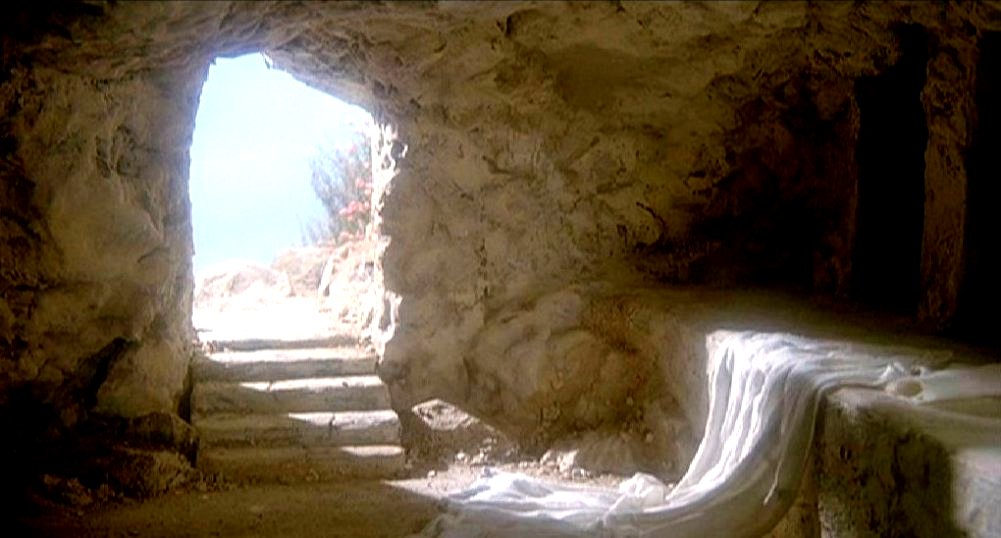
But he does not want to. God invites obedience from love rather than forces it from power. Do you wish to know how the the power of God and love of God are the same? Here is a hint:


And here it is fully known and displayed: 


Jesus explained this while he lived: "For God so loved the world that he gave his only Son, and whoever believes in him shall not perish but have everlasting life." 

One of the central spiritual disciplines for Lent is commitment to shed habits of ungodliness and sin and to adopt habits of virtue and holiness. This is the real intention of Lenten sacrifice - to use the 40 days of Lent to kickstart enduring progress toward Christlikeness.

However, in some ways Christian discipleship is a zero-sum game. That is, if we are to grow in discipleship we have to shrink in whatever hinders us from it. If we are to add holiness to our lives, we have to give up ungodliness. In his book I Surrender, Patrick Morley writes that the church’s main misconception is “that we can add Christ to our lives, but not subtract sin.” We think we can change what we believe without changing what we do. We want revival without reformation, says Morley, and rebirth without repentance.

That is why this Sunday, the first Sunday of Lent, is commitment Sunday at our church. Everyone will have the opportunity to make a personal, and private, commitment to God for this Lenten period. We distributed a from last week, and will again this Sunday, a form that may used as a template for Lenten commitment. Of course, you may make Lenten commitments as you wish; the form is merely a suggestion, not a requirement.

Everyone this Sunday will be handed an envelope. After completing your Lenten commitment, fold it and place it inside the envelope, the write your name and address on the front and seal it. Bring the envelope when you come forward to receive the bread and wine of Communion, and leave it at the altar area. After the service, a team of volunteers will gather to pray for each person individually. Then we will mail your envelope back to you, unopened.

Methodists have understood that the fullness of Christian faith and practice is found in four main areas:

  • Acts of worship - the public, communal praise of God and renewal by the Holy Spirit to be in discipleship throughout the week.
  • Acts of devotion - prayer, Scripture study, meditation, or journaling that opens the heart to the indwelling of the Spirit and asks God’s intercession for those in need. 
  • Acts of justice - those done in Christian concern, in cooperation with other people, which help affairs of the world or the church come more closely to the ideals of God as explained in the Scriptures
  • Acts of charity - personal acts of love or care that are individual rather than communal. 
No one is required to make resolutions according to these areas; they are one way to think about personal spiritual growth and religious life. Your resolutions are private. Please prayerfully consider ways that God is leading you to grow in Christian love, devotion, and service, and then bring your resolutions to worship on February 14.

Here is a link to download the form in PDF format: http://1drv.ms/1QaTWBu

God bless you for a holy Lent, and may the grace of our Lord rest upon you all!


Why we should not do Jewish Passover meals in church

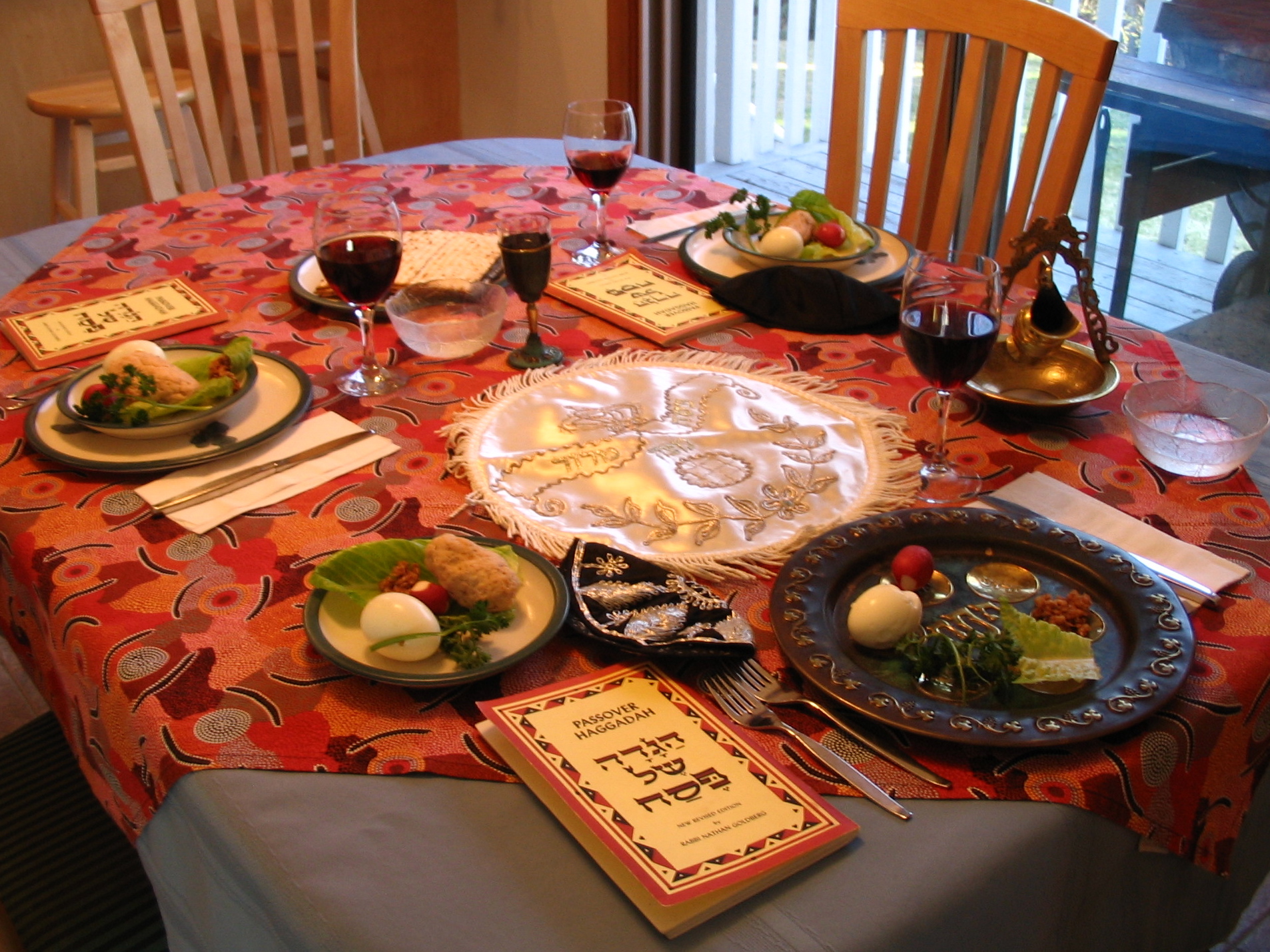
There is a habit that waxes and wanes in churches over time, that of holding Jewish Passover during Holy Week, sometimes during the Holy Thursday service itself. Sometimes you may hear the Passover referred to as a Seder meal, but Seder simply means "order," not Passover. That is, any Jewish meal that follows a liturgical or ritualistic order can be a Seder, Passover or not.

A modern Passover meal setting. This is not how Jesus celebrated Passover.
In fact, we have no idea how Jesus celebrated Passover
But there are several problems with Christian churches co-opting this distinctly Jewish religious practice. One is that the Gospels are not unanimous that Jesus celebrated Passover on Thursday night. Passover is in the synoptic Gospels but not in John, which says that the Last Supper was the night before Passover. Also, even in the synoptic Gospels it is pretty clear that the Lord's Supper, on which we model Holy Communion, is not the same as a Passover meal; after all, it was after the supper was over that Jesus took the cup to offer it to his disciples as his blood shed for them and "for many for the forgiveness of sins." These differing accounts in the Gospels should make it clear that trying to press any specific actions into any particulars of Jewish Passover ritual of that or any time is problematic at best.

Practicing a Passover in a Christian church, especially on Holy Thursday, risks conflating a Passover meal with Holy Communion and confusing the two in the understanding of what either is. They cannot, and so should not, be co-identified with one another.

This is what Taylor Watson Burton-Edwards, director of UM worship resources, has written on the topic:
The United Methodist Book of Worship has this to say about Seder practices. "United Methodists are encouraged to celebrate the Seder as invited guests in a Jewish home or in consultation with representatives of the Jewish community, thus respecting the integrity of what is a Jewish tradition and continuing the worthy practice of Jews and Christians sharing at table together. Celebrating the modern meal without a Jewish family as host is an affront to Jewish tradition and sometimes creates misunderstanding about the meaning of the Lord's Supper.
But there is more. Most of what follows is derived from UM sources and discussion and historical studies of the subject.

First, any specific connections between the Last Supper and Passover ritual in the time of Jesus are actually impossible to establish. There are no reliable texts describing Jewish Passover practices at all until the third century, and there is no way to demonstrate that these texts, which are themselves rather sketchy on some points, reflect what first century practice would have been. Thus, trying to recreate a first-century order for Passover or imagine what it may have been is just that—an act of imaginative speculation, not an act of responsible historical interpretation. It should also be noted that Jewish Passover Seder practice today is also not based on these third century texts, nor does it claim nor try to be. Instead, it consciously embraces the later history of the development of this rite beginning in the late middle ages and into current times.

So if there was a Seder for Passover in the first century at all, literally no one today knows or can claim to know what it looked like.

Second, Jesus chose perhaps the most non-distinctive elements of the Passover meal -- bread and wine, common to all meals -- as the signs and bearers of his body and blood in all the biblical accounts of the last supper in the gospels and I Corinthians. Given conflicting accounts between Luke and the others about which cup of wine Jesus used to designate his blood, there is no way to conclude decisively, on biblical grounds, what the meaning of that cup would have been related to a first century Seder, even if we had access to a definitive text.

Third, the earliest forms of Christian Eucharistic prayers bear far more resemblance to Jewish thanksgivings for meals (Q’iddush) or for Sabbath than to anything we see from the third century or even later medieval Jewish Seder texts.

This is not a problem nor seen as a problem by Judaism. Judaism understands itself to be a developing religion. Not everything for them was settled in the biblical period. There is always more to be understood.

But it is a serious problem for 21st century Christians trying to read much, much later Jewish liturgical practices onto whatever Jesus was doing with his disciples in the first century.

Monday, January 25, 2016

Why we should make all the money we can

Three Money Rules and Modern Life – Jan. 24, 2016


We ought not to forbid people to be diligent and frugal: We must exhort all Christians to gain all they can, and to save all they can; that is, in effect, to grow rich!
John Wesley, "Thoughts Upon Methodism," 1786 

One of the doctrines of the United Methodist Church that is Methodists should make all the money we can as part of our Christian duty and obligation. This is not a popular view these days, either within the church or society at large. Nonetheless, it is our doctrine. 

The reason it is doctrine rather than advice is that the doctrinal standards of the UMC include the sermons of John Wesley.

In his sermon entitled, "The Use of Money," John Wesley pointed out that “poets, orators, and philosophers … rail at” money “as the grand corrupter of the world .. the pest of human society.”
Then he said that all such statements were merely empty rantings, lacking solid reasons. Money is not to blame for the corruption of the world. “The love of money,” says the New Testament “is the root of all evil.” Wesley added,
The fault does not lie in the money, but in them that use it. It may be used ill: and what may not? But it may likewise be used well: It is full as applicable to the best, as to the worst uses. … It is therefore of the highest concern that all who fear God know how to employ this valuable talent … [which] may be reduced to three plain rules… . The first of these is, "Gain all you can.”

Money Rule No. One: We ought to make all the money all we can.

But it must be done morally, ethically, not at the expense of one’s life in Christ nor at the expense of our health. The apostle Paul put it this way in 1 Timothy 6:9, 
But those who desire to be rich [he means rich for its own sake] fall into temptation, into a snare, into many senseless and harmful desires that plunge people into ruin and destruction.
Not everyone is going to become wealthy. But Wesley went on to say if not wealthy, then aim for prosperity and if not that at least self-supporting. There is strong biblical support for this, for example, 1 Thessalonians 2, in which Paul reminded the church in Thessaly: 
We were not idle when we were with you, nor did we eat anyone’s food without paying for it. On the contrary, we worked night and day, laboring and toiling so that we would not be a burden to any of you. We did this, not because we do not have the right to such help, but in order to offer ourselves as a model for you to imitate. For even when we were with you, we gave you this rule: “The one who is unwilling to work shall not eat.”
So we should make all the money we can with the strong admonition that the point of making all we can is not to make all we can. That is, in the Christian perspective, accumulating wealth is not the goal of making money. That is where the other two rules for money come in.

The second rule of money is to save all we can.

Money is a tool for other ends, not an end in itself. So, Wesley said, don’t spend money 
  • on trivial pursuits or on what we would call bling, 
  • do not spend money simply to impress others 
  • or to signal status. 
  • Do not spend money just to claim a place in social standing.
Business Insider adds that spending money to assuage emotions is always a bad idea and so is debt. In fact, 10 percent of Americans owe more money than they have on hand and more than a third of Americans have credit card debt that exceeds their savings balance.

Live simply and justly. Save money to meet unforeseen needs, to pay for planned expenses and to be self-sufficient in retirement. That’s pretty much the whole goal of savings and investment.

The capstone of Methodist rules of money: Give all you can.

To an outside observer, Christians can be distinguished from non-Christians by only two things: how we spend our money and how we spend our time. Because really, that is all we have. 

And that is the hardest part. Surveys show that about seven of ten Americans describe themselves as Christians but almost two-thirds of Americans agree that the purpose of life is enjoyment and personal fulfillment and that each person's main responsibility is to oneself. 

Robert Wuthnow wrote in his book, God and Mammon in America that most of those who described themselves as committed churchgoers admitted they live no differently than non-Christians in any significant respect.


John Wesley wrote in 1786 that the Methodist movement would "dead sect" with having the form but not the power of Christian religion if holiness lost its place as Methodists’ guiding principle. The late Christian philosopher Henri Nouwen observed,
One of the temptations of upper-middle class life is to create sharp edges of our moral sensitivities that allows comfortable confusions about sin and virtue. The difference between rich and poor is not that the rich sin more than the poor, it is that the rich find it easier to call sin a virtue. When the poor sin, they call it sin; when they see holiness, they identify it as such. This intuitive clarity is often absent from the wealthy, and that absence easily leads to the atrophy of the moral sense.
That is why the third doctrine of money of the UMC is so important, to give all you can. It is through generosity that an unrighteous love of money is blocked and that money is used as a tool for good. Methodist Bishop Gary Mueller of Arkansas wrote recently,
It’s easy to get fixated on what’s missing in your life – the right job, house, car or money in the bank. Soon, however, you become angry, which can lead to an attitude of entitlement, which inevitably makes you more and more self-centered, which takes you away from God,
and which leaves you feeling isolated, bitter and negative. But something quite different occurs when you focus on what you do have - even when you don’t have everything you think you would like. You begin to experience overwhelming gratitude, which makes you more and more God-centered, which always takes you into an ever-deeper relationship with God, and which results in more joy, freedom and hope than you ever imagined. 
Ironic, isn’t it? The more you make it all about you, the more you struggle; while the more you make it about God, the more you thrive. It may be a hard lesson to learn, but it’s one that will last an eternity.
It is impossible to give oneself into poverty. The point of earning all we can and saving all we can is to release ourselves from the golden manacles of concern, anxiety and worry about money in order to use our money to carry out the work of Christ in the world. Everything about discipleship takes either time or money, and usually both.

There is, however, good news on the giving front. Americans are the most generous people in the world in terms of total monies given. CNN reported that in 2014 Americans donated a record $358 billion. By another measure – the percentage of individuals who personally helped a stranger, volunteered their time or gave money to a charity in the past year – we are second, just behind Burma.

Earning and saving require planning and discernment and so does giving. The New Testament actually sets priorities for giving that are easier to say than to carry out. In 1 Timothy 5, Paul writes that anyone who fails to provide for one’s own relatives, “especially for family members, has denied the faith and is worse than an unbeliever.” But he is referring to relatives in actual need, not those who merely earn less money.

After family members come the members of one’s church and then everyone else. Now, these priorities do not translate very neatly to 21st-century America since in Paul’s day there were no social-welfare agencies or bureaucracies and society itself, including families, was organized differently than we are. Nonetheless, as a general rule, it is a good place to start: family first, then other members of the church, then everyone else. If that sequence makes you uneasy, well, it does me, too.

All that being said, we are unmistakably obligated by Christ to assist people in need, to provide for the poor and those in crisis. In fact, Paul wrote in Ephesians 4 that the primary objective of work is “to have something to share with those in need” and in 2 Cor 9: “And God is able to bless you abundantly, so that in all things at all times, having all that you need, you will abound in every good work.”

Honest work, honestly done is the biblical standard. Gains must be honorably achieved. There are many admonitions to be honest in business. Deuteronomy 25, for example, requires merchants to give honest weights and measures in their trade: 
A full and fair weight you shall have, a full and fair measure you shall have, that your days may be long in the land that the Lord your God is giving you. For all who do such things, all who act dishonestly, are an abomination to the Lord your God.
1 Timothy 5 instructs employers not to cheat their employees: “For the Scripture says, ‘You shall not muzzle an ox when it treads out the grain,’ and, ‘The laborer deserves his wages.’”

So what we have learned about work and money?
  1. Making all the money that we can does not overrule our primary duty of religious devotion and holy living. Jesus said, “Seek first the Kingdom of God” and the things that money buys will be properly prioritized.
  2. A Christian is obligated to create wealth, but wealth is not the point of life. Our calling in life is to be a holy people who spread scriptural holiness across the land.
  3. Wealth without righteousness is more eternally lethal than poverty with holiness.
  4. We give from our wealth in emulation of Jesus’s ministry and to deny ourselves as Christ commanded, for as he told us, we cannot serve both God and wealth if we make wealth an idol of our loyalty rather than God.
And so we should live as 2 Philippians teaches:

Do nothing from selfish ambition or conceit, but in humility regard others as better than yourselves. Let each of you look not to your own interests, but to the interests of others. Let the same mind be in you that was in Christ Jesus,
who, though he was in the form of God,
    did not regard equality with God
    as something to be exploited,
but emptied himself,
    taking the form of a slave,
    being born in human likeness.
And being found in human form,
   he humbled himself
    and became obedient to the point of death—
    even death on a cross.

“Gain all you can. Save all you can. Give all you can.” They are a unity. All done together they assist personal holiness by enabling us to be the body of Christ in the world.

Click image to enlarge


Friday, December 25, 2015

The Forgotten Man and the Marvelous Exchange

Matthew 1.18-25:
18 Now the birth of Jesus the Messiah took place in this way. When his mother Mary had been engaged to Joseph, but before they lived together, she was found to be with child from the Holy Spirit. 19Her husband Joseph, being a righteous man and unwilling to expose her to public disgrace, planned to dismiss her quietly. 20But just when he had resolved to do this, an angel of the Lord appeared to him in a dream and said, ‘Joseph, son of David, do not be afraid to take Mary as your wife, for the child conceived in her is from the Holy Spirit. 1She will bear a son, and you are to name him Jesus, for he will save his people from their sins.’ 22All this took place to fulfil what had been spoken by the Lord through the prophet: 
23 ‘Look, the virgin shall conceive and bear a son,
and they shall name him Emmanuel’,
which means, ‘God is with us.’ 24When Joseph awoke from sleep, he did as the angel of the Lord commanded him; he took her as his wife, 25but had no marital relations with her until she had borne a son; and he named him Jesus.
He was  faced with a detestable duty. He was a man of compassion, even tenderness. But he was also a man honor, a man of stern code. His obedience to the Law was unwavering. The moment he learned that his fiancé was pregnant he knew that it was the end. The end, certainly, of their betrothal, and perhaps even the end of her life.
 
It was two millennia ago in the Roman-occupied land of Judea. The man was named Joseph. His fiancé was Mary. She was going to have a baby and it sure was not his. Compassion, honor and duty dueled within Joseph. He could not pretend there was no problem. She obviously had betrayed him. The whole town of Nazareth was watching. 
 
Finally, Joseph decided Mary would have to pay the price for infidelity as his honor and the Law required, but tempered with mercy. Joseph determined to break his engagement to Mary and dismiss her from his life without fanfare, leaving her to fend for herself. It would clear the slate, restore his honor and was as least hurtful to the young woman as any just solution could be. 
What the outcome might have been by Joseph’s plan we don’t know, because God revealed to him what was really going on, and Joseph changed his mind. 

Joseph dreamed of an angel, who informed Joseph that Mary’s unborn child was of the Holy Spirit. The angel gave Joseph instructions: take Mary home as his wife and adopt Mary’s child as his own, giving him the name Jesus, an ordinary name then, meaning,“God helps.” 
 
These things came to pass. In Joseph’s day, when a Jewish man gave a name to the child born to his wife, he was confirming the child as his own. Maybe others knew that Joseph was not the baby’s natural father, maybe they didn’t. It didn’t matter. When Joseph named the baby Jesus, he was also giving to Jesus his own identity, his own lineage. That is why Jesus could truly be said to be of the line of David, because Joseph was of David’s line and Joseph adopted Jesus as his own son. When Joseph named the child Jesus he was telling the world, “This child belongs to me, this child is my child.” 
 
We give Joseph short shrift, perhaps because Joseph is treated somewhat cursorily in the Gospels. Mary gets a lot more play. Joseph never speaks. Joseph hears, Joseph dreams, Joseph acts and Joseph obeys, but not even one syllable of his speaking is related. Mary is the one with the speaking part. Her role is the most sought after in Christmas pageants. 
 
Another pastor told me of one afternoon before the annual Christmas program, when a mother phoned the church office to say that her son, who was to play Joseph in the children's play, was sick and wouldn't be able to be there. “It's too late now to get another Joseph,” the director of the play said. “We'll just have to write him out of the script.” And they did. Joseph is easy to overlook and leave out.
 
In 1993, my wife played Mary in the Christmas pageant at our church. She got the part only because they needed our two-month-old daughter to play the baby Jesus, there being no other small infant in the congregation. Cathy and Elizabeth, Mary and Jesus, were a package deal, couldn’t get one without the other. But any guy off the street could have played Joseph. In fact, the pastor actually asked me, “Don, did you want to play Joseph or should I get a man from the choir to play him?” I said I would, but talk about feeling like a fifth wheel ... .
 
But more is going on with Joseph than is first apparent. A recurring theme of St. Paul is that Jesus' followers are adopted by God and made children of God, brothers and sisters of Christ. This should make us reconsider the significance of where Joseph fits in with God’s work. Joseph’s adoption of Jesus is highly significant. 

What if Joseph had said no to the angel and had sent Mary away anyway? Can we imagine Jesus growing up in the home of an unwed, single mother, both Mary and Jesus therefore outcast from society? How would Jesus have conceived of God as his heavenly Father if Joseph had never taken on the role of Jesus’ earthly father? But father to Jesus Joseph was.
 
God adopts Jesus’ disciples as sons and daughters of God in the family of God. But first, God sent his Son to be adopted by Joseph into the family of mortals. Joseph affirmed on behalf of all humanity that God belongs with us, "God with us."
 
The symmetry of God being born into humanity and humanity thence being adopted to become, as Second Peter puts it, “partakers of the divine nature” is called the “marvelous exchange” in Roman Catholic catechism and theosis, or divinization, in the Eastern Church. It is to realize that God becomes one of us so that we may become like him, and so are perfected to live forever with God.
 
Theologian George Weigel explains, “God ‘exchanges’ his divinity for our humanity, thus enabling us to ‘exchange’ our weakness for his divine glory – the glory of which the angels sing to the shepherds of Bethlehem.” St. Paul proclaimed in Second Corinthians, “For you know the grace of our Lord Jesus Christ, that though he was rich, yet for your sake he became poor, so that by his poverty you might become rich” (2 Corinthians 8:9).
 
This is possible because of the power of God, of course, but also because of the strength of Joseph. Joseph adopted the Son of God as the child of humankind, and through Christ God adopts you and me as children of God. This is a marvelous exchange indeed! Should we not see the symmetry of salvation and relationship – dare we say partnership – at work in the will of God and the obedience of Joseph? We see in Joseph’s story that we and God belong to each other in the one whom Joseph named Jesus, “God helps.”

Tuesday, December 22, 2015

A Communion liturgy for Christmas Eve

This is basically The Great Thanksgiving for the day from the UM Book of Worship, with the Invitation and Pardon my own writing (at least I am pretty sure, since I have used this for several years).

Invitation and Pardon

....Christ our Lord was not born to condemn the world, but that the world might be saved through him. And so Christ invites to his table everyone who loves him or wishes to love him, who hears his voice or desires to hear it, who comes this holy day from religious devotion or family duty, and who can pray with sincere heart:
....Merciful and forgiving God, we confess we withhold our love from you. We too easily fail to be obedient to your will. Forgive us, we pray, and free us for joyful obedience through Jesus Christ our Lord! Instill in us a true desire to live lives of worshipful holiness. Embolden us to rejoice always in your love, to love our neighbors as ourselves and to heed the cry of the needy. On this holy day, accept our prayers and worship as our thanks for your incomparable Christmas gift.
....Amen.
....Hear the Good News! Christ died for us while we were still sinners; that proves God’s love toward us. In the name of Jesus Christ, you are forgiven!
....In the name of Jesus Christ, you are forgiven!

The Great Thanksgiving
Pastor: The Lord be with you.
People: And also with you.
Lift up your hearts!
We lift them up to the Lord!
Let us give thanks to the Lord our God.
It is right to give our thanks and praise.
....It is right, and a good and joyful thing, always and everywhere to give thanks to you, Father Almighty, creator of heaven and earth. And so, with all your people on earth and all the company of heaven, we praise your name and join their unending hymn,
....Holy, holy, holy Lord, God of power and might, heaven and earth are full of your glory! Hosanna in the highest! Blessed is he who comes in the name of the Lord. Hosanna in the highest!
....Holy are you and blessed is your Son Jesus Christ. 
....Long ago, you called Abraham to walk in your way. With his wife Sarah he founded a people chosen by you to bring light to the world. Knowing that their descendants were bound in slavery in Egypt, you made with them a covenant of righteousness and led them to freedom in the Promised Land.
....Through the prophets of Israel you made known your salvation-righteousness and through the prophet Jeremiah foretold of a New Covenant. In this covenant, you said,
....“I will put my law in their minds and write it on their hearts. I will be their God,  and they will be my people. No longer will they teach their neighbor,  or say to one another, ‘Know the LORD,’ because they will all know me, from the least of them to the greatest,” declares the LORD. “For I will forgive their wickedness and will remember their sins no more.”
....In the fullness of time you chose a woman of holy character named Mary, telling her through your messenger,
....“You will conceive and give birth to a son, and you are to call him Jesus. He will be great and will be called the Son of the Most High. The Lord God will give him the throne of his father David, and he will reign over Jacob’s descendants forever; his kingdom will never end.”
....When Jesus was grown he was baptized and your Spirit rested powerfully upon him. He resisted temptations and preached the Good News to all who would hear. He healed the sick, proclaimed freedom for the prisoners and recovery of sight for the blind, and announced the year of the Lord's favor.
....Betrayed by a disciple, he was adjudged guilty of blasphemy against you, O God, who formed him in his mother’s womb. Though innocent, he was sentenced to die by the Roman governor, Pontius Pilate.
....And yet, according to your will, by the baptism of his suffering, death, and resurrection you gave birth to your church, delivered us from slavery to sin and death and made with us a new covenant by water and the Spirit.
....On the night in which he gave himself up for us he took bread, gave thanks to you, broke the bread, gave it to his disciples and said, “Take eat; this is my body which is given for you. Do this in remembrance of me.”
....When the supper was over, he took the cup, gave thanks to you, gave it to his disciples, and said, “Drink from this, all of you. This is my blood of the new covenant, poured out for you and for many for the forgiveness of sins. Do this, as often as you drink it, in remembrance of me.”
....And so, in remembrance of these, your mighty acts in Jesus Christ, we offer ourselves in praise and thanksgiving as a holy and living sacrifice, in union with Christ’s offering for us, as we proclaim the mystery of faith:
....Christ has died; Christ is risen; Christ will come again!
....Pour out your Holy Spirit on us gathered here and on these gifts of bread and wine. Make them be for us the body and blood of Christ, That we may be for the world the body of Christ, redeemed by his blood.
....By your Spirit make us one with Christ, one with each other and one in ministry to all the world, until Christ comes in final victory and we feast at his heavenly banquet.
Through your Son Jesus Christ, with the Holy Spirit in your holy church, all honor and glory is yours, almighty Father, now and for ever.
....Amen.

....And now, with the confidence of children of God, let us pray the Lord’s Prayer.
....Our Father who art in heaven, hallowed by thy name, thy kingdom come, thy will be done on earth as it is in heaven. give us this day our daily bread; and forgive us our trespasses as we forgive those who trespass against us. And lead us not into temptation, but deliver us from evil, for thine is the kingdom, and the power and the glory forever. Amen.


Saturday, December 5, 2015

A post-San Bernadino primer, part 1

I am writing this post to link on the clergy and clergy-related United Methodist Facebook pages, where, since the terrorist attack in San Bernadino, Calif., this week, the "fur has been flying" over what positions the denomination holds on violence and what positions United Methodists should stake out. 

This is a long series of posts because so many of my colleagues in ministry and others are making claims that seem to be cued more from politicians than actual law and facts about firearms. So first is a definition of terms, then a look at the laws regarding firearms purchases and transfers, then whether, as many of my colleagues have claimed, that we need simply to follow the UM Book of Resolutions and nothing much more. 

Terms

Advocates for stricter gun control laws should at least know how to talk accurately about guns. The day after the San. B. attack,
California Democratic Rep. Loretta Sanchez claimed that multiautomatic round weapons are easily available, even though not in California.
My first career was as a US Army combat-arms officer. I was qualified expert on a wide range of weapons from pistol to rifle to machine gun and anti-tank weapon. Never in my life have I heard of a "multiautomatic round weapon." All rifles and pistols fall into one, and only one, of the following categories:

1. Single shot: the gun must be manually reloaded after every shot. Single shot pistols are rare are and are mostly collector's items these days. Single shot rifles are either very specialized military sniper rifles or ordinary hunting rifles. Because they have a very slow rate of fire, they are pretty much useless for other purposes than these. 


Bolt-action, single shot rifle

The only exception I might make is the famous Winchester rifle design, which is manually reloaded from a tubular magazine, below and parallel to the barrel, by cycling a lever. Well-practiced shooters can fire these fairly rapidly, but their ammunition capacity is quite low and they are very slow to reload, so as mayhem guns they are not much suitable. That's why you never read news reports of them being used for criminal purposes.


Winchester Model 1894
 2. Semi-automatic: This means that each trigger pull fires only one round (bullet), then the gun reloads itself but will not fire again until the trigger is pulled again. That is, the reloading is automatic, but the firing is manual for every shot, hence, semi-automatic, not fully automatic. The simplest way to look at it this: if the gun is ready to fire again after firing a shot, so that all the shooter has to do is pull the trigger another time, then the gun may be termed as semi-automatic. 

Every magazine-fed pistol is semi-auto and in typical usage, when the media report that a criminal used a semi-auto pistol, a magazine-fed pistol is what they mean. For revolvers, some are semi-auto because those types are mechanically made ready to fire again after every shot (until ammo is exhausted). Some are not semi-auto, though, and are single shot guns because the shooter has to manually make the gun ready to shoot again after each shot. Here is the difference:

Revolvers are either Single Action or Double Action and the majority of revolvers being sold today are both. Single Action (SA) means that the shooter must manually cock the firing level to the rear for each shot. Revolvers that are Single Action Only (SAO) are therefore single-shot pistols, not semi-auto. However, Double Action revolvers do not require manually cocking the lever: load the gun, pull the trigger and it shoots. These revolvers are called Double Action Only (DAO).

The majority of revolvers are SA/DA, which means the level must be cocked for the first round, but not for subsequent rounds. These may be (I emphasize may) more useful for self defense, but the trigger control for subsequent rounds is usually not easy and they are difficult to shoot accurately in a hurry. Their real hazard is not only missing the target more often than a SAO revolver, but that to holster the gun after firing the shooter has to remember to "decock" it so it is no longer ready to fire immediately - a real safety issue. 


Magazine fed pistols, such as the Walther PPK pictured below, are almost all SA/DA or DAO. In DA mode, mag-fed pistols are much easier to fire than DA revolvers because the trigger pull is doing much less mechanical work. DAO mag-fed pistols and revolvers typically do not have an exposed hammer or lever. The Walther below is a SA/DA pistol.


Colt Police Service revolver, a semi-automatic pistol


James Bond's Walther PPK, a semi-automatic pistol
Semi-auto rifles are one of the following designs:

1. Magazine fed: Most military-design rifles are magazine fed. A magazine is a container, holding various numbers of rounds, that attaches underneath the firing chamber. When the trigger is pulled, the firing assembly recoils to the rear of the chamber and the fired case is ejected. When the assembly returns forward, it strips the top round off the magazine and inserts it into the breech and the gun is ready to fire. The trigger must be pulled again to shoot one, and only one, more shot, then the whole process may be repeated until the magazine is empty. A semi-auto rifle or pistol fires one and only time per trigger pull, but the gun reloads itself after each shot.
The infamous Russian AK-47 rifle, a magazine fed rifle and the most produced rifle ever.
2. Clip: The term "clip" should not be used to mean magazine. A clip is an old military design that was used for both single shot, bolt-action Army rifles (The M1903) and the World War 2 M1 Garand semi-auto. 


WW2-era M1 Garand rifle shoring ammunition clip being inserted.

There have been tubular-magazine, semi-auto rifles designed, but they are obsolete and no longer made these days. 

3. Automatic or fully-automatic: This simply means that when the trigger is depressed, the gun will keep firing until the trigger is released or the ammunition is exhausted. Military machine guns are the best example, such as the US Army M60 machine gun illustrated below. 


The M60E3 military machine gun, a belt-fed, full-automatic weapon
There have been full-auto pistols produced but the concept was abandoned because recoil makes such firing wholly impractical. The Army's famous M16 series rifle and its successor, the M4, have a selector switch the enables either semi-auto or full-auto firing. However, modern US military automatic rifles restrict full-auto firing to three rounds at a time because after three, recoil almost always throws the point of aim well off the target.

It has been illegal since 1934 for private citizens to own full-automatic firearms without extensive background checks, police-department prior approval and expensive federal licensing (National Firearms Act of 1934). However, any automatic gun manufactured after 19 May, 1986, may not be owned by private citizens unless they are licensed dealers. But even they cannot transfer or sell it to anyone except police, the military or a manufacturer licensed to make automatic guns, and the dealer must surrender possession of the firearm if he gives up his license (all of which which makes the whole drill rather pointless for a dealer). 

Final term for today: 

"Assault rifle"

In 1993, when the Congress first moved to ban such things, I was serving in the Pentagon. I had never heard the term "assault rifle" before so I looked it up in the official DOD dictionary of military terms (yes, there is such a thing). Know what? It wasn't there. 

"Assault rifle" is a political term and has no other context. What it really means is "looks scary." 

So let's take a look at "assault weapons." I mean literally take a look:

Under the previous ban on assault rifles (1994-2004), this rifle meets the legal definition of an assault rifle:


And this does not:


Yet functionally they are exactly the same. Each is a .22-caliber, semiautomatic, magazine-fed rifle made by Mossberg. The top is the Model 715 and the bottom is Model 702. The barrels, bolt and magazine wells for each are identical to the other. The ammunition and effective range for both are identical. The 715 is illustrated with a 25-round magazine that also fits without modification into the 702 at bottom, like this:


What is the difference, then, between the two guns? None that affects the function:

  • I guess the 715 looks scarier than the 702. 
  • The 715 is about $150 more (suckers!) 
  • The 715 has a carrying handle, but that's a matter of convenience to haul it around and has nothing to do with its lethality. 
  • Identical scopes may be fitted to each. 
  • The 715 has a "quad-rail fore-end," extending around the barrel from the breech to the front sight. Various accessories may be mounted on the rails, such as a flashlight or laser sight. This may, under some conditions, marginally improve the 715's accuracy over the 702, but not much, and has nothing to do with making the rifle itself deadlier when fired. 
  • The stock on the 715 is adjustable in length, but not by much. It is not a folding stock.
There is no difference between them that affects function, mechanical rate of fire, range, ammunition or lethality. Post San B., one side of the political aisle (including the president just today) has said the 715 should be banned but not the 702.


But what about banning "high-capacity" magazines? The 702's included magazine holds 10 rounds. Let's compute times for each gun to shoot 100 rounds. The triggers for both (being identical) can easily be pulled five times per second. Actual trigger-pulling time for each rifle to 100 rounds is therefore 20 seconds (okay, technically 19.8, but we'll round off). 

It takes a shooter three seconds to swap out magazines in a hurry. To shoot 100 rounds with the 715 requires three magazine swaps, or nine seconds of changeout time. Shooting 100 rounds with the 702 requires nine changeouts, or 27 seconds, 18 seconds more. 

Total shooting times:
  • 715 - 29 seconds
  • 702 - 47 seconds
Now, in a gunfight, 18 seconds can be a long time, but you're only getting them three seconds at a time. I don't say they don't matter, but I do say they don't matter as much as gun controllers think. The so-called "high-capacity" magazine ban is eyewash. And there are literally millions of 10-plus capacity mags already "in the wild," so to speak. What would the administration do about them?

Finally, the inefficacy of the 1994 "assault rifle" ban is well illustrated by this:
This was a banned "assault weapon:"


This was a permitted rifle that was not an "assault weapon:"


Can you tell the difference? 

Update: A word about how ammunition is classified.

Um, no.

Ammunition for pistols and rifles is classified according to the diameter of the bullet. It unit of measure is either in millimeters or as a decimal of an inch. For example, 9mm ammo or .45-caliber ammo. But, CNN not withstanding, they are not both at the same time, and a decimal mark never precedes the millimetric number. So there is no .9mm round nor a .22mm long rifle round.Those would be 9mm and .22, respectively.

However (because nothing should be truly simple, right?), there is a pistol round called .380 ACP caliber. (ACP simply stands for Automatic Colt Pistol). This caliber is also known as a "9mm short," having the dimensions of 9 X 17 mm. But "9mm" by itself means a round 9 X 19mm, referred to as the 9mm parabellum or 9mm Luger.

To make things even more confusing, the .380 is not actually a .38-caliber round. It and the 9mm parabellum are exactly .355 inch in diameter. So is the .357 magnum round. And both the .38 ACP and the .38 Super rounds are .356 inch in diameter. The round that actually is .357 inch in diameter is called the .38 Long Colt. Does any of this make sense? Actually, no.

Update: Reason very cogently makes the case that imprecision of language and terms infects the entire debate, but frankly only on one side. And it makes me wonder whether that's on purpose. Reason makes the same point I did, that "assault weapon" is nothing but a political term:
Contrary to what [New York Times columnist Gail] Collins et al. seem to think, the "assault weapon" category has no reality independent of legislation. 
Correct. See here: "Obama Wants to Ban 'Assault Weapons' but Does Not Know What They Are"

Update: When you've lost the Los Angeles Times ... . Why banning assault rifles won't reduce gun violence
The only thing unique about assault rifles is their menacing name and look.

The problem starts with the term itself. The “assault weapons” for sale in the U.S. now aren't really weapons of war. ...

As a matter of functionality, these guns are just like other rifles. They're more powerful than some handguns and rifles, and less powerful than others.
Related: "AFTER SAN BERNARDINO Support for Assault Weapons Ban Reaches 20-Year Low"
... just 44 percent of Americans now support an assault weapons ban, the lowest number in the 20 years that the NYT poll has asked the question. In 2011, 63 percent of Americans supported such a ban.

A world without nuclear weapons - what would it look like?

 From Pope Leo this week, according to the National Catholic Reporter : " Pope Leo quotes Bob Dylan song in book foreword calling for n...