There was woman whom Cathy and I knew from attending soccer games of a team one of our kids was playing on. The soccer mom, whom I’ll call Anna, was in her late thirties with three children. A few months after the end of the season, we learned that Anna had just been terminated from her job. Shortly afterward, her husband filed for divorce. It turned out he had been seeing another woman for more than a year. We relayed this sad news to someone we knew a few days later. This friend replied, “That’s terrible news. But remember, God does not place on us more than we can bear.”

I have to confess that I find that
statement deeply troubling. It presumes, I think, God somehow is the direct
cause of tragedy in our lives and that we are all really just human ten pins
who sometimes get flattened by the divine bowling ball. But don’t worry, you
can handle it because God would not have laid your divorce, or illness, or bankruptcy,
or other misfortune on you if you could not bear it.
But the Bible never says that.
“God does not place on you more than you can bear” is nowhere in the Bible.
Nothing like it is in the Bible. The saying is sometimes attributed to Mother
Teresa. But she neither said it nor wrote it.
In fact, the apostle Paul says
flatly in 2 Corinthians 1:8-10 that he and his missionary companions “were
burdened excessively, beyond our strength, so that we despaired even of
life... .”
But Paul never blamed God for that. Rather, he did understand that there was only one way out: “… indeed, we had the sentence of death within ourselves in order that we should not trust in ourselves, but in God … on whom we have set our hope.”
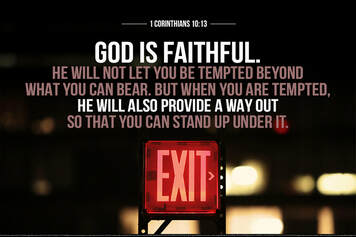
Probably, the idea that God won’t lay life’s exceptional misfortunes or tragedies won’t happen to someone unless they can “handle” it is a misquote of First Corinthians 10, verse 13, which says,
You suffer no temptation but that
which is common to everyone. God is faithful; he will not let you be tempted
beyond what you can bear. When you are tempted, he will also provide a way out
so you can endure it.
It is temptations to cease
discipleship, even if only for a moment, that Paul is talking about, not being
struck by a personal difficulty. Note that Paul does not blame God for
temptation. After all, the apostle James wrote, “When tempted, no one should
say, ‘God is tempting me.’ For God cannot be tempted by evil, nor does he tempt
anyone…” (James 1.13). No temptations come from God, but we have God as partner
when temptations come.
What does it mean, though, that
God “will not let” us be tempted beyond what we can bear? Does that mean that
God is hand picking and choosing which temptations he will let come through and
inflict us? Does he stand aside for some but block others? Frankly, if God is
actively selecting the temptations that strike me, then I don’t even want to
imagine the ones he blocks. The ones that get through are bad enough. Besides,
if God wants me not to sin, why would he let any temptations through at all? If
he can block some, he can block them all.
The way I understand Paul’s
teaching is that no temptation is possible that is more than we can
bear, God being our helper. I do not think that God is carefully selecting
which temptations hit us; no, they all get through. But no temptation is
stronger than the Christ's ability to defeat it. Therefore, no temptation is
more than we can bear, Christ being our strength.
This doesn’t mean it is easy. It
does mean that God is faithful and is always at our side, even when we want to
sin.
I knew a man in his late thirties,
a member of our Sunday School class in Virginia before I entered the ministry.
Though happily married, he became attracted to another woman who was also
married. He knew this was wrong and he successfully suppressed every urge to
act on his attraction, but it was a struggle even though he prayed about it. He read one day Hebrews 2.18, which says of Jesus,
… he had to be … fully human in
every way, in order that he might become a merciful and faithful high priest in
service to God, and that he might make atonement for the sins of the people.
Because he himself suffered when he was tempted, he is able to help those who
are being tempted.
So in prayer this fellow asked
Jesus bluntly whether he, Jesus, had ever been tempted to commit sins of the
flesh. The answer was not what he expected. He wanted a simple yes or no but
instead the Lord’s answer was, “You may trust that the Scriptures are true.”
The man realized that the specific temptations Jesus may have faced were not what
mattered. The truth that counts is that “he is able to help those who are being
tempted.”
For this reason, no temptation is
more than we can bear, but only if we know that it is not ourselves who win the
fight, but the risen Christ who suffered when he was tempted and therefore is
our certain strength when we are tempted.
Martin Luther put this truth in
verse. Let’s look at verse two of his hymn, A Mighty Fortress Is Our God:
Did we in our own strength confide
our striving would be losing,
were not the right man on our side,
the man of God's own choosing.
Dost ask who that may be?
Christ Jesus, it is he;
Lord Sabaoth, his name,
from age to age the same,
and he
must win the battle.
Here are four things about
temptations that may help us defeat them:
1.
The devil does not tempt Christian people to bring us back to
damnation but to remove us from service to God. Once we belong to Christ, the
devil has no control over our eternity. But recurring sinfulness blunts our
discipleship and hinders others from seeing Christ in us or knowing Christ
through us. In tempting us to renounce allegiance to God, which is what sin is,
the devil is not trying to reclaim our souls but to keep a claim on the souls
of people who do not know Jesus but who might be led to Christ by us – were it
not for our sin. Yielding to temptation, therefore, makes us allies of Satan.
This should disillusion us of the idea that there is such a thing as harmless
sin.
2.
Temptation presents a choice, not a destiny. It may be that comic
Flip Wilson’s character Geraldine like to announce, “The devil made me do it,”
but the devil cannot make us do anything. James says, “Submit yourselves
to God. Resist the devil, and he will flee from you.” There is no temptation
that cannot be defeated by a combination of human faith and divine power.
3. There is no temptation that makes
anyone unworthy of discipleship. Being tempted is not a sin, no matter how
severe the temptation or how serious the action would be. Jesus was tempted to
deny God altogether and worship Satan instead. He didn’t. Hebrews explains that
Jesus was “tempted in all things as we are yet was without sin” (4:15). To be
tempted is neither sinful nor shameful. (But it’s nothing to brag about,
either!)
However, being human we will not
be able to resist every temptation. This is a riddle: if any particular
temptation can be defeated why cannot every temptation be turned back without
fail? This question vexed even Paul. He wrote in his letter to the church in
Rome,
“I do not understand my own
actions. I do not do what I want to do, I do what I hate to do. So I know that
sin lives within me. There is nothing good in my sinful nature because I cannot
carry out my own desire to do the good. I keep on doing bad things, even though
I want to do good. So I find this law at work: When I want to do good, evil is
right there with me. Even though in my heart I love God, I also love ungodly
things and I feel trapped by this struggle. What a wretched man I am!” (Rom
7:15-24a, paraphrased).
Nonetheless, our progress toward a
sanctified, holy life is still achievable. “What, then, shall we say in
response to these things?” asked Paul, for after all, “If God is for us, who
can be against us?” The answer is no one who can finally or ultimately prevail.
So what to do when temptation strikes?
First, pray, and simply commit
that temptation over to Jesus’ hands.
Second, try to identify what
appetite the temptation is appealing to, because temptations almost always find
a way to exploit natural needs or desires. After 40 days of fasting, Jesus was
hungry and so the devil tempted him to misuse his divine power for selfish ends
by turning stones to bread. Our natural needs and desires are supposed to serve
us, but we sin when we wind up serving them. There are limits to what we may
justly desire. Instead, we should redirect that appetite to serving the cause
of Christ.
Third, never let temptations, even
successful ones, think you are unworthy to serve God. That would be like Patrick
Mahomes thinking that when he gets intercepted, he should hang up his jersey.
When we yield to temptation, as inevitably we all will, we should confess,
repent, learn from it to be stronger next time, and recommit to serving the
Lord, especially to being one through whom others may know Christ. I can’t
think of anything that will anger the devil so much, and I’d much rather have
the devil mad at me than happy with me.
I’ll leave the last word to Paul,
who in his first epistle to Timothy advised handling temptation this way,
“…shun all this; pursue righteousness, godliness, faith, love, endurance,
gentleness. Fight the good fight of the faith; take hold of the eternal life,
to which you were called and for which you made the good confession in the
presence of many witnesses.”
Let us remember both who we are
and whose we are, for we are called to holiness. “God is faithful; he
will not let you be tempted beyond what you can bear. When you are tempted, he
will also provide a way out so you can endure it.”
We may trust that the Scriptures
are true.


