
And here is another:
Wordles are certainly eye catching. One more:

Cosmologists are not your run-of-the-mill thinkers, and [M.I.T Professor] Max Tegmark is not your run-of-the-mill cosmologist. Throughout his career, Tegmark has made important contributions to problems such as measuring dark matter in the cosmos and understanding how light from the early universe informs models of the Big Bang. But unlike most other physicists, who stay within the confines of the latest theories and measurements, the Swedish-born Tegmark has a night job. In a series of papers that have caught the attention of physicists and philosophers around the world, he explores not what the laws of nature say but why there are any laws at all.If you read the whole interview, you might discern that Tegmark's hypothesis is not far from the theory of the logos in ancient Greek philosophy. The logos was thought to be the ordering structure of the universe, so first described by Heraclitus.The Stoics later picked up the concept, associating it with reason and that which gave animation to the universe.
According to Tegmark, “there is only mathematics; that is all that exists.” In his theory, the mathematical universe hypothesis, he updates quantum physics and cosmology with the concept of many parallel universes inhabiting multiple levels of space and time. By posing his hypothesis at the crossroads of philosophy and physics, Tegmark is harking back to the ancient Greeks with the oldest of the old questions: What is real?
In the beginning was the Word [logos], and the Word was with God, and the Word was God. 2He was in the beginning with God. 3All things came into being through him, and without him not one thing came into being. What has come into being 4in him was life, and the life was the light of all people.Now, Prof. Tegmark certainly did not set out to show that a theory of the universe, founded in 21st-century science, was only an elaboration of early Christian theology or ancient Greek philosophy. But it's kind of interesting that there is a philosophical convergence between them.

So if God is as the premises of the problem describe him, than how can either kind of evil exist? This problem is one of the most-frequently cited reasons that people say they can't accept Christian teaching. (The theological name of this problem is theodicy, derived from the Greek for the "justice of God.")
I will start a sermon series on this problem on July 27. As well, beginning July 15 I'll lead a daytime Bible study called, "Job, Jonah, Jesus and the Problem of Good and Evil," that will meet at 9 a.m.
Folks, pat answers don't work for this problem. It's a hard one.

So the Sunni authorities want Muslims to limit their prayers to 10 minutes each, at least for the two mandatory daily prayers that occur during the workday. Meanwhile, back in the USA, Christian ministers wish their people would pray for 10 minutes once per day.For Egyptian-born Muslim cleric and television host, Sheikh Yusuf al-Qaradawi, there is a simple answer to Egypt's productivity problem -- pray less, work more.
"Praying is a good thing ... 10 minutes should be enough," Al-Jazeera television personality Qaradawi says in a religious edict, or fatwa, published on his website.
..."He's right. I cannot say the contrary. One must not waste time at work and use prayer as the pretext," Sheikh Fawzi al-Zifzaf, of the centre of Islamic studies at Al-Azhar, Sunni Islam's main seat of learning, told AFP.
As for Mohammed al-Shahhat al-Gendi, secretary general of the Council of Supreme Islamic affairs, "10 minutes are absolutely suitable for one prayer."
"Improving productivity is not at all contrary to Islam," he told AFP.

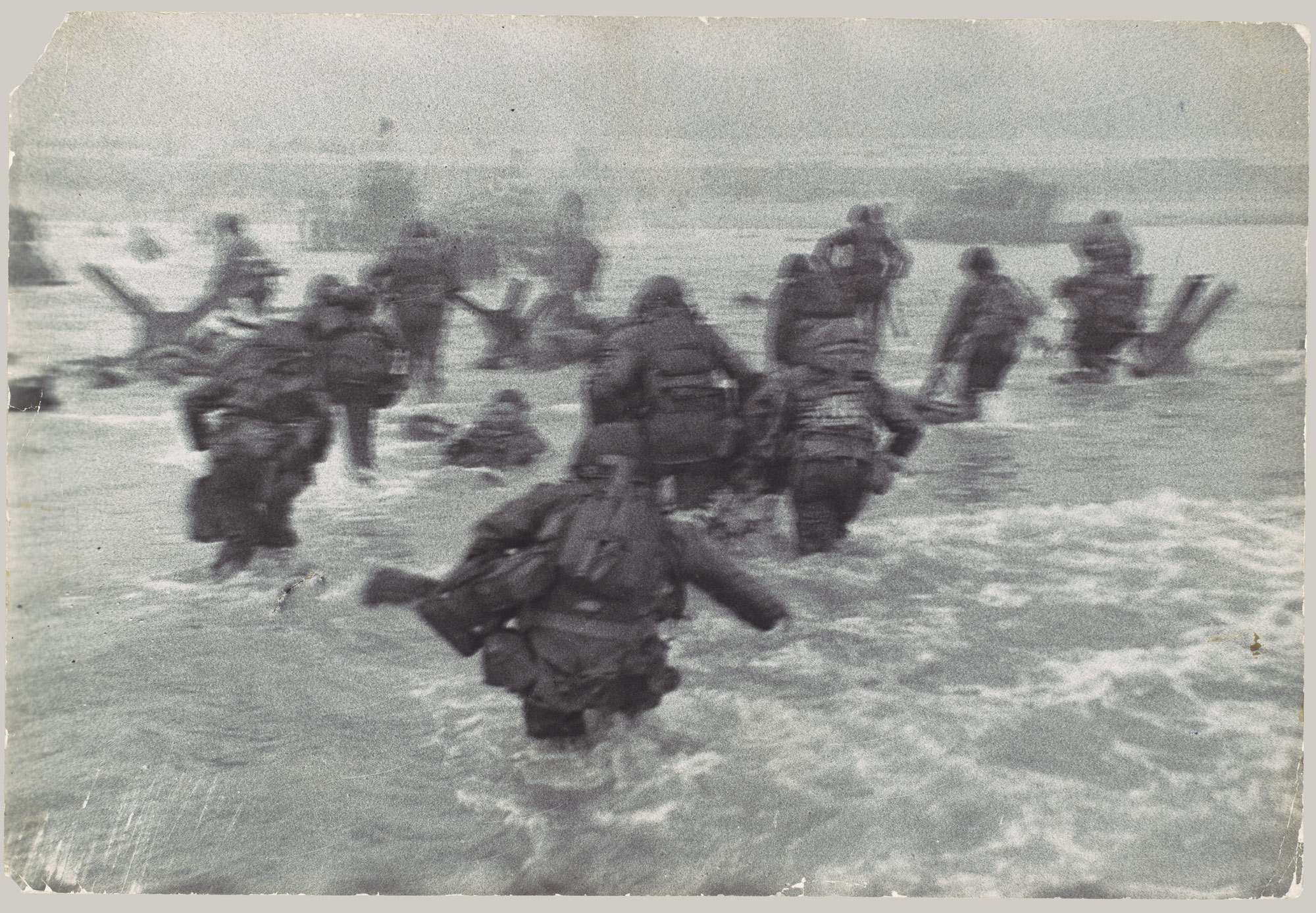 |
| Omaha Beach, Normandy, 6 June 1944 |
 Rescue workers surround a passenger plane which skidded off a runway at Tegucigalpa airport in Honduras, May 30, 2008.
"They say he received something like $3,000 a year," said Abu Atab from Morocco inaccurately. "This shows that Olmert is a decent man. This is a small sum that any Arab government official would receive on a daily basis as a bribe. Our leaders steal millions of dollars and no one dares to hold them accountable."However, there was strong praise for Israel from Arabs who admitted they hated the Jewish state and all it stands for, except this:
Touching on the same issue, a reader from Algeria posted this comment: "In the Arab world, our leaders don't accept less than $1 million in bribes; the money must be deposited in secret bank accounts in Switzerland. Olmert is a fool if he took only a small sum."
Another comment, this time from Ahmed in Jordan, also referred to the alleged amount: "Only a few thousand dollars? What a fool! This is what an Egyptian minister gets in a day or what a Saudi CEO gets in 45 minutes, or a Kuwaiti government official in five minutes. This is what the physician of the emir of Qatar gets every 30 seconds."
A Saudi national named Abdel Karim urged his Arab brethren to stop criticizing Israel and learn something about its democracy. "Before we curse Israel, we must learn from the democratic and judicial system in Israel, where no one is above the law," he wrote.One Arab reader offered some advice to Olmert:
Khaled, another Saudi national, chimed in: "Although we are talking about Israel, which I have always hated very much, there is still no one above the law there."
Mahmoud al-Bakili of Yemen posted the following response on one of the Web sites: "We want this kind of accountability and transparency in the Arab and Islamic world."
And there was this comment from an Arab who described himself as a Syrian Voice: "Despite my strong hatred for the Zionist regime, I have a lot of admiration and respect for this entity because there is no one above the law. In the Arab world, laws are broken every day and no one seems to care."
One Arab commentator who identified himself as Jasser Abdel Hamid advised Olmert to seek citizenship of one of the Arab countries. "Why don't you seek Arab citizenship?" he asked sarcastically. "There you can take as much money as you want. Even if they discover the theft, they will erect a statue for you in a public square."Finally, Rashid Bohairi in Kuwait asked a very good question: "What about the millions of dollars that Mahmoud Abbas and the Palestinian Authority stole? How come the Palestinian people are still hungry?"
There is a worldwide secular religion which we may call environmentalism, holding that we are stewards of the earth, that despoiling the planet with waste products of our luxurious living is a sin, and that the path of righteousness is to live as frugally as possible. [From, "The Question of Global Warming."]Freeman Dyson is one of the most highly-regarded physicists in the world. Wikipedia introduces its entry on him thus
Freeman John Dyson FRS (born December 15, 1923) is an English-born American theoretical physicist and mathematician, famous for his work in quantum mechanics, solid-state physics, and nuclear engineering. He is a lifelong opponent of nationalism and a proponent of nuclear disarmament and international cooperation. Dyson is a member of the Board of Sponsors of The Bulletin of the Atomic Scientists.A true intellectual heavyweight, his essay in the New York Review of Books this month is a very important analysis that I urge you to read in full. Dyson is not the first to point out that environmentalism has morphed into an actual religion in its own right. Michael Crichton and J.R. Dunn have written highly insightful essays about how environmentalism is a religion in its own right. See “Environmentalism as Religion” by Crichton and Dunn’s piece, “A Necessary Apocalypse," in which he shows how global-warming environmentalism is not merely a religion, it is an apocalyptic religion. Its deity is Mother Earth (Gaia), for whom human beings are mortal enemies. NBC’s Matt Lauer inadvertently gave away Gaiaism’s central article of faith thus:
Earth’s intricate web of ecosystems thrived for millions of years as natural paradises, until we came along, paved paradise, and put up a parking lot. Our assault on nature is killing off the very things we depend on for our own lives … The stark reality is that there are simply too many of us, and we consume way too much, especially here at home.My second son was required to take ecology his junior year in high school; he related to me that the curriculum basically said there was nothing wrong with earth that the disappearance of humanity wouldn’t cure. Jonah Goldberg wrote recently of the "Church of Green."
"At its core, environmentalism is a kind of nature worship. It’s a holistic ideology, shot through with religious sentiment. ...As Crichton pointed out, "environmentalism is in fact a perfect 21st century remapping of traditional Judeo-Christian beliefs and myths." Let me elucidate.
Environmentalism’s most renewable resources are fear, guilt, and moral bullying. Its worldview casts man as a sinful creature who, through the pursuit of forbidden knowledge, abandoned our Edenic past. John Muir, who laid the philosophical foundations of modern environmentalism, described humans as “selfish, conceited creatures.” Salvation comes from shedding our sins, rejecting our addictions (to oil, consumerism, etc.) and demonstrating an all-encompassing love of Mother Earth. Quoth Al Gore: “The climate crisis is not a political issue; it is a moral and spiritual challenge to all of humanity.”
I heard Gore on NPR recently. He was asked about evangelical pastor Joseph Hagee’s absurd comment that Hurricane Katrina was God’s wrath for New Orleans’s sexual depravity. Naturally, Gore chuckled at such backwardness. But then the Nobel laureate went on to blame Katrina on man’s energy sinfulness. It struck me that the two men are not so different.

What is the hypothesis of Gaia ? Stated simply, the idea is that we may have discovered a living being bigger, more ancient, and more complex than anything from our wildest dreams. That being, called Gaia, is the Earth.The most important tenet of Gaiaism is that the earth is itself alive and is a being in its own right.
Everything we thought was good turns out also to be bad. It is an act of kindness to travel to your cousin's wedding. Now it is also an act of cruelty. It is a good thing to light the streets at night. Climate change tells us it kills more people than it saves. We are killing people by the most innocent means: turning on the lights, taking a bath, driving to work, going on holiday. Climate change demands a reversal of our moral compass, for which we are plainly unprepared.Apocalypticism: Like religious apocalypticism, environmental apocalypticism - in fact, the whole movement - is predicated on the imminent, substantial destruction of the natural world and its inhabitants. This from no less a personage than United Nations Secretary-General Ban Ki-moon, who just five months ago said that "humanity faces oblivion if it fails to confront global warming." Oblivion, he said. Rising seas, expanding droughts, melting sea ice, increased desertification, scorched crops, mass human suffering and death - all inhabit the same enviro-religious space as Revelation's horsemen of the apocalypse.
Scientists and economists can agree with Buddhist monks and Christian activists that ruthless destruction of natural habitats is evil and careful preservation of birds and butterflies is good. The worldwide community of environmentalists—most of whom are not scientists—holds the moral high ground, and is guiding human societies toward a hopeful future.Catch that? This is a clear delineation of the realm of light and of darkness, and whom inhabits each. "The worldwide community of environmentalists ... holds the moral high ground," and thus are the children of light. Who are the children of darkness? They are the "evil" ones who conduct or permit the "ruthless destruction of natural habitats." Dyson continues,
Unfortunately, some members of the environmental movement have also adopted as an article of faith the belief that global warming is the greatest threat to the ecology of our planet. ... Much of the public has come to believe that anyone who is skeptical about the dangers of global warming is an enemy of the environment.(Italics added.) "Enemy of the environment" = child of darkness. (Dyson does not himself promote such a belief, but certainly it is out there.)
It was "natural," part of the pure cycle of life for a young man to suffer a gruesome, horrifying, massively painful death by means of the "red in tooth and claw" of one of Gaia's creatures. And so the case that environmentalism is a religion in its own right is hereby closed.Scott’s friends and family consoled themselves that his death, sad and untimely though it was, had somehow been kind of fitting for him. As James Valdez put it, "He was a real outdoorsy guy."
"It felt natural," said Abby Heller. "It felt like it was part of nature, and part of the way the cycle happens. It seemed kind of pure."
We can deal with climate change only with the help of governments, restraining the exertions of our natural liberties.Dyson wrote that, "Environmentalism has replaced socialism as the leading secular religion." I demur. Environmentalism has not replaced socialism at all. Instead, the old-line socialists, faced with decades of the failure of political socialism, have jumped on the environmentalist bandwagon to keep socialism alive. Environmentalism has become a much better vehicle to achieve a rigid regulation of people's lives than political socialism ever was. After all, the fate of the entire planet is at stake! Environmentalism has already led some British members of Parliament to propose that the government regulate almost every aspect of buying and selling by private individuals. If this is not socialism, it is a distinction without a difference.
The presenter is a 61-year-old MD from Helsinki. For more than 30 years, he has studied the new-old nature pantheism that was born in the UN framework with its partners, the Club of Rome and the World Economic Forum. This religion has much replaced Christianity in Western countries. Nature pantheism specifically draws from the “wisdoms” of theosophy, which is based on the esotericism and occultism of the world's most famous con artist, Madame Blavatsky, who proclaimed to have discovered the lost truth that unites the world religions.Many Christians around the world have been worried about the rise of the nature pantheism for decades and have harshly criticized church fathers who have stumbled into the new religion, such as the Pope. As an agnostic and a former long-term social democrat, I find myself in the same front with these Christians, because these Christians do not mix faith and reality like nature believers.
1 Corinthians 12:1, 4-11:Paul’s letters to the church in Corinth offers guidance, advice and correction of theological errors. One thin he emphasized was how the members of a church, though many, comprise only one body of believers. He put it this way:
Now concerning spiritual gifts, brothers and sisters, I do not want you to be uninformed. ... Now there are varieties of gifts, but the same Spirit; and there are varieties of services, but the same Lord; and there are varieties of activities, but it is the same God who activates all of them in everyone. To each is given the manifestation of the Spirit for the common good. To one is given through the Spirit the utterance of wisdom, and to another the utterance of knowledge according to the same Spirit, to another faith by the same Spirit, to another gifts of healing by the one Spirit, to another the working of miracles, to another prophecy, to another the discernment of spirits, to another various kinds of tongues, to another the interpretation of tongues. All these are activated by one and the same Spirit, who allots to each one individually just as the Spirit chooses.
“For just as the body is one and has many members, and all the members of the body, though many, are one body, so it is with Christ. For in the one Spirit we were all baptized into one body ... and we were all made to drink of one Spirit.”

... a common mistake in the life and work of the church. ... We join the church as a community of those who receive new life in Christ, by grace through faith, and who seek to grow in that grace as faithful disciples. But all too often we find ourselves distracted by a range of activities that focus on the life of the congregation rather than the commandment of Christ to be his witnesses in the world. Instead of growing as disciples, we find ourselves enveloped by church programs...The danger is that we start and continue programs that serve our own interests first, rather than the work of Christ.
Bible.org's web page on the gifts (click here)
[T]he Vatican has confirmed that it’s in negotiations with Saudi Arabia to establish the first Catholic Church inside the Kingdom.Well, zing! As you know, it is presently against Saudi law for any non-Muslim congregation to meet in the kingdom. Even house churches there are illegal, and the penalties can be quite severe. (In fact, mere possession of a Bible is illegal.)
Archbishop Mounged El-Hachem, the papal envoy to Kuwait, Qatar, Bahrain, Yemen and the United Arab Emirates said talks had started a few weeks ago, in the wake of King Abdullah’s visit to Pope Benedict last November.The Times OnLine site has this:
Currently, all Saudi citizens are required by law to be Muslim, and the Mutaween, or religious police, strictly prohibits the public practice of non-Muslim religions.
The last Christian priest was expelled from the kingdom in 1985.
However, the Vatican’s relationship with the Muslim world is improving rapidly, and Qatar opened its first Catholic church on Sunday.
Mgr El-Hachem said a church in Saudi Arabia would be an important sign of “reciprocity” between the faiths.
Not by chance, the disclosure came just after the first Catholic church in Qatar, Our Lady of the Rosary, was inaugurated at a mass in the seaside capital of Doha attended by 15,000 people and held by Cardinal Ivan Dias, head of the Congregation for Evangelisation, who presented a chalice sent by Pope Benedict XVI. ...Yet, as Abe Greenwald points out, the West is decidedly behind when it comes to whose religion is waxing, and where.
This would involve negotiations for the "authorisation of the building of Catholic churches" in Saudi Arabia, he said. Father Federico Lombardi, the Vatican spokesman, said he could not confirm that the two sides were "in negotiations" but added: "If, as we hope, we reach an agreement authorising the construction of the first church in Saudi Arabia, it will be a step of historic importance."
The way was paved not only by King Abdullah's talks with the Pope but also more recently by the setting up of a permanent Catholic-Muslim Forum to repair relations between the two faiths after the Pope's controversial remarks on Islam at Regensburg University in 2006.
The Pope said his apparent reference to Islam as inherently violent and inhumane had been "misunderstood," and he made amends by praying at the Blue Mosque in Istanbul shortly afterwards. He has called however for "reciprocal" gestures by the Muslim side, such as greater tolerance for Christian minorities in Muslim countries.
Vatican Radio said the opening of the church in Qatar was "an event of historical importance after 14 centuries". The church, which bears no crosses or bells, stands on land donated to the Church by Qatar's emir, Sheikh Hamad Bin Khalifa Al-Thani, who favours interreligious dialogue.
The only places we’re faced with renewed Islamic radicalization are in the Muslim enclaves of the West. The Archbishop of Canterbury speaks about the inevitability of sharia in England; France is at a semi-permanent boil of ghettoized Islamic discontent; last month a week of cartoon-inspired riots in Denmark was capped off by a (shockingly unpublicized) bomb in Copenhagen; Canada’s courts are clotted either by alleged terrorists or by “human rights” violators who dare criticize the alleged terrorists; and in Lodi, California more and more Muslim families are home schooling their daughters so that they may “clean and cook for [their] male relatives” and also “to isolate their adolescent and teenage daughters from the corrupting influences that they see in much of American life.”Read the whole thing.
As Qur’anic government has been a demonstrable failure everywhere it’s arisen, the West is becoming one of the last places in which fanatical Muslims are safe enough and comfortable enough to indulge in the decadence of their caliphate fantasies.
The first photo is of the Gethsemane Church on the Mount of Olives outside Jerusalem. The church's proper name is the Church of All Nations and was built from 1919-1924. It was to Gethsemane that Jesus and his disciples, except Judas, came after the Last Supper. It was here that Judas brought the Temple police to arrest Jesus.

The first thing Pontius Pilate sentenced Jesus to endure was flagellation, a whipping with a particular whip called a flagellum. Although probably not quite as brutal as depicted in Mel Gibson's movie, The Passion of the Christ, it was a bloody ordeal nonetheless, and considerably weakened Jesus before he was crucified, which may help account for the speed at which he expired on the cross.
As at most Christian holy sites in Israel, there is a church built at the site where Jesus was whipped. This plaque at the church explains its history.

This is the interior of the Church of the Flagellation. There is little historical doubt that this is indeed the actual site where the scourging took place. Jesus' trial took place only a half-block away; Pilate's "courtroom" is still there and is undeniably of Roman origin. The courtyard between that site and this church is verifiably also of Roman origin.

This is a small chapel along the via dolorosa, the Way of Sorrows that Jesus walked to his execution. At this station of the cross, Jesus stumbled and fell, depicted in the mural below. It was not at this place, but a later one, where the Roman soldiers made a bystander help carry the cross because Jesus was too weakened to continue alone. The scene depicted is of the ancient Roman Catholic tradition of Jesus carrying the entire cross, the upright and crossbeam included. Relatively recent historical research has revealed, though, that almost certainly there were permanent uprights built outside Jerusalem, a sort of ready-to-use gallows, if you will. Jesus and other condemned would have carried only the crossbeam.
Below is a street scene along the via dolorosa. This and many other sections are lined with shops, all seeking the tourists' trade. In the first century, the streets were much wider and certainly not so commercialized.

Finally, you see the dome and cross of the Church of the Holy Sepulchre.

This is a view from the courtyard of the church.
Another view. As you can see, the church is extremely large. Under one roof the church encompasses the site where Jesus was crucified, the place his body was (incompletely) prepared for burial, and his tomb.
A schematic of the church from Sacred Destinations Travel Guide.

This is a tableau on the wall next to the place where Jesus' body was prepared for burial. The rock of preparation is on the floor just beneath here. Except it is not actually the rock even if it is the actual location - the actual rock was taken away in bits and pieces centuries ago by religious pilgrims who wanted a relic.
Inside the Church of the Holy Sepulchre, this is the entrance to the traditionally-sited tomb of Jesus. I did not go inside since the waiting line was more than an hour long.
The Sepulchre Church is, as I said, simply enormous. High above the tomb's site is this dome, which is not the largest dome of the church by any means.
Sacred Destinations' page on the church is worth reading and includes the arguments in favor of the site being the actual location of Jesus' death and entombment.
"We wanted to test our theory that how people spend their money is at least as important as how much money they earn," said Elizabeth Dunn, a psychologist at the University of British Columbia.Something else I've learned: generous people cope with their own mortality much better than others. In the years I've ministered to the terminally ill and people dealing with aging-toward-mortality, invariably the ones who have been generous towards others - routinely, not just for birthdays or holidays - finally die more peaceably than non-generous people.
They asked their 600 volunteers first to rate their general happiness, report their annual income and detail their monthly spending including bills, gifts for themselves, gifts for others and donations to charity.
"Regardless of how much income each person made, those who spent money on others reported greater happiness, while those who spent more on themselves did not," Dunn said in a statement.
Dunn's team also surveyed 16 employees at a company in Boston before and after they received an annual profit-sharing bonus of between $3,000 and $8,000.
"Employees who devoted more of their bonus to pro-social spending experienced greater happiness after receiving the bonus, and the manner in which they spent that bonus was a more important predictor of their happiness than the size of the bonus itself," they wrote in their report, published in the journal Science.
"Finally, participants who were randomly assigned to spend money on others experienced greater happiness than those assigned to spend money on themselves," they said.
Shortly after a student at Sapir College in Sderot was killed and one other person was wounded by shrapnel in a Kassam rocket attack, a barrage of four Grad missiles struck the Ashkelon area. According to Channel 1, one person was wounded by shrapnel.Hamas has been firing the anti-personnel rockets into Israeli towns and countryside with regularity for years.
The Sapir College casualty has been identified as Roni Yihieh, 47, of Moshav Bit'ha near Ofakim. Yehieh, a father of four, was critically wounded when a rocket hit a parking lot on the western Negev campus, and died shortly after being evacuated to Barzilai Hospital in Ashkelon.


The more vexing question, both morally and strategically, is what Israel ought to do about Gaza. The standard answer is that Israel's response to the Kassams ought to be "proportionate." What does that mean? Does the "proportion" apply to the intention of those firing the Kassams -- to wit, indiscriminate terror against civilian populations? In that case, a "proportionate" Israeli response would involve, perhaps, firing 2,500 artillery shells at random against civilian targets in Gaza. Or should proportion apply to the effects of the Kassams -- an exquisitely calibrated, eye-for-eye operation involving the killing of a dozen Palestinians and the deliberate maiming or traumatizing of several hundred more?He goes on to discuss the lack of Israeli options in more detail - read the whole thing - but the elephant in the living room is this: as long as Europe and the United States hold Israel and Hamas to two different standards, then Israel can only suffer these attacks with little hope of ending them. Hamas is a terrorist outfit founded for one reason only: the destroy Israel. As Stephens points out,
Hamas has also made no effort to rewrite its 1988 charter, which calls for Israel's destruction. The charter is explicitly anti-Semitic: "The time will not come until Muslims will fight the Jews (and kill them); until the Jews hide behind rocks and trees, which will cry: O Muslim! there is a Jew hiding behind me, come on and kill him!" (Article Seven) "In order to face the usurpation of Palestine by the Jews, we have no escape from raising the banner of Jihad." (Article 15) And so on.What Israel has been doing is conducting "targeted assassinations" of senior Hamas leaders and of those involved in the manufacture and deployment of the rockets. The strikes have mainly been done by guided missiles fired from attack helicopters. But of course, the West condemns those strikes, apparently for no other reason that sometimes, despite Israel's pains to be precise, other Gazans are killed or wounded. That and the now-reflexive response that "it's Israel's fault" no matter what happens.
According to defense sources, the goals of such an operation - reportedly in the planning stages for weeks if not months - would not "merely" be to reduce the threat of rocket fire and rocket manufacturing in the Gaza Strip, but would also likely entail paralyzing the Hamas government's ability to operate, and even include "regime change."We'll see. The Olmert government pretty much proved in 2006's Lebanon invasion that it does not have the stomach or the will to bring military campaigns to actual decision. There's no real reason to think it will be more determined this time.
From Pope Leo this week, according to the National Catholic Reporter : " Pope Leo quotes Bob Dylan song in book foreword calling for n...


